About Gomphocerippus rufus (Linnaeus, 1758)
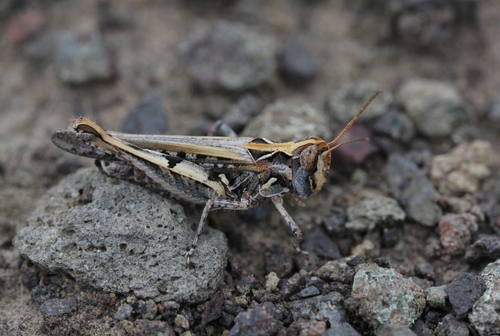
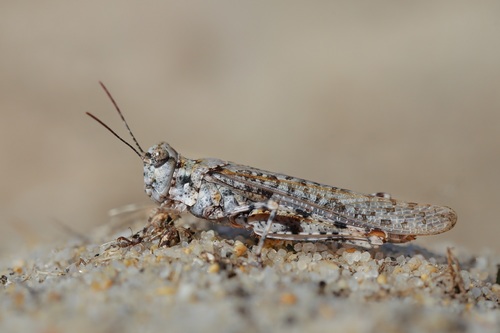
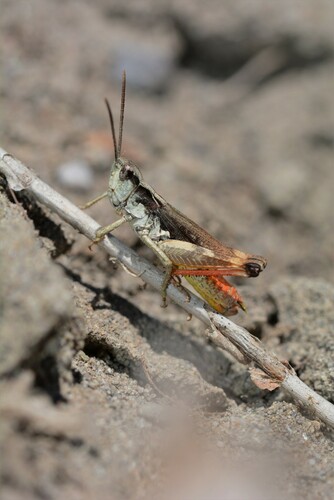
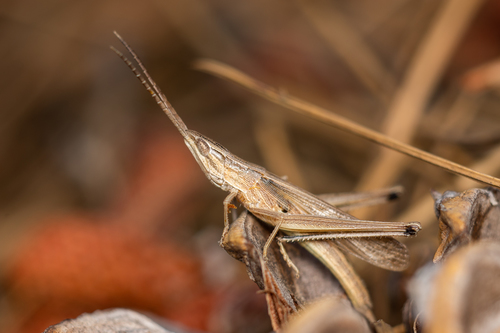
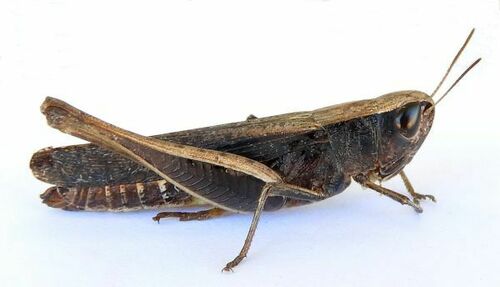
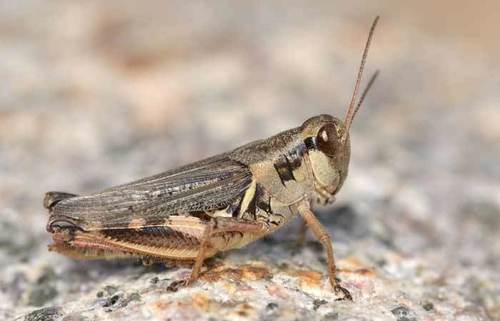
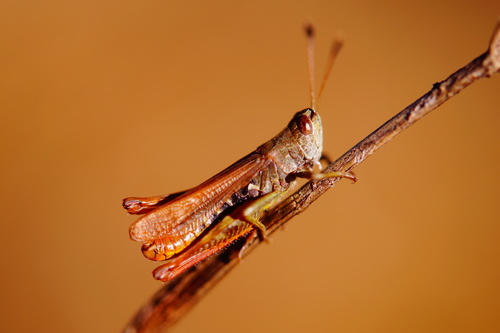
Physical characteristics: Males of Gomphocerippus rufus (rufous grasshopper) range 14 to 16 mm in length, while females are larger, at 17 to 22 mm. Body color is usually various shades of brown, with patches or tones of grey, yellow, and red. Mature males have an orange-red tip to the abdomen; females have similar color patterns, but the colored abdominal tip is much less pronounced, and some females appear reddish purple. The antenna has a distinct, flattened, expanded apical club at its tip. The pronotum has a central seam. Both sexes have fully developed wings. Male forewings are longer than female forewings: in males, they reach just beyond the primary joint of the hind legs, while in females, they do not reach this joint.
Habitat: The rufous grasshopper usually occurs in open land, particularly terrain with tall grass including meadows, pastures, and forest edges, and is often found specifically in chalk grassland. It has been recorded on southern slopes of the Alps up to approximately 8100 feet. It prefers warm environments with moisture levels ranging from dry to moist. It is very common across much of Europe, including Germany, Sweden, France, and the United Kingdom, and occurs across almost all of Europe and Asia, ranging from France to parts of Siberia, and from Scandinavia to northern Germany. These skilled climbers avoid staying on the ground, instead perching on plants in sunny, elevated areas. Because of this preference, they tend to live near taller herbaceous plants, and only occur near short plants infrequently. This preference is clearly illustrated by the 1950s myxomatosis outbreak in British rabbits. Rabbit populations were severely depleted; because rabbits crop grass short by eating it, the population decrease led to less short cropped grass. While species dependent on short grass, such as the large blue butterfly, suffered greatly, the rufous grasshopper prospered, as the lack of rabbits allowed long grass to increase. Known predators of the rufous grasshopper include bats, such as the greater mouse-eared bat.
Life cycle: Females lay eggs, usually five per egg packet, in semi-arid soil near grass roots around autumn and winter. Nymphs hatch around late May, and adults begin appearing in late July. Development depends heavily on temperature. Most individuals are fully developed by the end of August. When autumn conditions are not too harsh, adults are relatively tolerant of cold weather and may survive until early December. Despite this cold tolerance, they prefer warm weather, and more individuals survive through hotter summers than cooler summers.