About Gobius paganellus Linnaeus, 1758
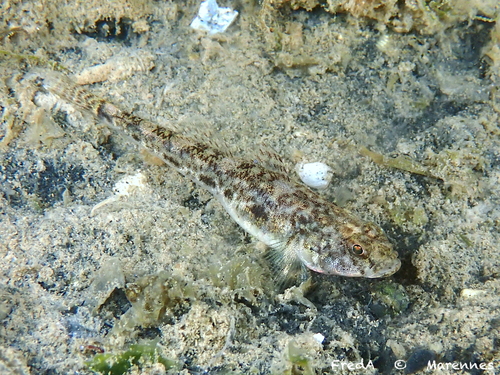
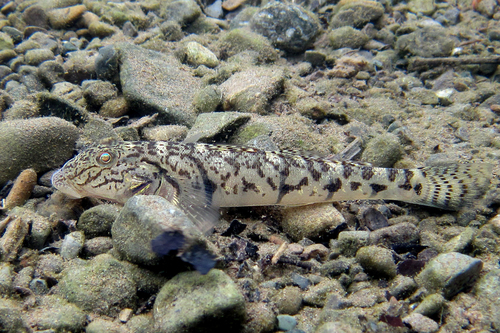
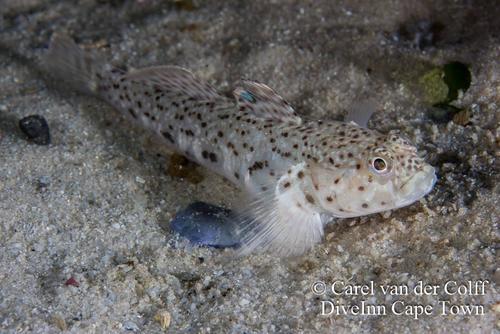
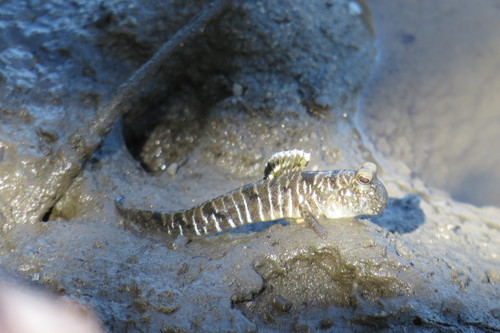
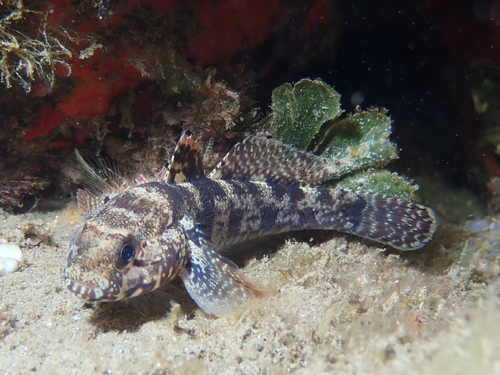
The rock goby, scientifically known as Gobius paganellus Linnaeus, 1758, is usually black with white blotches, and individuals of this species can change color. Males become much darker black when guarding eggs. The neck region of the rock goby lacks scales, and a pale band runs along the top of its first dorsal fin. Neither of its two dorsal fins have black spots on their leading edges. This species can grow to a total length of 12 centimetres (4.7 in), and has a recorded maximum lifespan of ten years. The rock goby occurs in the temperate East Atlantic and the Mediterranean Sea. Its geographic range stretches from western Scotland south to the Azores and Senegal, and also covers most of the Mediterranean Sea and the Black Sea. Individuals sometimes pass through the Suez Canal to reach the Red Sea and the Gulf of Aqaba. The rock goby prefers rocky sea floors located below the low tidemark, but it can also be found in larger rock pools during the summer. It can also inhabit fresh or brackish water, and occurs at depths ranging from 0 to 15 metres (0 to 49 ft). Rock gobies reproduce in the spring. They nest in rocky areas near kelp forests. A single clutch can hold up to 7000 eggs, which are laid in a single layer under rocks and shells, with each egg measuring 2.5 mm in height. The male aggressively guards the clutch, and the eggs hatch after approximately 19 days.