About Gobius niger Linnaeus, 1758
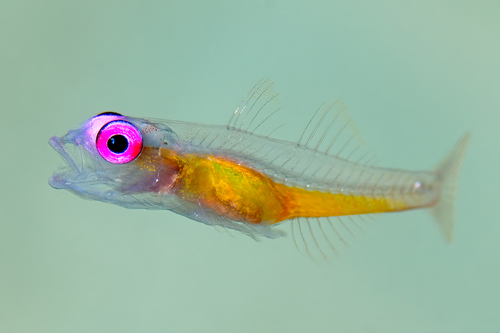
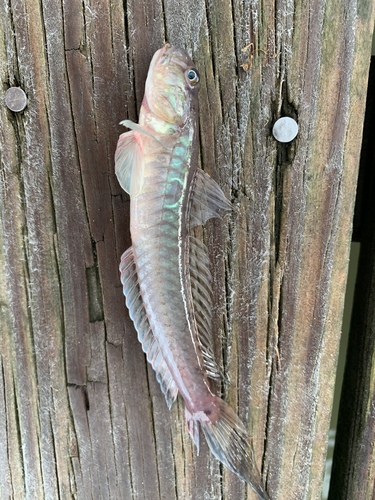
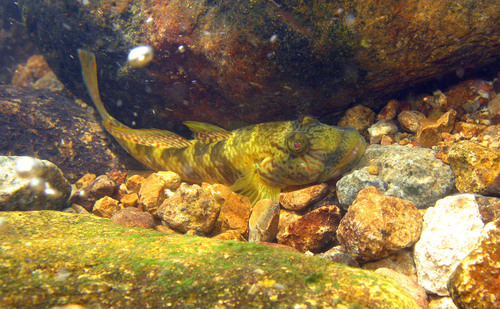
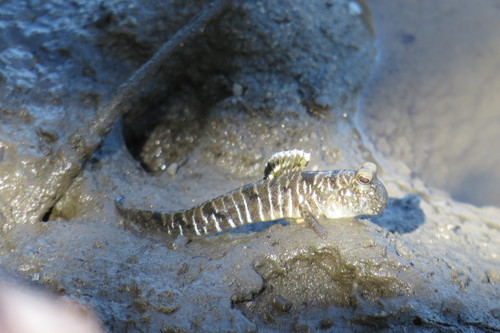
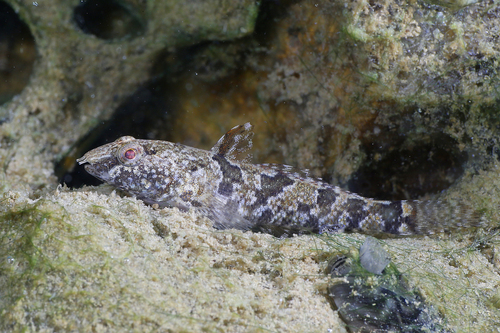
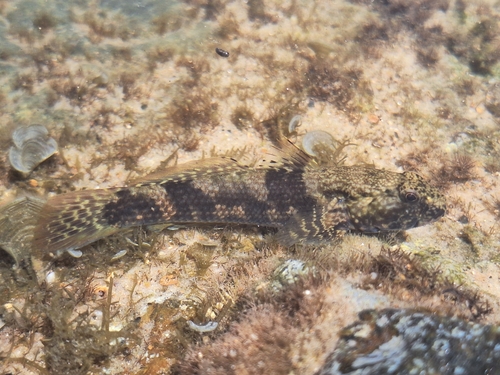
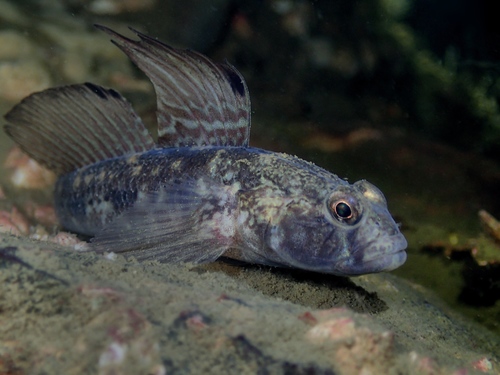
The black goby, scientific name Gobius niger Linnaeus, 1758, has a deeper body, a more rounded snout, and generally reaches a larger size than the common goby, sand goby, and two-spotted goby. It has two almost continuous dorsal fins: the anterior dorsal fin has six spines that may project from the fin membrane, while the shorter posterior dorsal fin is made of soft rays. Unlike the common goby and sand goby, where a long gap sits between the posterior dorsal fin and the caudal peduncle, the posterior dorsal fin of the black goby ends very close to the caudal peduncle. Its pelvic fins are fused. Its body is some shade of dark brown, marked with indistinct black blotches. During the breeding season, males turn almost entirely black, and their fins become more vivid. The average size of an adult black goby is around 5 to 7 cm (2.0 to 2.8 in). The black goby is native to shallow waters of the eastern Atlantic Ocean, the Mediterranean Sea, and the Black Sea. Its distribution range stretches from Cape Blanc in Mauritania to Trondheim in Norway, and also includes the Baltic Sea. It is most commonly found at depths of less than 50 metres (160 ft). Its typical habitats are lagoons, estuaries, and inshore waters, where it lives on sandy or muddy bottoms and among seagrasses and seaweeds. It will occasionally move into fresh water.