About Gobiosoma bosc (Lacepède, 1800)
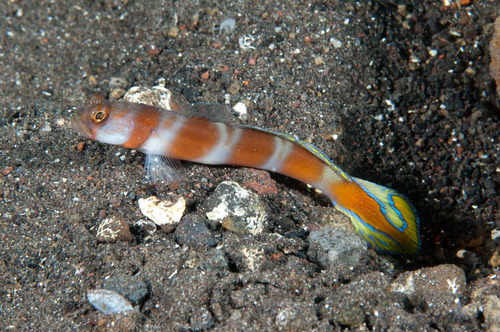
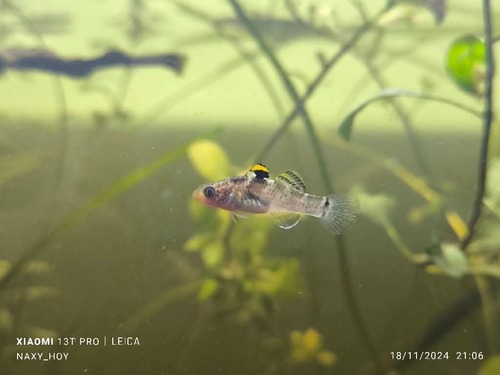
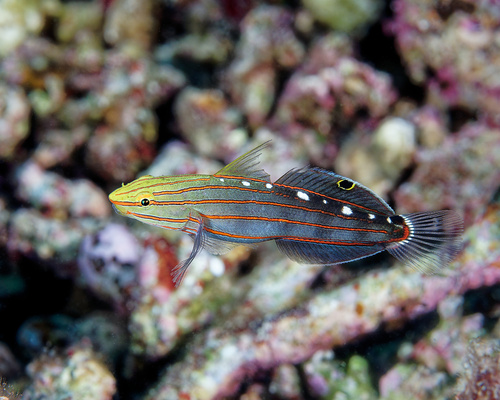
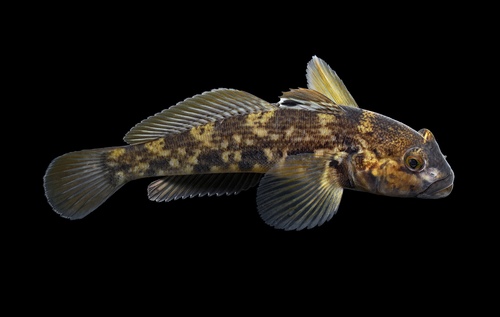
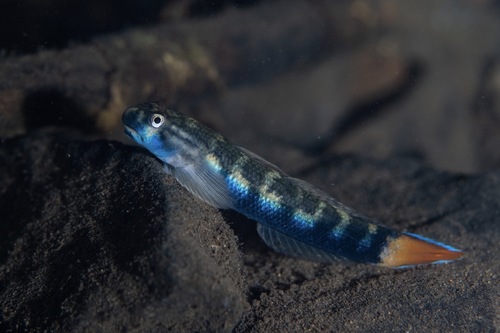
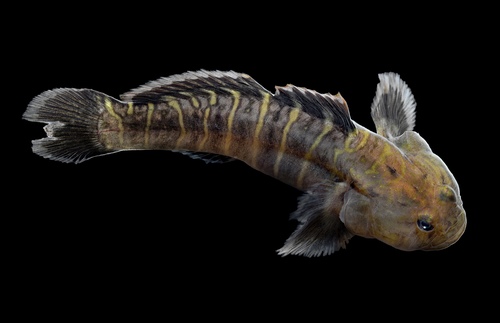
The naked goby, scientifically known as Gobiosoma bosc (Lacepède, 1800), is usually less than 2 inches in length and has no scales. Its pelvic fins are connected by a membrane that forms a sucker-like disk, and this fin extends to a point between the pelvic fin base and the anus. Its body color ranges from pale yellow to murky brown, and it has between nine and ten vertical variable markings along its body. These vertical bars may not be visible in individuals that have very light or very dark body coloration. Naked gobies generally inhabit estuaries and coastal waters, and they almost exclusively live in brackish water habitats. They are distributed across the Western Atlantic, ranging from Connecticut to Mexico. During the winter, naked gobies may bury themselves in bottom sediments. Young naked gobies are commonly found in estuaries south of New Jersey, and only occur sporadically in estuaries north of New Jersey. Naked gobies reproduce between May and November each year. They are oviparous, meaning they lay eggs. Females lay their eggs inside empty oyster shells, and males guard the eggs until they hatch. After hatching, free-swimming larvae may migrate upstream and school over oyster reefs before settling to the bottom. The typical lifespan of a naked goby is approximately four years.