About Gobiomorphus huttoni (Ogilby, 1894)
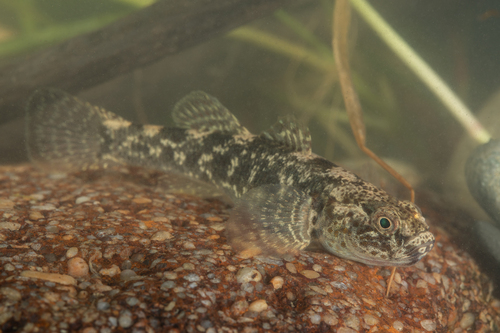
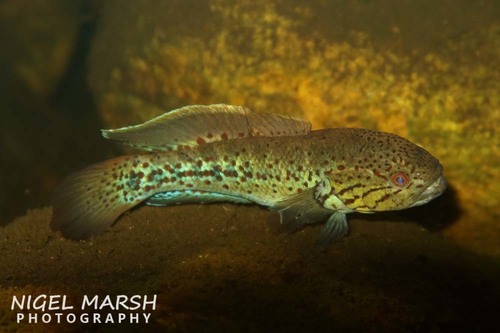
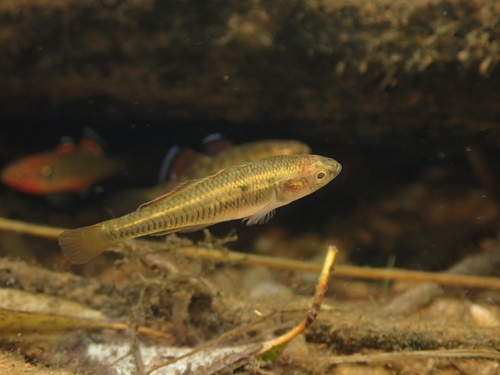
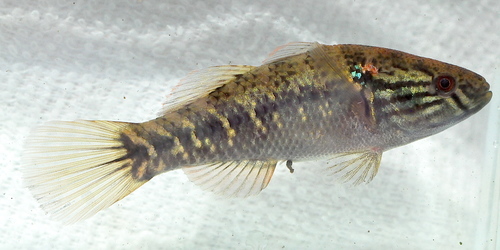
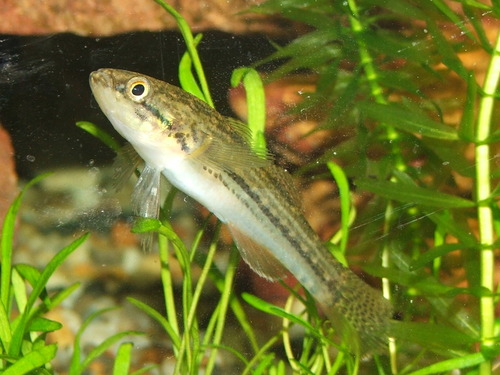
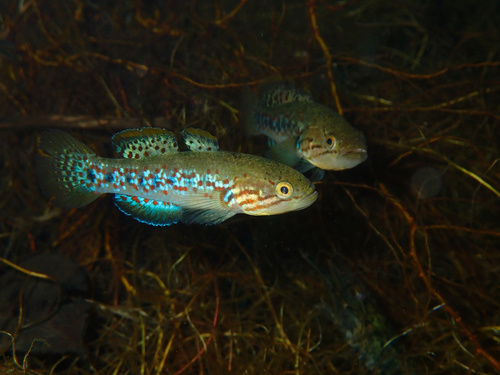
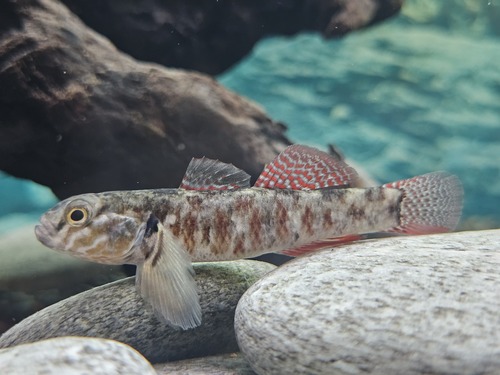
Gobiomorphus huttoni, first recognized as a distinct species in 1894, has undergone multiple name changes. Its current specific epithet "huttoni" honors Sir Frederick W. Hutton, a New Zealand biologist. This species, commonly called the redfin bully, is one of seven native bully species that live in a range of freshwater habitats across New Zealand. Male redfin bullies are the most colourful freshwater fish in New Zealand, with bright red markings on the dorsal, anal, and tail fins, as well as the body and cheeks. Males also have a bluish-green stripe along the outer edge of the first dorsal fin. Only males have this red colouration; females share the same patterning, but have brown colouring in place of red. Both sexes of redfin bully have distinctive diagonal stripes on their cheeks. These stripes are useful for confirming identification, as they remain visible even in fish as small as 30 mm long and very pale individuals. During the breeding season, males turn solid black, with a bright green edge to the first dorsal fin. G. huttoni is considered a cryptic fish: its colouration lets it camouflage and blend into its surroundings, which serves as an important defence mechanism. The species reaches a maximum length of 120 mm, and males are generally larger than females. The average weight of G. huttoni is 8.4g, with a margin of error of ±0.4g. In a research study conducted by Vanderpham, researchers took a series of body and fin measurements, and counted cephalic dorsal head pores of the mechanosensory lateral-line system on G. huttoni. These pores and their associated canal neuromasts are important for prey detection and predator avoidance, especially in habitats with turbulent conditions where superficial neuromasts are less effective. Habitat-related variation patterns in the lateral-line system of the common bully are also likely to match patterns seen in redfin bullies that occupy similar habitats. Like most bully species, G. huttoni is nocturnal. While young fry may be visible during the day, adults are primarily active at night and will dart for cover if disturbed. G. huttoni is endemic to New Zealand, where it is found throughout the North Island, Stewart Island, and the Chatham Islands. It is quite rare along the east coast of the South Island north of Oamaru, with the exception of the Banks Peninsula area. G. huttoni is diadromous, meaning it migrates between fresh and saltwater. It cannot establish self-sustaining populations in landlocked waterways, so it tends to live near the coast with access to the ocean. However, it is able to climb upstream, so populations can be found well inland, including at elevations above 5m. G. huttoni is typically found in cobble-bottomed habitats with swift flows and riffles in large rivers. It can also be found in runs and pools of small bouldery streams, and in urban areas. Its preferred habitat has a high proportion of native forest in the surrounding catchment. Dense canopy cover is not required, but native forest helps maintain cooler water temperatures and adds extra nutrients that support water oxygenation. Redfin bullies are amphidromous, meaning they migrate between fresh water and the sea as part of their normal life cycle. All native bully species are cave spawners. For G. huttoni, spawning occurs in fresh water, normally during spring. Males establish a nest or territory inside a cave-like structure, most often a hollow beneath a rock or log. As they prepare to defend the nest, males change colour, darkening from brown to completely black to better camouflage in their surroundings. When a female is ready to lay eggs, she enters the nest and turns upside-down to lay between 1,000 and 20,000 oval eggs. The eggs form a close-packed single layer attached to the ceiling of the nest. The male then fertilizes the eggs. After laying, the female leaves, and the male guards the eggs until larvae hatch two to four weeks later, with hatching time dependent on water temperature. Females may lay eggs more than once over the spawning season, and a single male may guard eggs from multiple females. Males defending eggs show territorial and aggressive behaviour while waiting for larvae to hatch. After hatching, 3mm G. huttoni larvae (fry) are carried downstream by the current to the sea. After several months, when juveniles have grown to approximately 15 to 20mm long, they travel back upstream into fresh water, where they spend the rest of their lives. No landlocked populations of redfin bully have been found, indicating they are required to spend their first few months at sea. The saltwater marine environment also provides more of the small food sources that young larvae consume. Juvenile G. huttoni have better climbing ability than any other Gobiomorphus species, but they are still found mostly in lowland waterways. G. huttoni reaches sexual maturity in its second year, and has an average lifespan of approximately three to four years.