About Gobiomorphus cotidianus McDowall, 1975
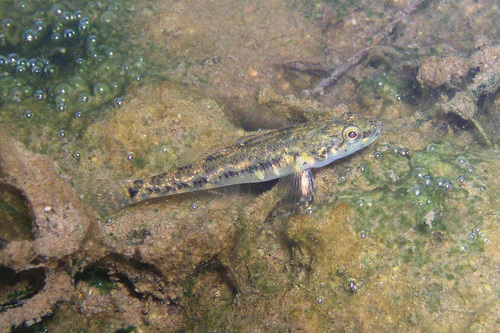
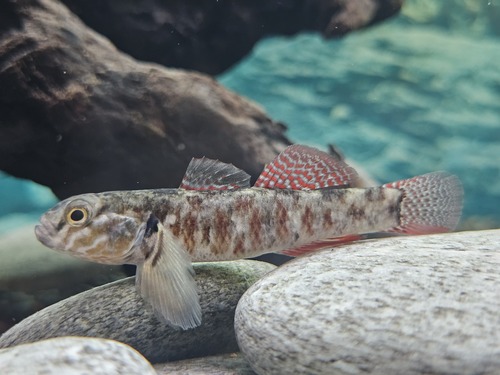
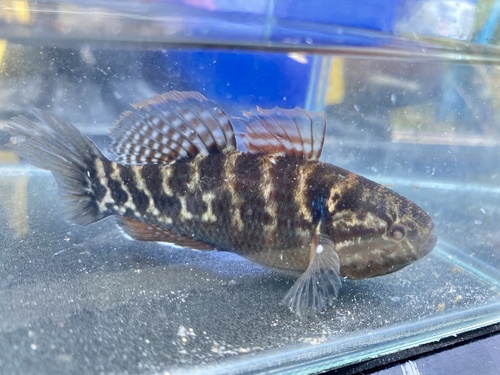
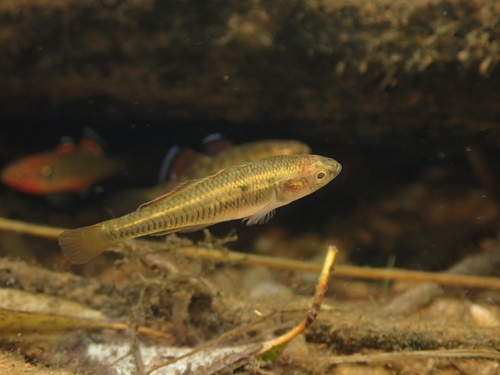
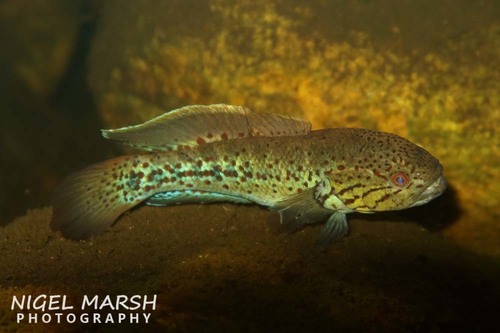
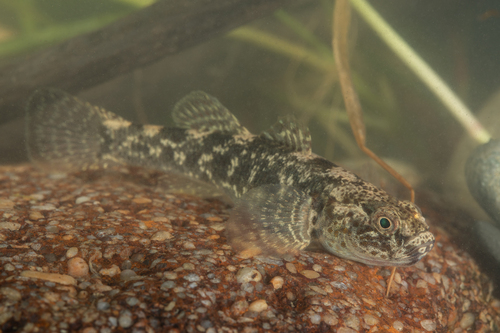
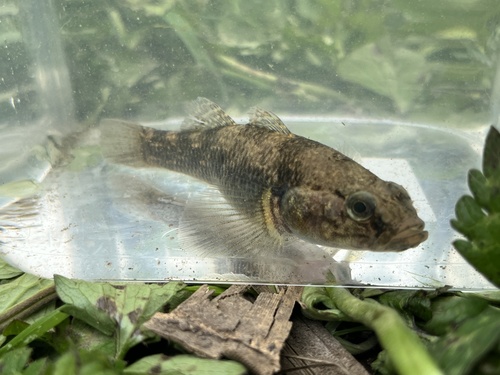
The common bully, Gobiomorphus cotidianus, is called toitoi in Māori. It is a fish endemic to New Zealand, found across the entire country. Three other bully species are often confused with the common bully, and few clear traits set it apart from related species. The most reliable defining characteristics are vertical lines on the cheek, plus the placement of head pores and head scale patterns, though these traits are very difficult to identify in wild individuals. This is an amphidromous fish, meaning it can survive in both marine and freshwater environments. It is a small species that reaches a maximum length of 15 cm. It can live in marine, freshwater, or brackish water habitats, and generally occupies benthic zones. Some populations enter the sea and live in coastal rivers and streams, while other land-locked populations have become established in many shallow mainland lakes. Common bullies generally prefer moderate to slow-moving water, so they are the most frequently sighted of all bully species. Their diet is made up mostly of small benthic invertebrates, and also includes insect larvae and crustacea. During the summer breeding season, common bullies move into the littoral zones of lakes and streams as females prepare to reproduce. Females attach clusters of several hundred to several thousand eggs to the underside of hard surfaces on the lake bottom. Males then fertilize the eggs and guard them. Larval common bullies are planktonic, and feed mainly on zooplankton. As young fish grow larger, they move into deeper water, and shift to a benthic lifestyle once they reach approximately 18 mm in length. They reach sexual maturity at around 1 year old, and have an average generation time of 2 years.