About Gobiomorphus breviceps (Stokell, 1939)
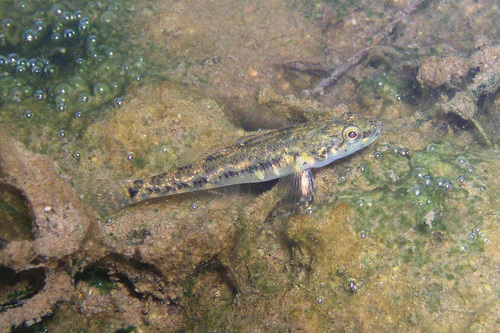
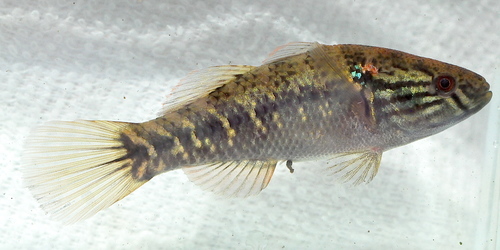
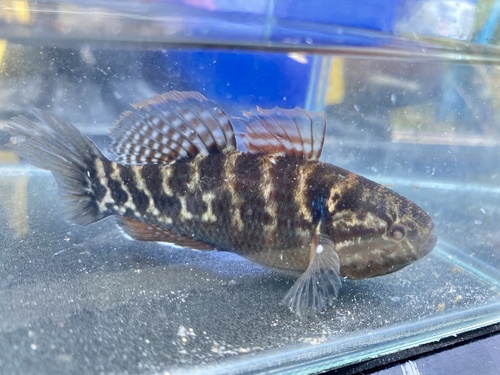
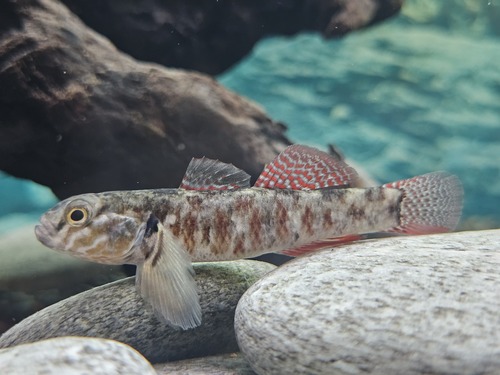
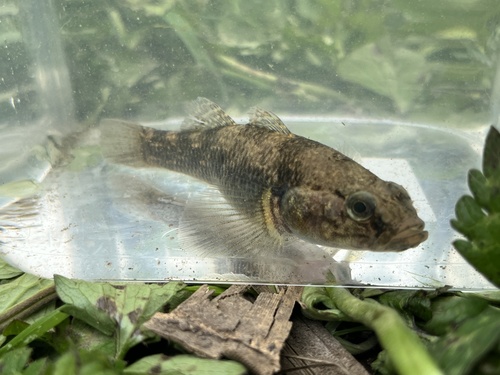
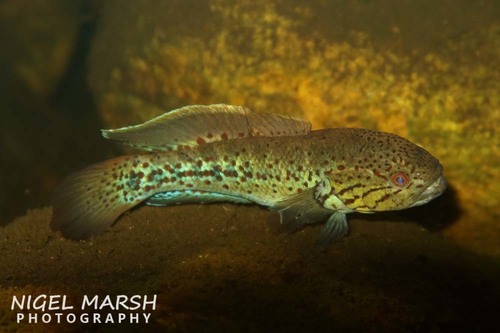
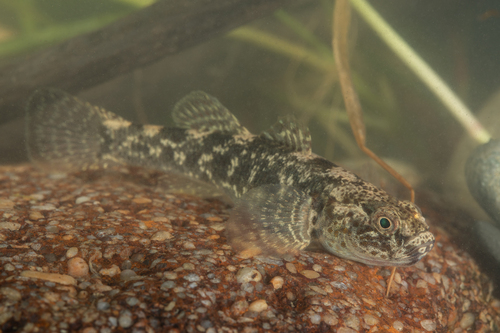
Males of the upland bully, Gobiomorphus breviceps, are larger and more stocky than females, and have bolder markings. The face is covered in many orange spots, and a cream vertical stripe is located at the base of the pectoral fins. Like other species in the genus Gobiomorphus, the first dorsal fin of males has a coloured stripe. The colour of this stripe in upland bullies is locally variable: many populations have bright orange dorsal stripes, while others have bright green, pink, yellow, cream, or uncoloured stripes. Upland bullies are widespread across New Zealand's South Island, with large gaps in distribution on the west coast, around the Tasman Mountains and from the area around Hokitika southwards. They are present in the lower half of the North Island, ranging from the headwaters of the Mokau River in the west to southern Hawke's Bay in the east. They are also found on Stewart Island. There are five distinct genetic and geographical groupings of the species. The largest and most distinctive grouping covers most of the South Island's east coast, while the other four are closely related and occur in northern South Island and in the North Island. The North and South islands were connected by land during ice ages, which allowed upland bullies from the northern South Island to spread further north. Upland bullies from the large southern grouping are often larger and have bolder patterning than their northern counterparts. This species can be found both far inland and close to the coast. It tolerates a wide range of conditions, but prefers slowly flowing water. Upland bullies are neither diadromous nor migratory, and spend their entire lives in freshwater. Over spring and summer, males establish and defend nests, which are typically hollows underneath rocks. Males prefer larger nests, but will choose more enclosed nest sites when a predator is present. While defending their nest, males turn very dark, ranging from brown to completely black. When a female is ready to lay eggs, she enters the nest and turns upside-down to lay several hundred to one thousand oval eggs. These eggs form a close-packed single layer attached to the ceiling of the nest. The male then fertilizes the eggs. After laying, the female leaves and the male guards the eggs until they hatch, two to four weeks later. Females can lay eggs up to eight times over a single spawning season, and one male may guard the eggs from more than one female. Young fry grow in still waters along stream edges. They reach sexual maturity in their first year, and have an average lifespan of around 3–4 years.