About Gnorimoschema gallaesolidaginis (Riley, 1869)
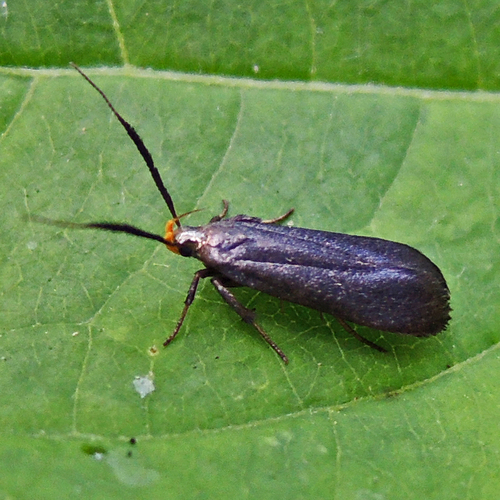
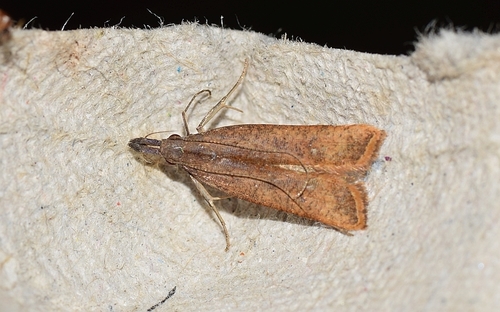
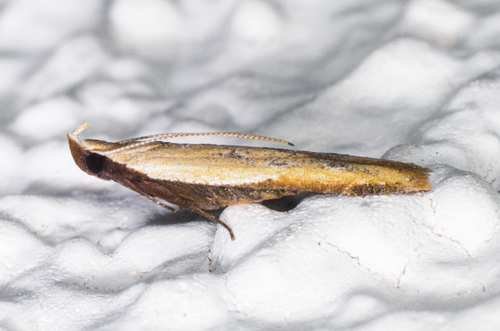
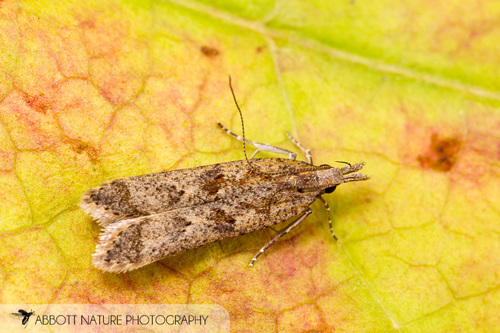
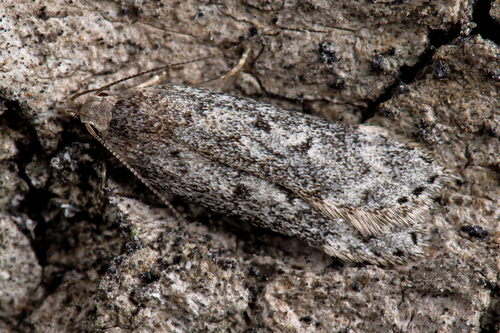
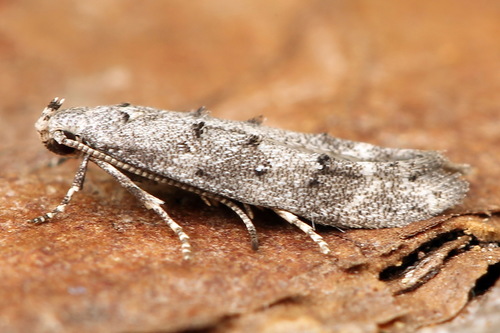
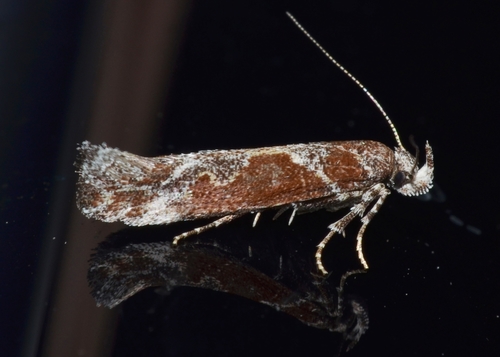
Gnorimoschema gallaesolidaginis, commonly called the solidago gall moth, goldenrod gall moth, or goldenrod gallmaker, is a moth species belonging to the family Gelechiidae. It was originally described by Riley in 1869. This species is found in North America, with confirmed records from the following regions: Alberta, British Columbia, California, Florida, Illinois, Indiana, Kentucky, Maine, Maryland, Massachusetts, Michigan, Minnesota, Mississippi, Missouri, New Brunswick, New Hampshire, New York, North Carolina, Ohio, Oklahoma, Ontario, Pennsylvania, Quebec, Tennessee, Texas, and Wisconsin. The forewings of this moth are deep purplish-brown, and are more or less sprinkled with carneous, a flesh-colored tone. A light carneous band originates from the wing costa near the base, curving toward the middle of the inner margin. This band extends along the inner margin to a point just beyond the start of the cilia, where it curves upward toward the wing tip, reaching only halfway up the height of the wing. At this point, the band is approached from above by a diffuse spot of the same carneous color. This spot starts from the costa just behind the wing apex, and extends downward to the middle of the wing. The hindwings of Gnorimoschema gallaesolidaginis are slate-gray. The larvae of this species feed on three goldenrod species: Solidago nemoralis, Solidago altissima, and Solidago gigantea. Larvae form spindle-shaped galls on their host plants.