About Glycymeris longior (G.B.Sowerby I, 1833)
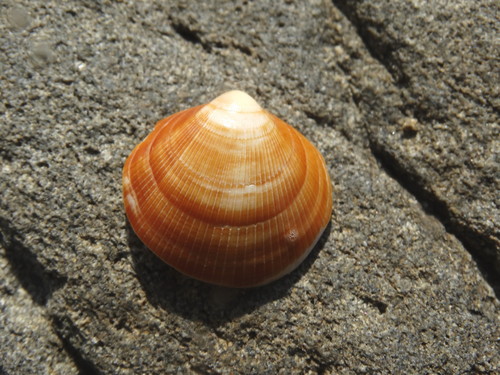
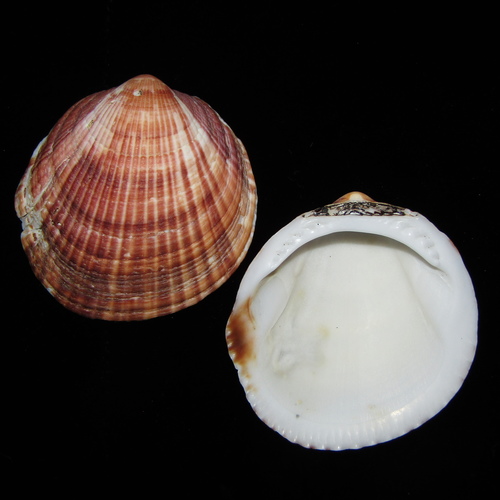
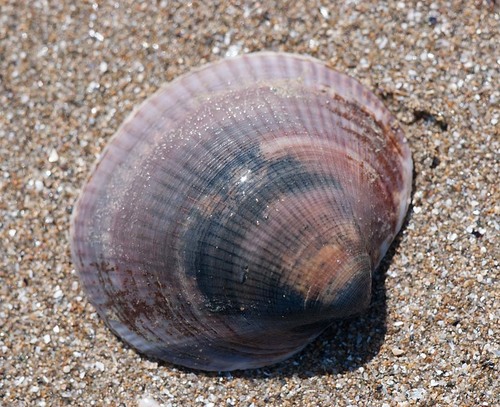
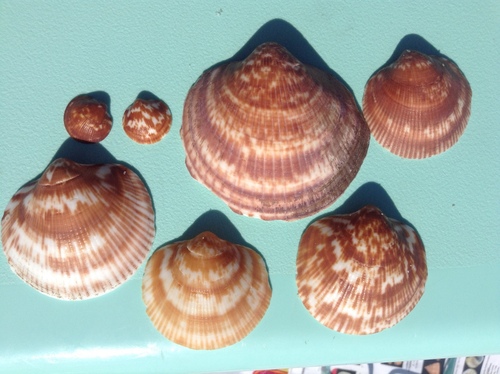
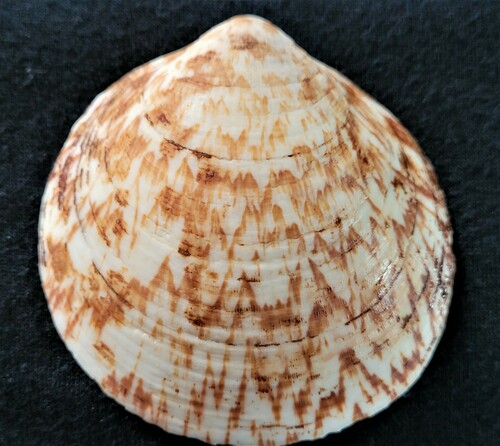
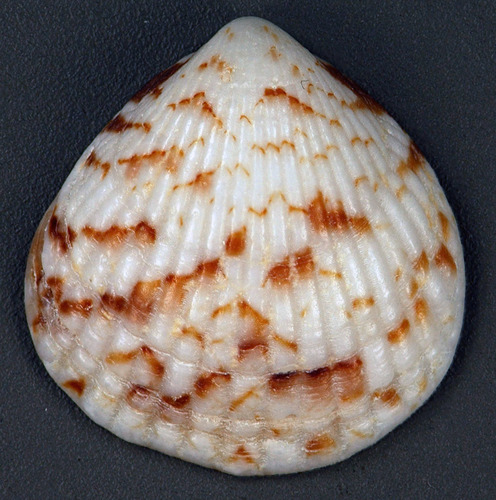
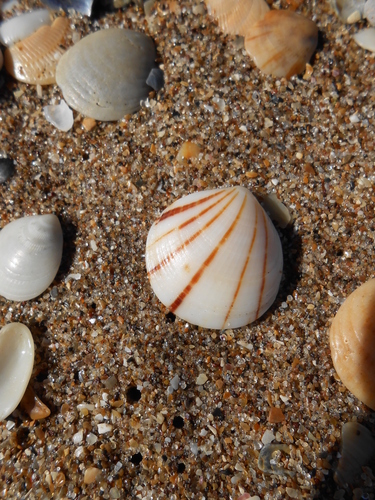
Glycymeris longior (G.B.Sowerby I, 1833) is a dioecious, long-lived species of clam; recorded individuals have reached 69 years of age. This clam produces brownish, porcelain-textured, subcircular valves that are equivalve and equilateral, marked with visible annual growth rings. The maximum recorded valve height is 50 mm. The valves articulate at the hinge engagement structure via a series of pit cavities and triangular teeth, with nine teeth present on each side of the hinge. The inner edges of the valves are crenulate, or shaped like festoons or waves. This crenulation, along with the hinge system of teeth and pits, keeps the valves aligned. The species' ligament bears striated grooves. Inside the valves, semi-oval, unequal imprints of the adductor muscles are visible. It has short palps, large filibranchs, unfused mantle margins, and a large foot that it uses to bury itself slowly, and it lacks siphons entirely. Species of the Glycymeris genus are used in sclerochronological studies, which examine valve growth rings, to reconstruct past environments. This use is due to the genus' characteristic longevity, wide geographical distribution, recording of environmental variations within their valves, and extensive fossil record, among other factors. This species occurs in the Atlantic Ocean along the southwestern coast of South America, ranging from the state of Espirito Santo, Brazil to the San Matías Gulf in Argentina. Some studies suggest its range may extend as far north as the Brazilian state of Pará. Glycymeris longior lives buried in or just above sandy sediment in shallow water, at depths of up to 10 meters.