About Gloydius ussuriensis (Emelianov, 1929)
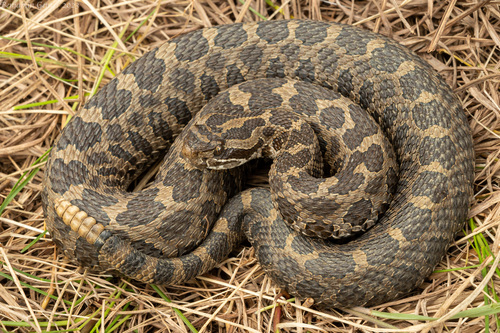
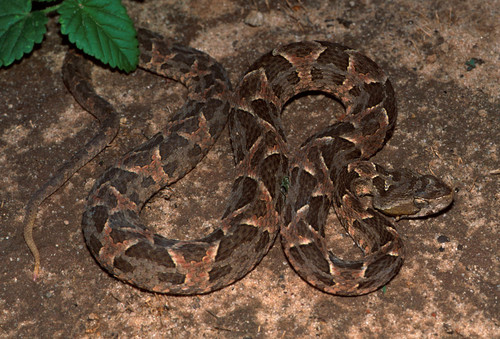
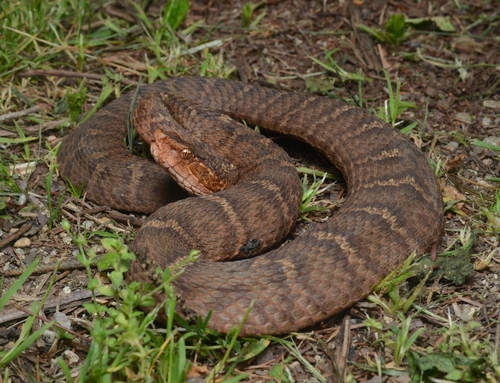
This is a description of Gloydius ussuriensis, originally documented by Emelianov in 1929. For adult body size, males reach a total length of 37–63 cm (14.6–24.8 inches), while females measure 41–64.7 cm (16.1–25.5 inches). However, Emelianov’s original size data included two 37 cm (14.6 in) males that may actually have been subadults; the next largest male in the sample was 41.8 cm (16.5 in). From the same original data, male tail length makes up 12-17% of total body length, while female tail length accounts for 12-15% of total body length. Its typical scalation has 21 rows of keeled dorsal scales at midbody; the keels on the first scale rows are faintly visible. It also has 146–157 ventral scales, 39–54 subcaudal scales, and 7 supralabial scales. Of the supralabial scales, the second is the smallest, and the fourth is usually the largest. The species’ color pattern starts with a ground color ranging from light brownish gray to blackish gray, overlaid with 24–33 relatively large, usually elliptical dorsolateral blotches. These blotches may sit opposite each other or alternate on either side of the middorsal line. They are usually closed, have a pale interior with a dark smudge at the center, which creates the appearance of a row of bull's-eyes on each side of the body. The blotches are separated by one scale row along the lateral side, extend down to the first scale row, and may merge with other blotches across the middorsal line. A dark postocular stripe is present, and this stripe is bordered above by a narrow yellow or white line. Gloydius ussuriensis is found in far east Russia (Primorskiy Kray), northeastern China, North Korea, South Korea, and on Quelpart Island. Chernov proposed restricting the species’ type locality to "Suchan River (in Primorskiy Kray)".