About Gloydius intermedius (Strauch, 1868)
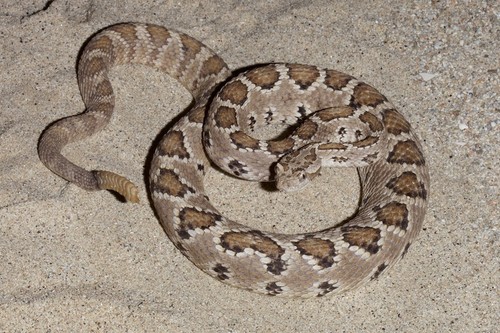
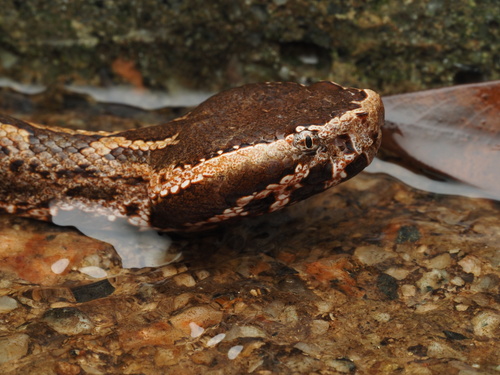
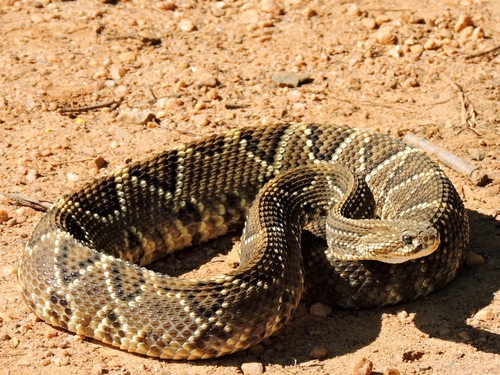
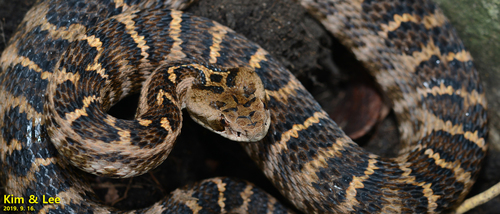
Gloyd and Conant (1990) recorded that the total length of examined subadult and adult Gloydius intermedius ranged from 33.5 to 71 cm (13.2 to 28.0 in). Nikolsky (1916) noted that some individuals can grow to a maximum total length of 78 cm (30.5 in). This species has a relatively stout body, and its snout is not upturned. Its scalation features 7 supralabial scales, 23 rows of keeled dorsal scales at midbody, 149 to 165 ventral scales, and 32 to 48 subcaudal scales. The overall color pattern is variable, but it typically consists of 28 to 45 dark subquadrate dorsal blotches or crossbands that usually extend down the flanks as far as the first or second scale rows. Irregular light areas are found between these dark blotches. A dark brown to black postorbital stripe runs from behind the eye to the angle of the jaw; this stripe is outlined by a light line above it and by cream-colored supralabial scales below it. Gloydius intermedius occurs in southeastern Azerbaijan, northern Iran, southern Turkmenistan, northwestern Afghanistan, southern Russia, Korea, northwestern China, and Mongolia. Stejneger (1907) listed the type locality as "Governm. Irkutsk, East Siberia." Golay et al. (1993) list the type locality as "Yesso (= Esso) Island, banks of Amur River and Khinggan (= Hinggan Ling) Mountain Range."