About Gloydius blomhoffii (Boie, 1826)
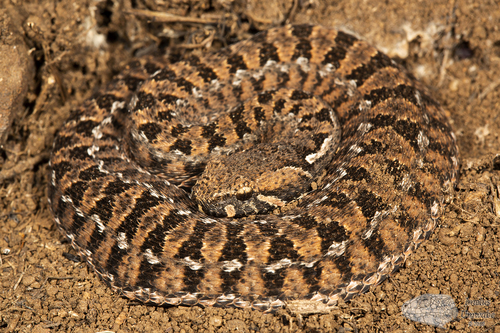
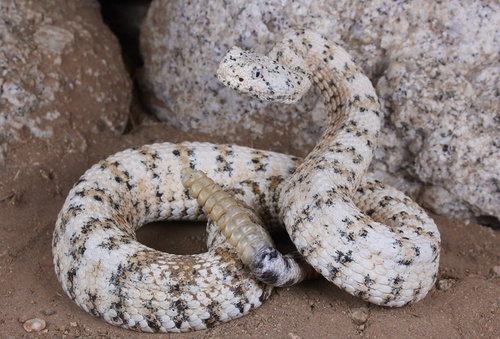
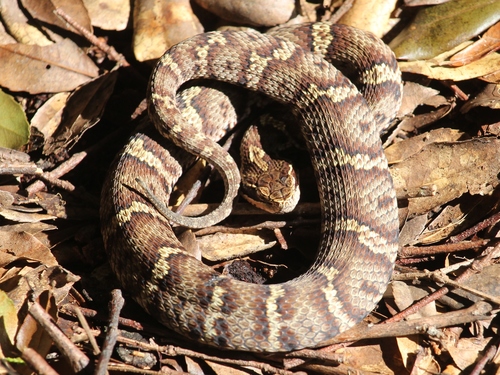
Gloydius blomhoffii, first formally described in 1826 by Boie, is a pit viper species native to Japan. Mature individuals reach an average length of 45–81 cm (17+3⁄4 to 31+7⁄8 inches), while the longest recorded specimen measured 91 cm (36 in). Its body has a base color of pale gray, reddish-brown, or yellow-brown, covered by a series of irregularly shaped lateral blotches. These blotches have black borders and often have lighter-colored centers. The head is dark brown or black, with beige or pale gray sides. In Japan, this species’ venom varies very little in both potency and effects. Per a 2005 report by Yoshimitsu, Gloydius blomhoffii and the Okinawan habu (Protobothrops flavoviridis), another pit viper, are the most venomous snakes in Japan. When measured via intraperitoneal injection in mice, the venom’s LD50 lethality ranges from 0.3 mg/kg to 1.22 mg/kg. The venom is mostly composed of haemolytic toxins, but also contains two distinct neurotoxins: an alpha-toxin that acts as a post-synaptic inhibitor, and a beta-toxin that acts as a pre-synaptic inhibitor. Because the beta-toxin acts pre-synaptically, its effects cannot be blocked or treated with anticholinesterases. The venom also contains an anticoagulant called mamushi L-amino-acid oxidase (M-LAO), as well as the peptide ablomin. Ablomin shares a highly similar amino acid sequence with helothermine, a venom compound found in the Mexican beaded lizard (Heloderma horridum). This species is confirmed to occur in Japan, and Gloyd and Conant note that there is no evidence supporting claims that it lives in the Ryukyu Islands. Its official type locality is listed simply as "Japan". It occupies a wide range of habitats, including swamps, marshes, meadows, open woodland, rocky hillsides, and montane rock outcroppings.