About Glomeris intermedia Latzel, 1884
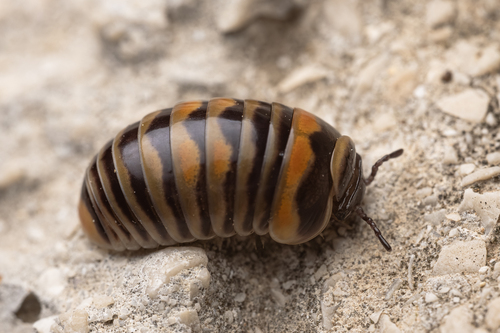
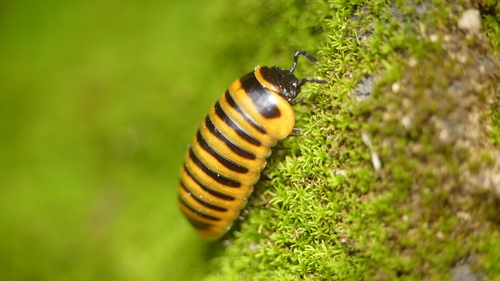
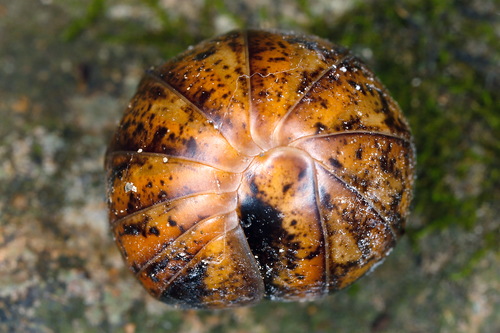
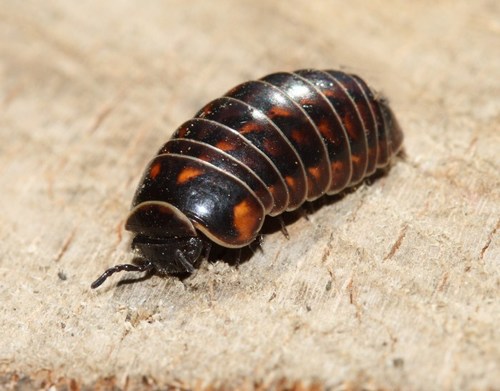
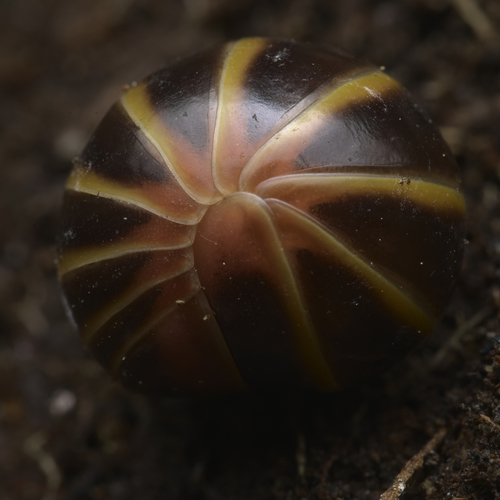
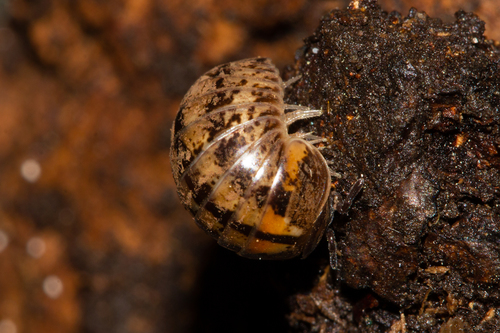
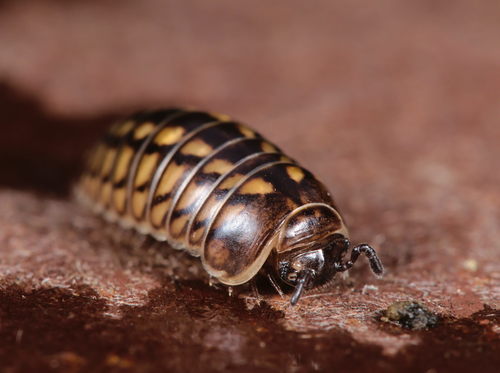
Glomeris intermedia shows a range of body colors, with individuals having a base body color of black, brown, grey, or yellow. Its tergites — the hardened dorsal plates that cover the millipede’s body segments — bear multiple spots that range in color from beige to red. The middle spot among these is typically the largest, though it can be smaller or even entirely absent in some individuals. The lateral-most spot extends farther forward than the middle spot, and both spots have sharply defined anterior boundaries. The posterior edges of the body segments are outlined by a narrow, lightly colored line that creates a distinct visual pattern. Across the northern part of this species’ distribution range, the medial row of spots is usually absent. The species’ final body segment, called the preanal tergite, has two large bright spots that do not reach the segment’s edge. In males, the preanal tergite is slightly lobed, which may help distinguish males from females. The second body segment, known as the breastplate, has two to three major furrows — occasionally only one — and may also have 0 to 2 anterior furrows and 1 to 5 minor furrows. Glomeris intermedia is native to Western Europe, where it occurs in Belgium, France, Germany, Luxembourg, Spain, Switzerland, and the Netherlands. It lives in elevated forest habitats on hills and mountains. It is a detritivore that feeds on rotten wood and dead leaves, and it prefers acidic soils.