About Glomeris hexasticha Brandt, 1833
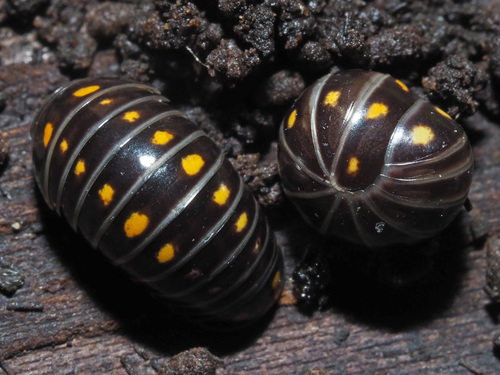
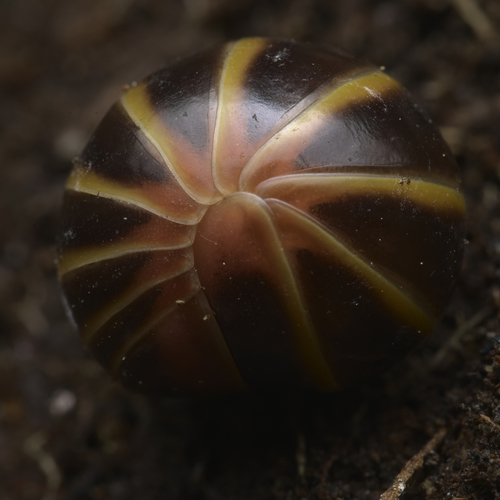
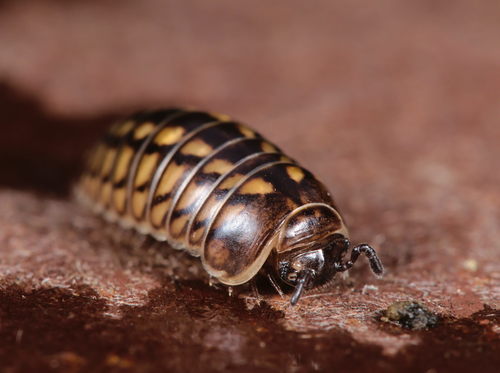
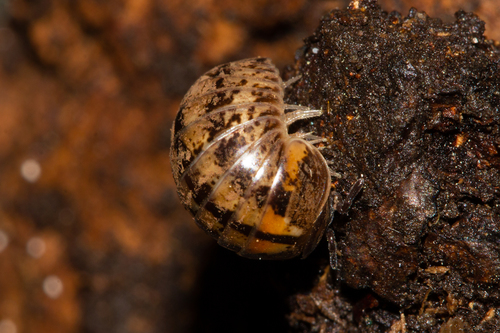
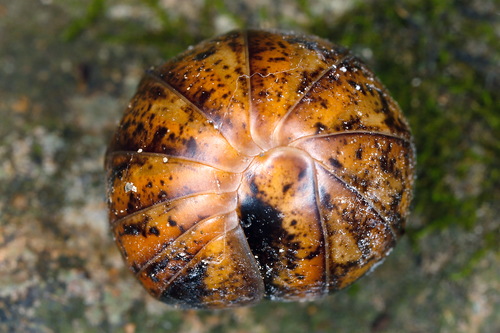
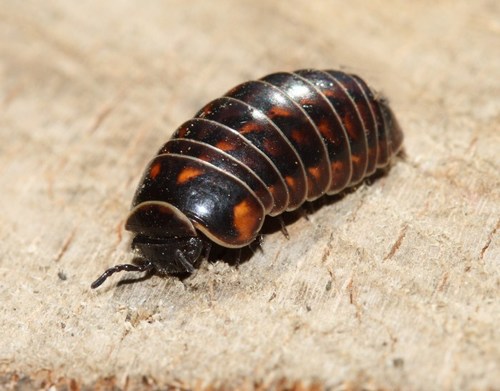
Glomeris hexasticha, formally described by Brandt in 1833, has an adult body length ranging from 6 to 17 mm. The base colour of its exoskeleton varies from brown to black, and is marked with 7 rows of yellow-brown to red-brown spots; eastern populations typically have only 6 rows of spots. The lateral spots on this species' thoracic plate are large and always clearly defined. The second tergite of Glomeris hexasticha usually has a main furrow, with 0 to 1 additional pre-furrow and 2 to 4 subsidiary furrows. In males of the species, the rear margin of the pre-anal tergite has a prominent bulge, while the bulge is far less pronounced in females. Males also have an additional cross bulge positioned above the pre-anal tergite's rear margin. Glomeris hexasticha has a widespread distribution across Europe, where it has been recorded in Albania, Austria, Bosnia and Herzegovina, Bulgaria, Croatia, the Czech Republic, Germany, Hungary, Italy, North Macedonia, Poland, Romania, Serbia, Slovakia, Slovenia, Switzerland, and Ukraine. It is also native to Central European Russia, European Turkey, and the transcontinental Near East region. This species primarily inhabits forests at montane and subalpine altitudes, and can be found in both deciduous and coniferous forests, including stands of common hornbeam (Carpinus betulus) and black pine (Pinus nigra). Glomeris hexasticha has also been found living in forest edge habitats and meadows, where it occurs alongside wild wheat grasses (Agropyron sp.) and common rosehip (Rosa canina). Glomeris hexasticha is a detritivore, and feeds on decaying plant matter including dead wood and dead leaves.