About Gleichenia polypodioides (L.) Sm.
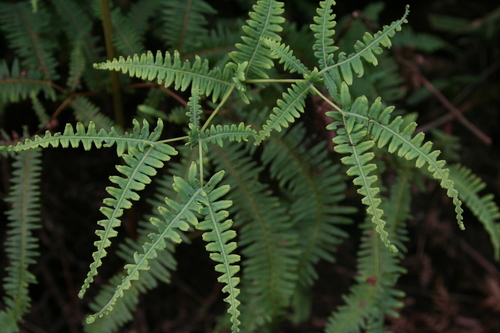
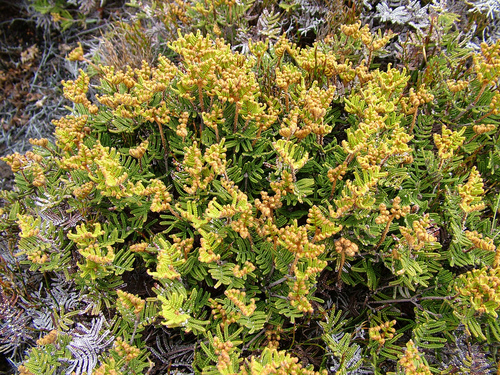
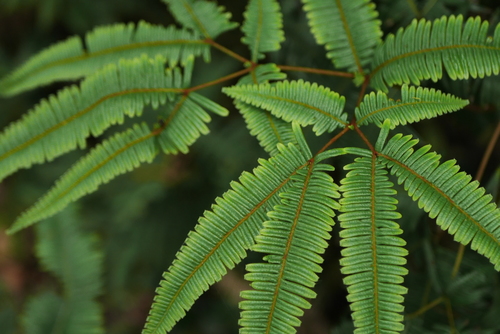
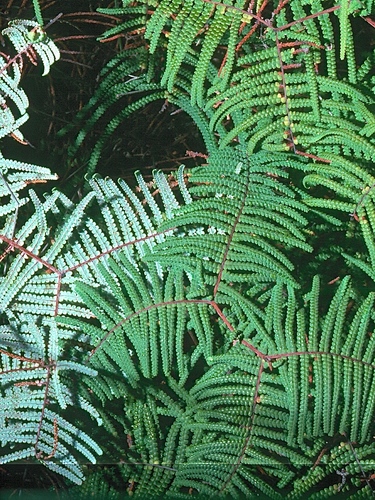
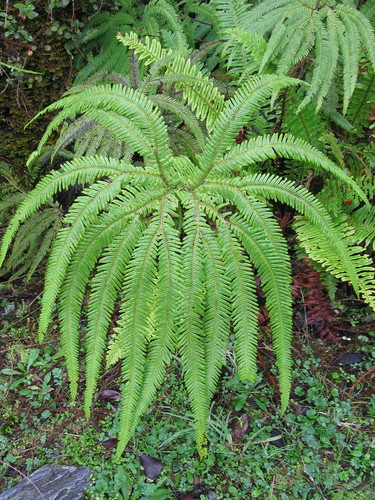
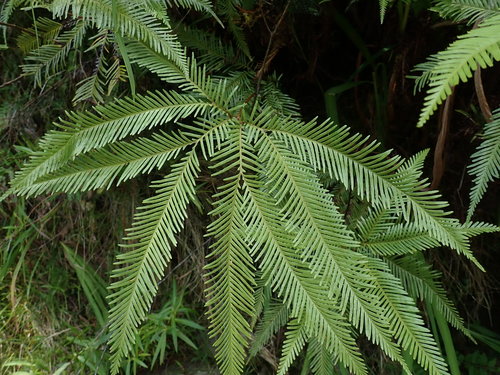
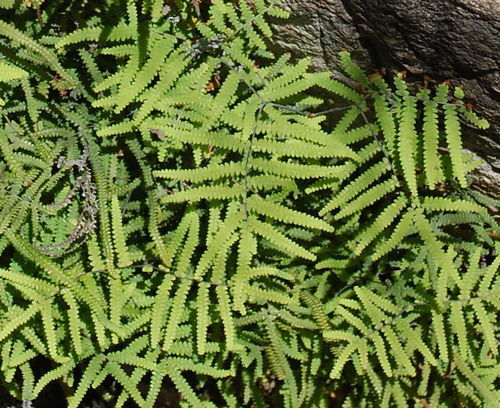
Gleichenia polypodioides (L.) Sm. is commonly known as coral fern, kystervaring (the word 'kyster' means 'coastal' and is possibly of Scandinavian origin) or ystervaring, which translates to 'iron fern' in Afrikaans. These common names refer to the species' glabrous, brown, wiry stipes. This species is widespread across south and east tropical Africa, southern Africa, and the western Indian Ocean region. It grows naturally in a broad coastal belt in South Africa, Lesotho, Eswatini, Angola, Malawi, Burundi, Tanzania, Mozambique, Zimbabwe, Mauritius, Réunion, Amsterdam Island and Madagascar. Carl Linnaeus first described this species in 1771 under the name Onoclea polypodioides. This rhizomatous perennial fern often forms dense, impenetrable thickets that sometimes cover large areas, and acts as an important pioneer species in disturbed areas such as pine plantations. It is frequently mistaken for an exotic invasive species, rather than recognized as a useful plant for habitat rehabilitation, a source of peat, and a growing medium. The species also shows exceptional resistance to herbicides. Its rhizome is brown, 1–2.5 mm in diameter, and creeping. The rhizome bears long-spined dark-brown scales that measure up to 0.5 mm in diameter including the spines, and its fronds grow spaced 2–20 cm apart. The stipe is castaneous, up to 60 cm long and up to 1.5 mm in diameter, glabrous or bearing a few scales similar to those found on the rhizome, and has a shallow longitudinal groove. Fronds have a bifurcate to reniform-lunate outline, with 1, rarely 2, levels of false dichotomy in each lateral branch system that arises from each side of the terminal bud; all branches bear distant foliar segments. Aborted apical buds are up to 1.2 mm long, covered in dark-brown lanceolate laciniate scales that sometimes have black spines. Pinnules, the foliar segments, are linear, up to 7 x 0.75 cm, and pinnate. They are usually glabrous, but are sometimes covered with brown laciniate scales, and are divided into sessile, rounded, entire triangular lobes that measure 3 x 2 mm, with a green to glaucous underside. Sori are partially immersed in the lamina, and consist of 2–4 sporangia, each contained within a separate but adjoining pit. The genus Gleichenia is named after German botanist W.F. von Gleichen, while the specific epithet 'polypodioides' refers to the species' resemblance to the genus Polypodium, which also has sori sunken into the frond surface. Gleichenia polypodioides is one of 12 recognized species in the genus Gleichenia. It grows on sheltered rocks and slopes, along streams and earthbanks, on road embankments and other disturbed areas, in cool regions with high rainfall or frequent mist, in sites that receive full sun or light shade. In the subtropics, it occurs at elevations between 1,220 and 1,870 m, while in South Africa it can be found growing near sea level.