About Gleichenia dicarpa R.Br.
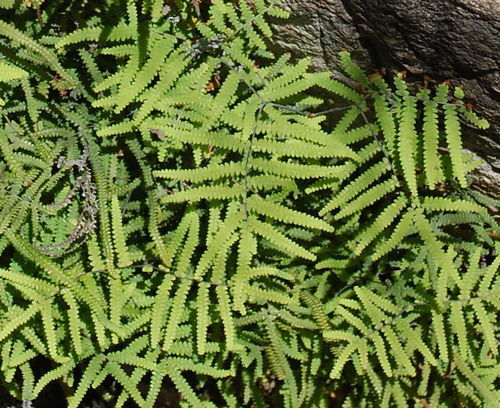
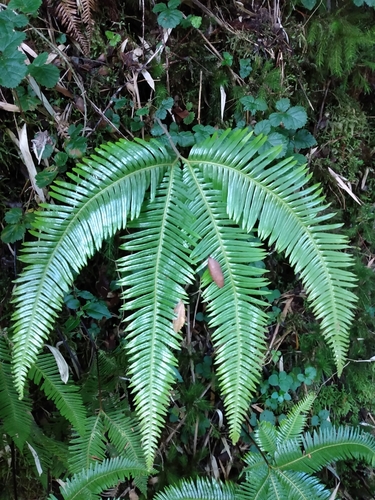
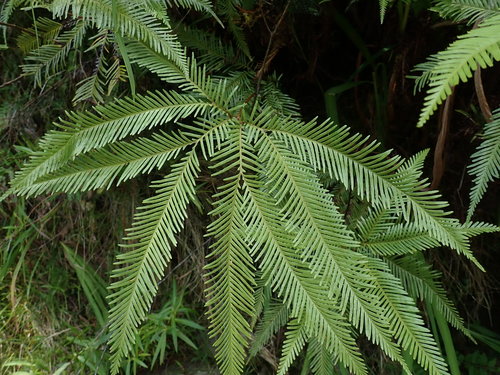
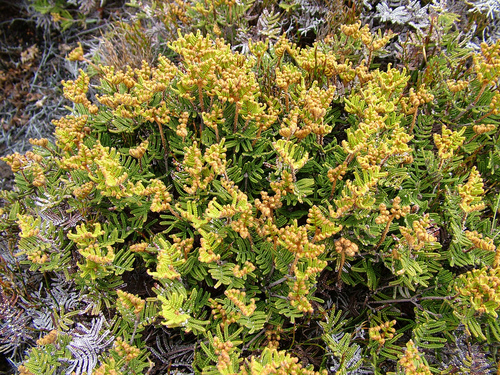
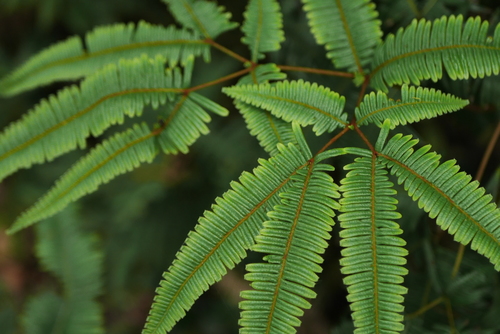
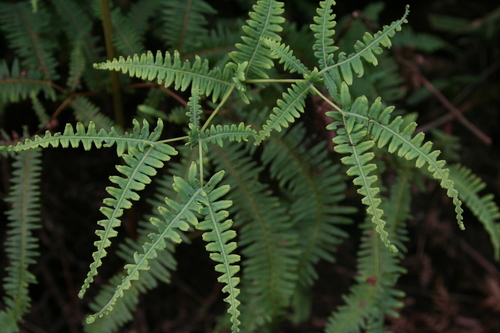
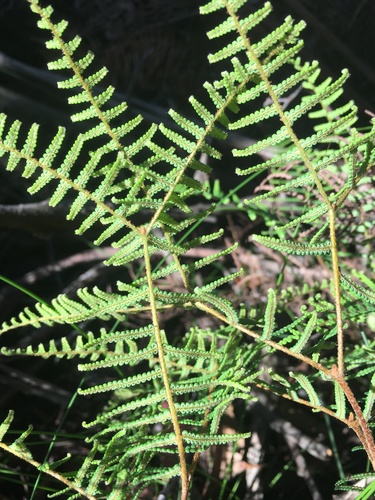
Gleichenia dicarpa R.Br. produces numerous fronds that grow more or less vertically from a thin, highly branched rhizome. Each individual frond can reach 2 metres (7 feet) in length, with pinnae growing up to 4 centimetres (1.6 inches) long. The smallest end-branches, called pinnules, are only 1 to 1.5 millimetres long, and have recurved margins that give them a cup or pouch shape. In fertile fronds, two spores are contained within each of these pouches, and this pouch-like structure is the source of the fern's common name. The spores are yellowish when immature, and darken to black when they reach ripeness. Fronds that grow in sunnier locations often develop a bleached yellow colour. This species occurs across eastern Australia, ranging from Queensland through New South Wales and Victoria, and is also present in Tasmania, where it is widespread and found at altitudes up to 900 metres (3000 feet). It is widely distributed across New Zealand, where it grows on the North Island, South Island, Stewart Island, and the Chatham Islands. It also grows in New Caledonia. Gleichenia dicarpa is a common plant that is frequently found growing under waterfalls, in peatlands, under cliffs, and in tall open forest. It can tolerate growing in nutrient-poor conditions, and prefers high humidity, ample sunlight, and consistent moisture. Its tangled roots trap detritus and prevent erosion, and it can act as a pioneer species on disturbed ground. Although it is not available commercially, Gleichenia dicarpa can be easily propagated from spores. It grows successfully as long as it is not allowed to dry out and is not disturbed, and prefers acidic soil and a sunny position.