About Gleditsia triacanthos L.
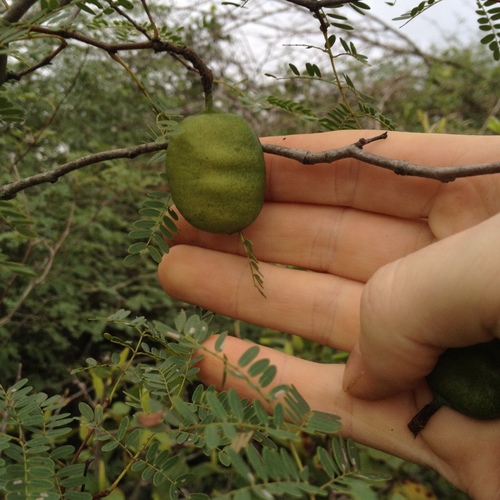
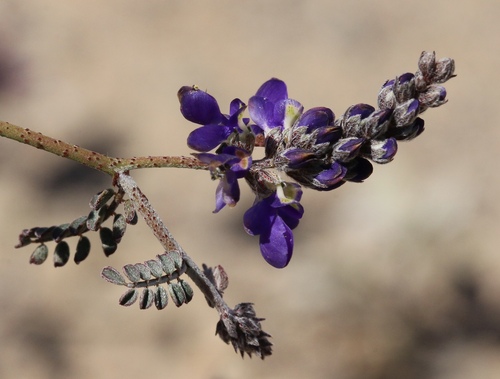
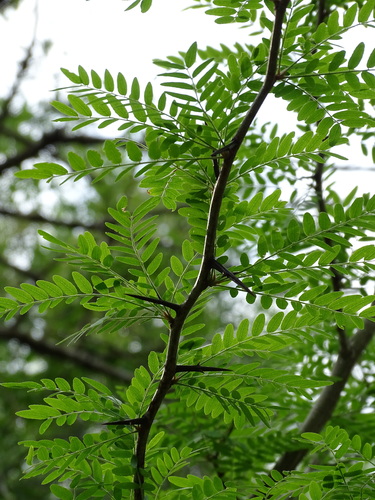
Gleditsia triacanthos, commonly called honey locust, can reach a height of 20–30 m (65–100 ft). It grows quickly, and has a medium lifespan that can reach up to 125 years. Older trees produce pinnately compound leaves, while vigorous young trees produce bipinnately compound leaves. Leaflets on pinnately compound leaves are 1.4–3.6 cm (1⁄2–1+1⁄2 in) long, and are very slightly smaller on bipinnate leaves. The leaves are green during summer, and turn yellow in autumn, with shades ranging from cream and tan to golden yellow. Honey locusts leaf out relatively late in spring, but generally leaf out slightly earlier than black locust (Robinia pseudoacacia). Strongly scented flowers bloom in late spring, arranged in 3–7 centimeter long racemes that hold many tiny greenish-yellow to greenish-white flowers. Honey locusts are polygamous-dioecious: many trees only bear pollen-producing flowers or seed-producing flowers (making them strictly dioecious), but some trees carry both flower types in separate clusters, though usually one type predominates. The fruit of the honey locust is a flat legume pod that matures in early autumn, and is often twisted or curved. Pods average 7–35 cm (3–14 in) long and 1.5–3 cm (1⁄2–1+1⁄4 in) wide. When ripe, each pod holds up to twenty dark brown oval seeds, each around 2 cm (1 in) long. A soft, gooey pulp with a slightly sweet flavor surrounds the seeds. In the species' native habitat, pods are produced from mid-September through mid-October. Most honey locusts have thorns 6–10 cm (2+1⁄2–4 in) long growing from branches and trunks, with some thorns reaching 20 cm (8 in) in length. Thorns may grow as single points or branch into multiple points, and often form dense clusters. Thorns are modified branches, and occasionally sprout leaves. Thornless individual plants are sometimes found in the wild, and are commonly sold by nurseries. The agreed native range of honey locust extends from northern Mexico through the Gulf Coast of the United States, north into the U.S. Midwest, parts of the U.S. East Coast, and the southernmost parts of Canada. In Canada, it is a rare forest species found in southern Ontario near Lakes Huron or Erie. Plants of the World Online (POWO) lists it as introduced to Ontario, while NatureServe and World Plants list it as native. World Plants lists honey locust as native to Nova Scotia, but POWO lists it as introduced there, and NatureServe does not record it in the province. NatureServe also records it as an introduced plant on Prince Edward Island. In the Midwest, honey locust grows very widely across Illinois, Indiana, Ohio, and Missouri, and is much rarer and scattered in Wisconsin, Minnesota, and North Dakota. In Kansas, it grows naturally in the eastern half of the state; it also grows at the eastern and northern edge of Nebraska along the Missouri River, in a small area of South Dakota, and in southern Michigan. In the eastern United States, honey locust is considered native to Connecticut, Massachusetts, New Hampshire, Rhode Island, and New York. Botanist Elbert Luther Little mapped the species' natural range as extending into Pennsylvania, but NatureServe lists it as introduced to Pennsylvania. NatureServe also lists it as introduced to Maine, Vermont, and New Jersey, while both POWO and World Plants list it as native to all these areas. In the American South, only NatureServe lists honey locust as introduced to Delaware and the District of Columbia, while World Plants lists it as native to both. POWO does not list it as growing wild in Washington, D.C. All sources agree it is native to the rest of the South, though Elbert Luther Little's range map does not show it growing east of the Appalachian Mountains. In Florida, it is only recorded growing in a few isolated areas of the Florida Panhandle. To the west, it grows throughout eastern Texas and Oklahoma, and becomes scattered and isolated further west. POWO lists honey locust as introduced to New Mexico, but native to Wyoming, Utah, and Nevada. This contradicts NatureServe, which lists it as native to New Mexico, and introduced to Colorado, Wyoming, Utah, and Nevada. Only World Plants lists honey locust as native to many western U.S. states including Arizona, California, Colorado, Idaho, Montana, New Mexico, Nevada, Utah, and Wyoming. In Mexico, honey locust grows in four states: Coahuila, Nuevo León, Sonora, and Tamaulipas. Trees native to Mexico are much smaller than trees from the center of the species' range, reaching a maximum height of just 12 m (39 ft), with some populations reaching less than 6 m (20 ft). Mexican honey locusts are also found in isolated locations on south-facing slopes, at elevations of 1,170 to 1,400 m (3,840 to 4,590 ft). Worldwide, honey locust has become established outside of cultivation in Europe, southern Asia, Australia, southern Africa, Argentina, and Uruguay. Within its native range, honey locust grows in humid or subhumid climates. It grows best in organically rich, moist, well-drained soils, but is tolerant of a wide range of soil conditions. It is intolerant of shade, and is a minor component of forests. The sweet pulp in honey locust seed pods is eaten by many animals including cattle, deer, rabbits, squirrels, and hares. White-tailed deer disperse honey locust seeds by eating pods and passing seeds in their dung. Deer likely move seeds more than one kilometer from where the pods were eaten, but probably no more than three kilometers, helping the tree reach new habitats and maintain its wild population even in fragmented habitats. Crows eat the seeds themselves during winter. The size and number of honey locust thorns are thought to have evolved to protect the trees from browsing Pleistocene megafauna, including mastodons, which may also have helped disperse the species' seeds. Honey locust seeds do not sprout easily unless their seed coat is damaged. In controlled experiments, only 5% of untreated seeds sprouted. By comparison, soaking seeds in concentrated sulfuric acid for one and a half hours increased germination to 68%, and soaking for two and a half hours increased germination to 98%. The caterpillar stage of the honey locust moth (Syssphinx bicolor) feeds on the leaves of honey locust and Kentucky coffee trees. The first brood of adult moths emerges from hibernation in the ground in late spring. Green larvae have several horns on their backs, and reach full size in about three weeks. Once full grown, larvae pupate in the soil. There may be two or three broods per year. Honey locust trees are a frequent host for the parasitic plant American mistletoe (Phoradendron leucarpum), but are usually not infected by large numbers of the parasite, and do not suffer obvious damage. Because honey locust tolerates urban stressors including salt spray, compacted soils, poor aeration, constrained planting areas, and pollution, it has been widely planted in cities. It also adapts well to relatively dry conditions, and tolerates both alkaline and acidic soils. Once established, it is drought tolerant, though it grows best with consistent moisture. It was widely planted as a replacement for American elm trees killed by Dutch elm disease, and became somewhat overplanted during the 1970s. However, widespread planting has revealed many issues. Like maples and oaks, honey locust is particularly vulnerable to Ganoderma root rots, a fungal infection that affects the roots and lower trunk of the tree. Three insects are the main pests that attack urban honey locusts: the honeylocust plant bug (Blepharidopterus chlorionis), mimosa webworm (Homadaula anisocentra), and honeylocust spider mite (Platytetranychus multidigituli). Thornless cultivars are especially susceptible to damage by the non-native mimosa webworm. Healthy trees can withstand one or two years of complete defoliation, but stressed trees may be killed. Higher numbers of honey locust trees within 10 meters (33 ft) increase webworm attacks, as does more impermeable hardscape surface out to 20 m (66 ft) from the tree. The pulp inside honey locust pods is edible, unlike the toxic pulp of black locust, and is eaten by wildlife and livestock. Despite its common name, honey locust is not a significant honey plant. The name comes from the sweet taste of the legume pulp, which was used for food and traditional medicine by Native American people, and can also be used to make tea. The long pods eventually dry and ripen to brown or maroon, and are enclosed in a tough, leathery skin that adheres strongly to the inner pulp. Unripe pods hold bright green pulp, while ripe pods have strongly sweet, crisp and succulent pulp. Dark brown tannin-rich seeds sit in slots within the pulp. The edible seeds of honey locust have nutritional potential, and flour made from their cotyledons is a food source with various potential uses for pastry, baking, and other gastronomic purposes.