About Glebocarcinus oregonensis (Dana, 1852)
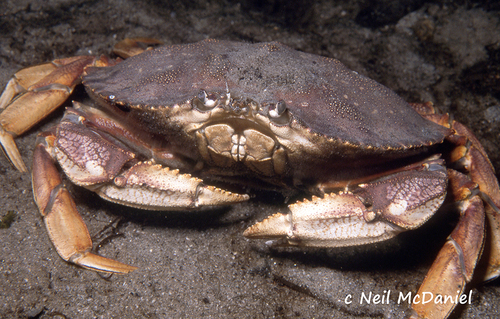
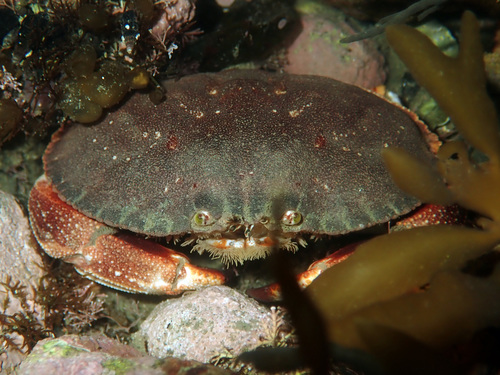
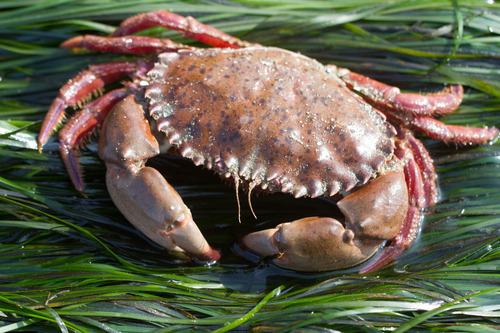
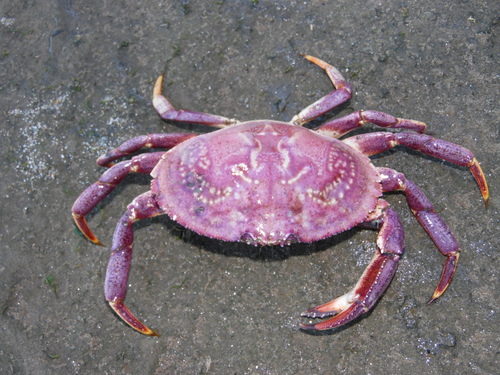
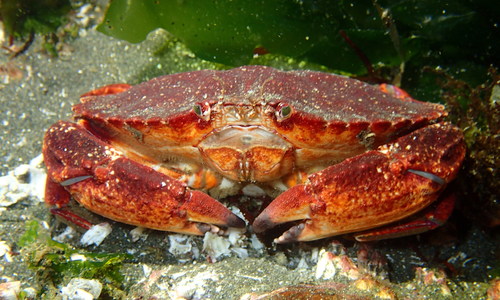
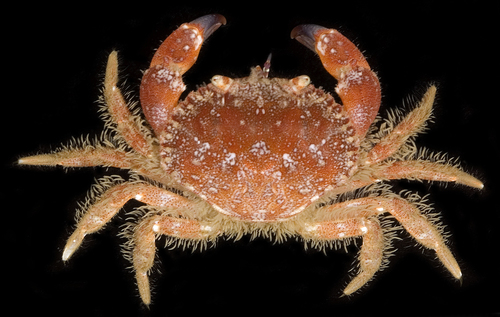
Glebocarcinus oregonensis typically has a red-brown coloration, though this can vary, and its legs are covered in many setae, or hairs. The carapace reaches a maximum width of about 5 centimeters (2 inches), and is widest at the 7th or 8th lateral tooth. The tips of this species' chelipeds are black; the dactylus of the cheliped has no spiny ridges, and the dorsal surface of the crab is covered in small tubercles, which are rounded projections. Males of this species have larger chelipeds than females.
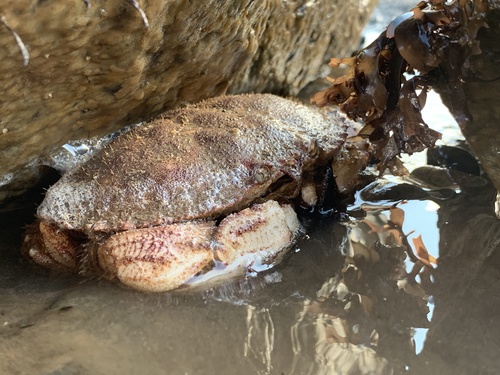
In terms of ecology, Glebocarcinus oregonensis is most commonly found in crevices, holes such as those in dead barnacles, and under rocks. It can live at depths of up to 1,400 feet (430 meters). It is a nocturnal feeder, and its diet consists mostly of small barnacles, snails, bivalves, worms, green algae, and Pacific oysters. Known predators of Glebocarcinus oregonensis include Pacific cod, river otters, and red rock crab. Breeding for this species takes place during the summer; in Puget Sound, females carry eggs from November to May. It is common to find harems made up of one male and up to seven females. Males may carry females that are molting, and continue doing so until the female's new shell hardens, as mating occurs after the female molts.