About Glaucidium sanchezi Lowery & R.J.Newman, 1949
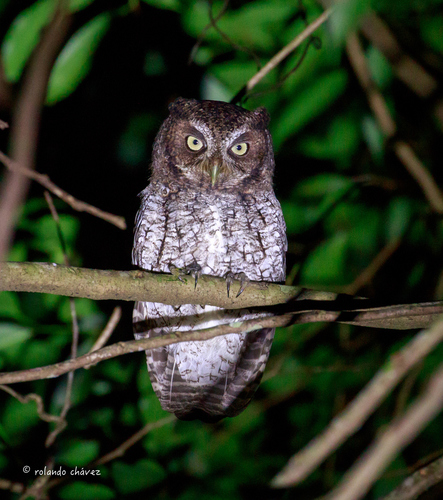
Glaucidium sanchezi, commonly known as the Tamaulipas pygmy owl, was formally described by Lowery & R.J. Newman in 1949. Adult Tamaulipas pygmy owls have a total length between 13 and 16 cm (5.1 and 6.3 in), with a relatively long tail measuring 5.1 to 5.7 cm (2.0 and 2.2 in). Their average weight is 53 g (1.9 oz), and males are generally lighter than females. Males have a brownish facial disc flecked with white and short white eyebrows. Their upperparts are olive-brown, with a greyer crown that has fine white speckling on the front and sides. The primary wing and tail feathers have white barring. The underparts are whitish with some reddish-brown streaking and mottling. Their legs are feathered, the bill is yellowish-brown, and the eyes are yellow. Females are similar in pattern to males, but have an overall more reddish-brown body coloration. This species is endemic to Mexico, where it is only found in the mountains of northeastern Mexico, specifically in northern Hidalgo state and southeastern San Luis Potosí state. It inhabits moist evergreen forest, montane forest, and cloud forest at elevations between approximately 900 and 2,100 m (3,000 and 6,900 ft). The Tamaulipas pygmy owl is partly diurnal, and feeds on insects and small vertebrates such as lizards. Little is known about its breeding behavior, but the species typically nests in tree holes that were previously used by woodpeckers. Females lay clutches of up to four white eggs, and young owls are able to fly soon after they leave the nest.