About Gittenbergeria turriplana (Morelet, 1845)
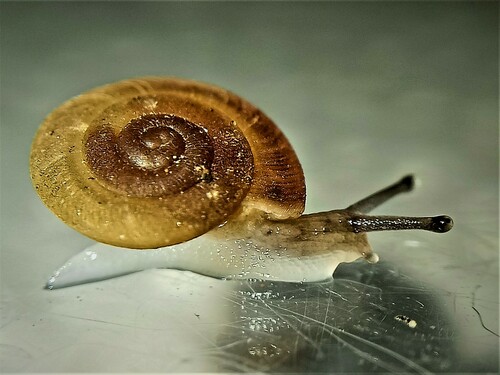
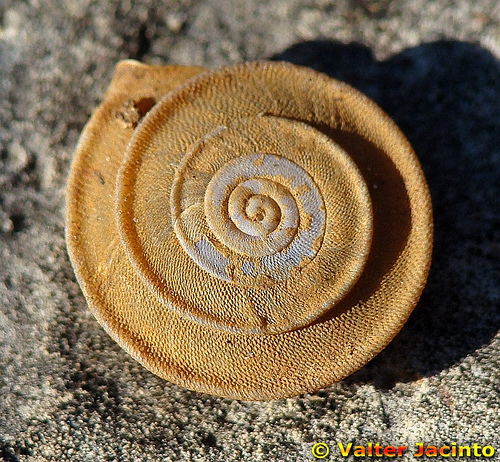
Gittenbergeria turriplana was first described by Morelet in 1845. Its shell is brown with characteristic microsculpture. It has a depressed shape with a strong keel, and its earliest whorls are almost flat. The aperture is narrow. The aperture margin is reflected and turned outward. Two teeth sit on the lower edge of the aperture, and these correspond to two conspicuous depressions on the outer surface of the shell. The umbilicus is open and eccentric. The shell measures 12–14 mm wide and 5–6 mm high. The soft body of the animal is almost black, with a lighter-colored foot, and its upper tentacles are very long. This species is endemic to the Algarve region of southern Portugal. It is a frequent species across the Algarve, and is locally very common there. Ecologically, it lives at low altitudes on calcareous substrate, near the coast. It is frequently found on old walls, in old urban gardens and parks, and also occurs in shrublands and cultivated areas.