About Giraffa tippelskirchi Matschie, 1898
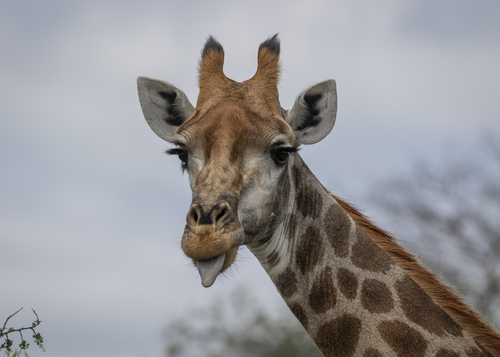
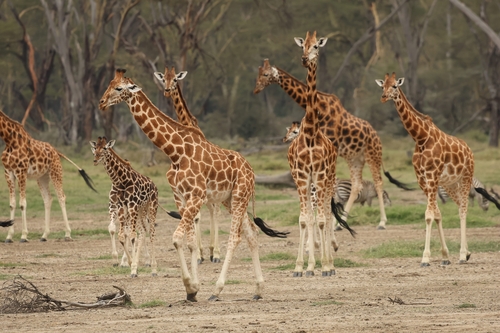
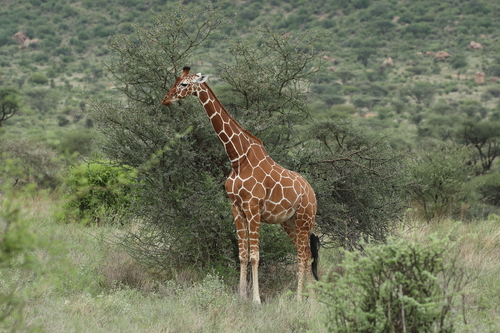
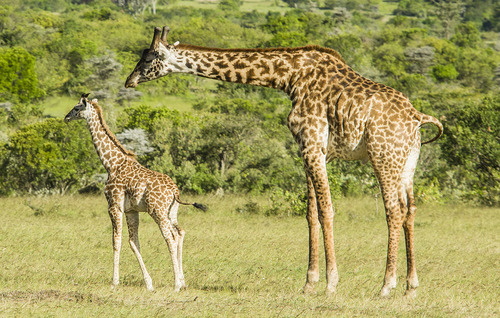
The Masai giraffe, scientifically named Giraffa tippelskirchi Matschie, 1898, can be identified by the jagged, irregular spots covering its body. It is native to multiple regions of eastern Africa. As the largest giraffe species in terms of body size, it is the tallest land animal on Earth. Adult males (bulls) are typically larger and heavier than adult females (cows); bulls can weigh close to 1.3 tonnes (1.4 short tons) and reach up to 5.8 m (19 ft) in height. In the wild, Masai giraffes live to around 30 years of age on average, and they usually live longer when kept in captivity. The most well-known feature of the Masai giraffe is its neck, which holds seven vertebrae and makes up roughly one-third of the animal's total body height. It has a long, muscular tongue that can grow up to 50 centimetres (20 inches) long; this prehensile tongue lets the Masai giraffe grab leaves from tall trees that other animals cannot reach. The darker pigment of the tongue is thought to act as a natural sunscreen that prevents sunburn. Two bony structures called ossicones sit on the top of the Masai giraffe's head, covered in thick skin with dark hair at their tips. These ossicones are used to strike opponents during fights. Bulls usually have an additional ossicone located between their eyes. Masai giraffes have been recorded reaching speeds of nearly 64 kilometers per hour (40 miles per hour) when galloping.