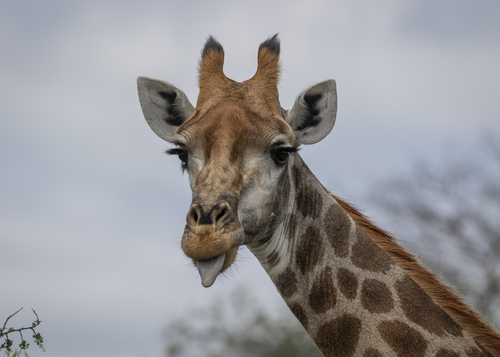
About Giraffa giraffa (von Schreber, 1784)
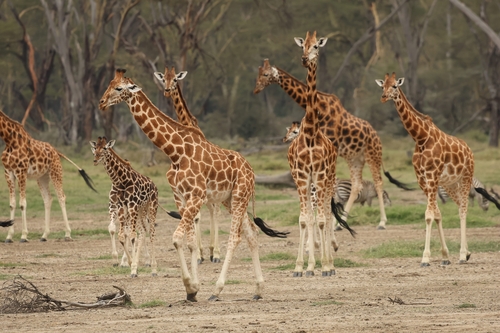
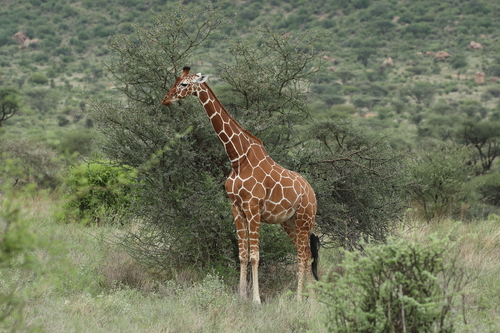
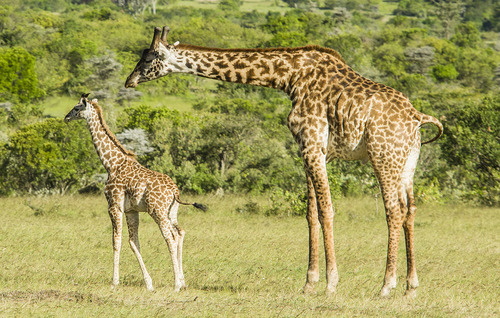
The southern giraffe, also called the two-horned giraffe, has the scientific name Giraffa giraffa (von Schreber, 1784), and is a giraffe species native to Southern Africa. The International Union for Conservation of Nature (IUCN) recognizes four distinct giraffe species, with multiple accepted subspecies of giraffe. Southern giraffes have rounded or blotched spots, some of which have star-shaped extensions, on a light tan background; their spotting pattern runs all the way down to their hooves. Their natural range covers South Africa, Angola, Namibia, Botswana, Zambia, Zimbabwe, and Mozambique. Their approximate total population is between 44,500 and 50,000 individuals, and the IUCN classifies giraffes as Vulnerable to extinction. Southern giraffes naturally inhabit the savannahs and woodlands of northern South Africa, Angola, southern Botswana, southern Zimbabwe, Zambia, and south-western Mozambique. After local extinctions across several areas, South African giraffes have been reintroduced to many parts of Southern Africa, including Eswatini, Majete Game Reserve in Malawi, and Maputo and Zinave National Parks in Mozambique. Angolan giraffes (a southern giraffe subspecies) have been reintroduced to the Cuatir Conservation Area in Southern Angola, and starting in 2023, to Iona National Park on the north bank of the Cunene River. Southern giraffes are common both inside and outside of protected areas. Southern giraffes typically live in savannahs and woodlands where food plants grow. They are herbivorous mammals that feed on the leaves, flowers, fruits, and shoots of woody plants such as Acacia.