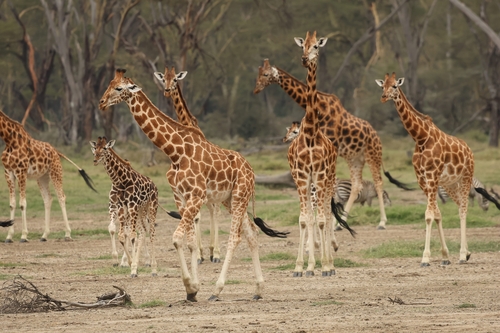
About Giraffa camelopardalis (Linnaeus, 1758)
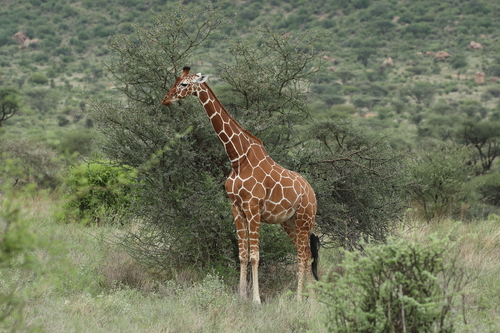
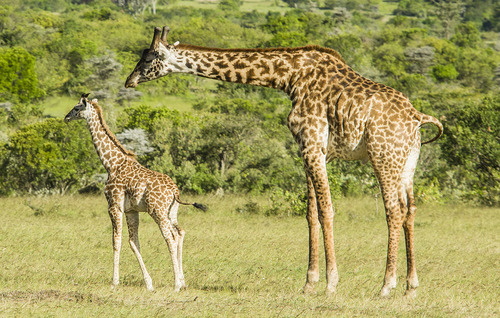
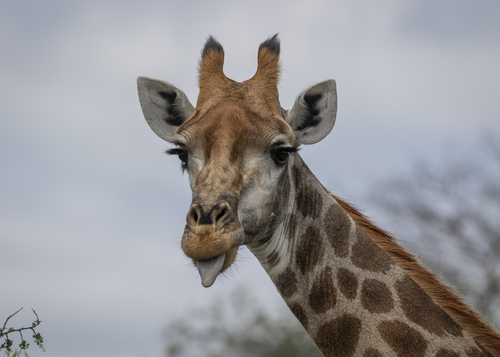
Description: The northern giraffe (Giraffa camelopardalis) is often mistaken for the southern giraffe. It can be distinguished by the shape and size of its two distinctive horn-like forehead protuberances called ossicones, which are longer and larger than those of the southern giraffe. Male northern giraffes have a third cylindrical ossicone in the center of the head just above the eyes, measuring 76 to 127 mm (3 to 5 inches) long. Distribution and habitat: Northern giraffes inhabit savannahs, shrublands, and woodlands. Following numerous local extinctions, they are the least numerous and most endangered giraffe species. In East Africa, Nubian giraffes are mostly found in Kenya, Uganda, southwestern Ethiopia, and South Sudan. In Uganda, the Uganda Wildlife Authority, with support from the Giraffe Conservation Foundation, has moved Nubian giraffes to Kidepo National Park to reinforce and secure the local population, reintroduced them to Pian Upe Wildlife Reserve, moved them to the south side of the Nile in Murchison Falls National Park, and introduced them to Lake Mburo National Park. In Central Africa, there are almost 2,400 Kordofan giraffes across the Central African Republic, Chad, Cameroon, and a small but growing population in Garamba National Park in the northeastern Democratic Republic of the Congo. West African giraffes were once widespread across West Africa. By 2018, only a single population of a few hundred West African giraffes remained, confined to the Dosso Reserve of Kouré and its surrounding Giraffe Zone area in Niger. In 2018, the Giraffe Conservation Foundation and Sahara Conservation Fund reintroduced eight giraffes to the Gadabedji Reserve in central Niger; a further four were moved in 2022. This effort was dangerous due to the poor security situation in the Kouré Region, and it successfully established a second population of West African giraffes. Today, northern giraffe populations are isolated in South Sudan, Kenya, Chad, and Niger, and they commonly live both inside and outside of protected areas. The earliest known northern giraffe ranges date to the late Pliocene in Chad. The species was once abundant across North Africa, and lived in Algeria during the early Pleistocene of the Quaternary period. Northern giraffes inhabited Morocco, Libya, and Egypt until they went extinct in these regions around AD 600, when the drying climate of the Sahara made the area uninhabitable for giraffes. Giraffe bones and fossils have been found across all these North African countries.