About Ginglymostoma cirratum (Bonnaterre, 1788)
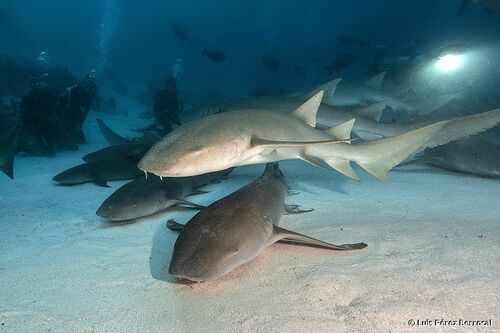
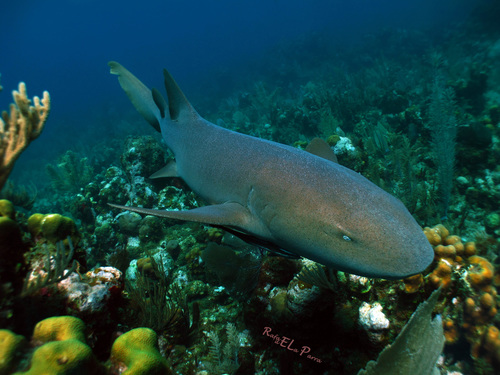
Ginglymostoma cirratum, commonly known as the nurse shark, has two rounded dorsal fins, rounded pectoral fins, an elongated caudal fin, and a broad head. The maximum confirmed adult length currently documented is 3.08 m (10 ft 1+1⁄2 in); past reports of 4.5 m (15 ft) length and weights up to 330 kg (730 lb) are likely exaggerated. Adult nurse sharks are brownish in color. Newly born nurse sharks have spotted coloration that fades with age, and measure about 30 cm long at birth. Nurse sharks have a wide but patchy geographical distribution across tropical and subtropical coastal waters of the Eastern Atlantic, Western Atlantic, and Eastern Pacific. In the Eastern Atlantic, their range extends from Cape Verde to Gabon, with accidental occurrences as far north as France. In the Western Atlantic, including the Caribbean, they range from Rhode Island to southern Brazil. In the Eastern Pacific, they range from Baja California to Peru. Nurse sharks are typically an inshore bottom-dwelling species. Juveniles are mostly found on the seabed of shallow coral reefs, seagrass flats, and around mangrove islands. Older individuals typically live in and around deeper reefs and rocky areas; they seek shelter in crevices and under ledges during the day, and leave their shelter at night to feed on the seabed in shallower areas. Nurse sharks can develop piebaldism, a genetic condition that causes partial loss of body pigmentation and results in a speckled body. Nurse sharks are opportunistic predators that feed primarily on small fish (such as stingrays and teleosts) and some invertebrates (such as crustaceans, molluscs, sea urchins, tunicates, and anthozoans), as well as algae. They are typically solitary nocturnal animals that search through bottom sediments for food at night, but are often gregarious during the day, forming large sedentary groups. Nurse sharks are obligate suction feeders capable of generating some of the highest suction forces recorded for any aquatic vertebrate to date. While their small mouths may limit the size of prey they can consume, they can use suck-and-spit behavior and/or violent head shaking to reduce the size of food items. Unlike most other shark species, nurse sharks are exceptionally sedentary. They show strong site fidelity, which is typical of reef sharks, and are one of the few shark species known to have mating site fidelity, returning to the same breeding grounds repeatedly. In some coastal habitats, American alligators (Alligator mississippiensis) and American crocodiles (Crocodylus acutus) may occasionally prey on nurse sharks. Photographic evidence and historical records indicate that encounters between these species are common in their shared habitats. Nurse sharks are ovoviviparous, meaning fertilized eggs hatch inside the female's body. The nurse shark mating cycle is biennial, with females taking up to 18 months to produce a new batch of eggs. The mating season runs from late June to the end of July, with a six-month gestation period and a typical litter of 21–29 pups. Young nurse sharks are born fully developed at about 30 cm long. Nurse sharks practice multiple paternity during mating season. A ten-year study found that a nurse shark brood had more genotypes than broods sired by a single father. Fourteen distinct genotypes were found in the examined brood, indicating that more than one father fertilized the mother's eggs. Multiple paternity promotes genetic variation in nurse sharks.