About Gilpinia hercyniae (Hartig, 1837)
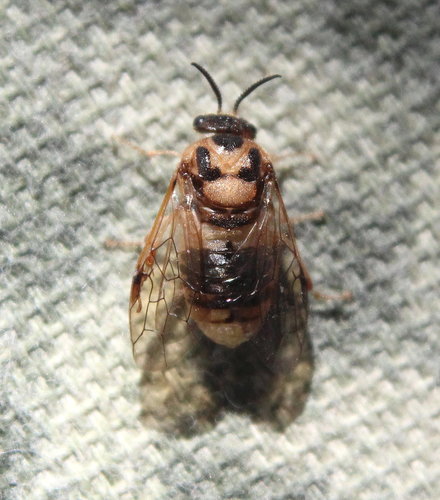
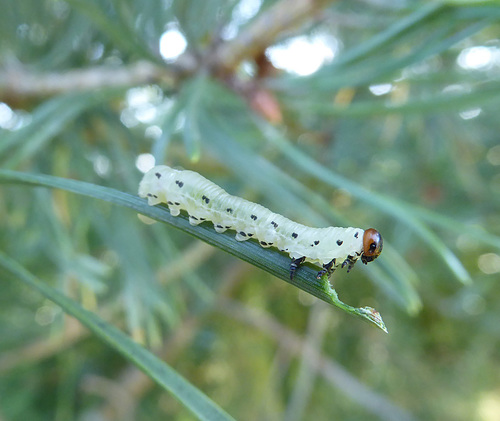
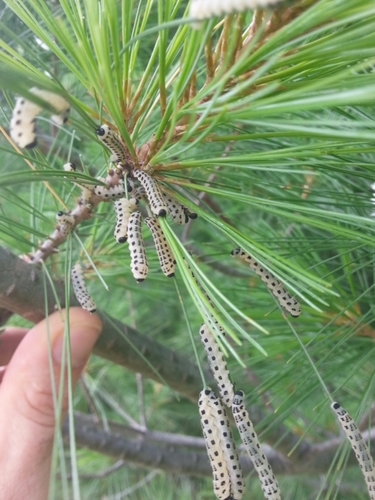
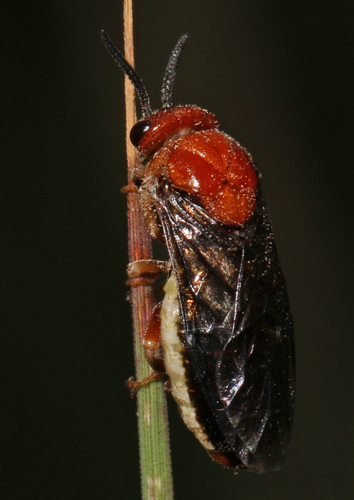
Gilpinia hercyniae, commonly called the European spruce sawfly, was first discovered in North America near Hull, Quebec, in 1922. By 1930, it was causing severe damage to spruce stands in Quebec's Lower St. Lawrence–Gaspé region. Its population grew dramatically, and additional damage later appeared in New Brunswick and the northeastern United States. The total wood loss from spruce mortality caused by this sawfly has been estimated at 10 million cubic metres. By the mid-1980s, populations of this pest across all spruce species in Canada from Manitoba to the Atlantic Ocean, and in adjacent parts of the United States, had become relatively low due to the impact of a spontaneous virus disease and introduced parasites. In Newfoundland, control of the sawfly was aided by the introduction of the masked shrew, a cocoon-hunting insectivore. This sawfly produces either one or two generations per year. In Ontario, larvae overwinter inside cocoons in the forest litter layer, and develop into pupae in the spring. Adults emerge shortly after pupation. Males of this species are very rare, so reproduction typically occurs without fertilization. Females lay their eggs in slits they cut into spruce needles. After hatching, larvae feed on older needles during June and July. Once fully grown, which occurs when larvae reach about 20 mm in length, they drop to the ground and spin cocoons. Adults emerge within a month and lay a second set of eggs; the second-generation larvae hatching from these eggs feed from mid-August through September.