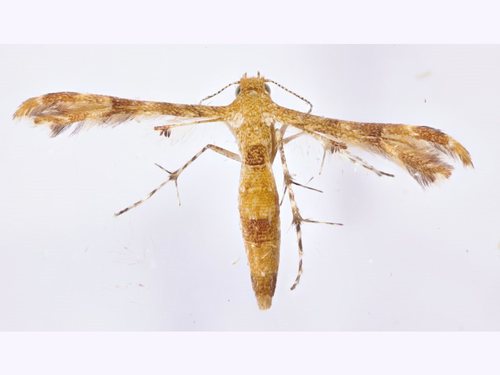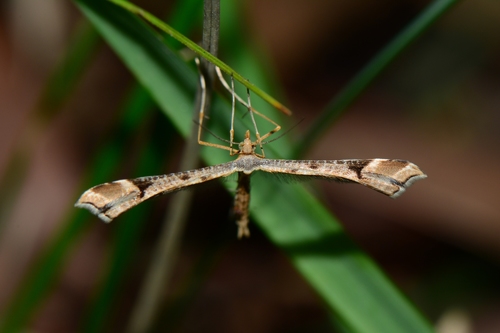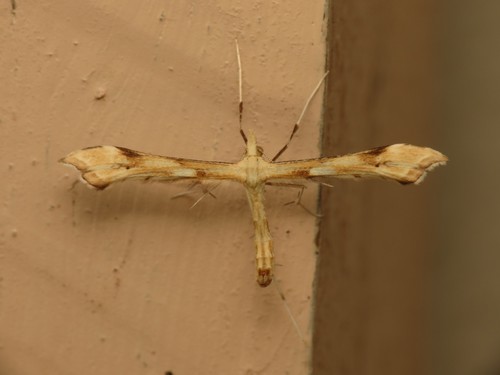
About Gillmeria ochrodactyla (Denis & Schiffermüller, 1775)
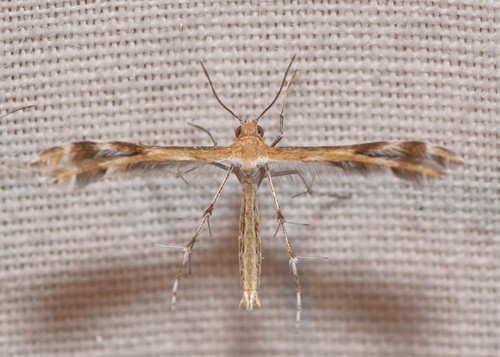
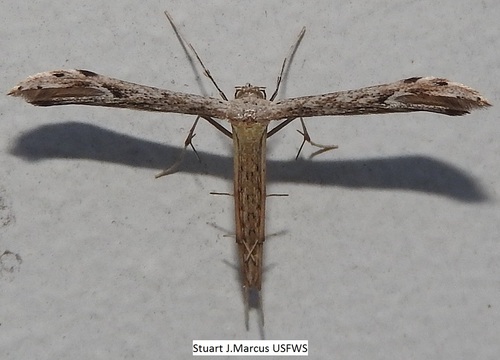
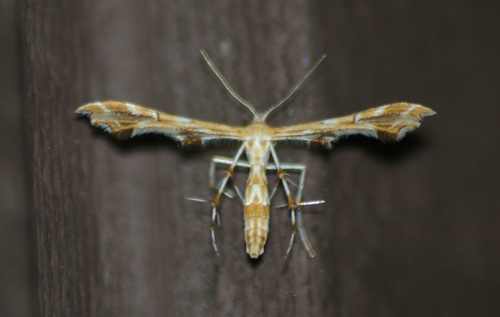
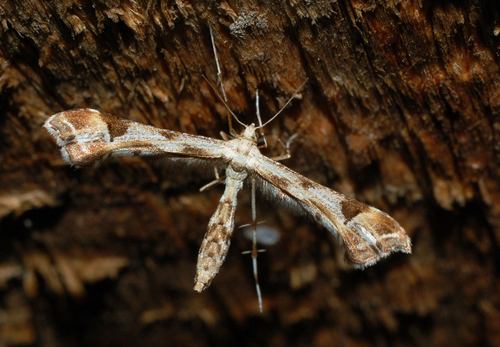
Until recently, this species was known under the scientific name Gillmeria tetradactyla. Today, that name is considered invalid, as it was changed to Gillmeria ochrodactyla to resolve confusion with Platyptilia tetradactyla. Gillmeria ochrodactyla has a wingspan ranging from 24 to 28 millimetres, or 0.94 to 1.10 inches. Superficially, it closely resembles the related species Gillmeria pallidactyla. The two species can be distinguished by leg banding: G. ochrodactyla has distinct brown and white bands on its hindlegs below the middle spurs, while G. pallidactyla has no such banding on its legs. This moth has one generation per year, with adults flying from late June to August. Adults can often be found resting on the flower heads of their larval food plant, tansy (Tanacetum vulgare), and will come to lights after dark. Larvae first feed on tansy flowers in August, then tunnel down into plant shoots. They enter diapause in the plant roots from November through March. In April, larvae move into new-growth stems and mine up to around 2 centimetres of tissue. They may shift to a new position within the same stem or move to an entirely new stem to continue mining until early June. You can find G. ochrodactyla larvae by searching for wilted tansy stems or checking for frass below leaf sheaths. While G. pallidactyla larvae have also been found on tansy, their feeding behavior differs: mature G. pallidactyla larvae feed externally on stems, rather than mining inside them. Gillmeria ochrodactyla is distributed across most of Europe, and has been newly recorded in Iran and Tajikistan.