About Gila atraria (Girard, 1856)
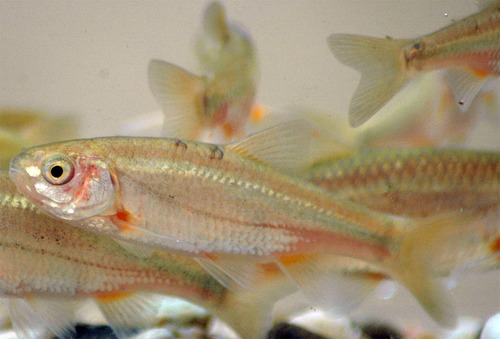
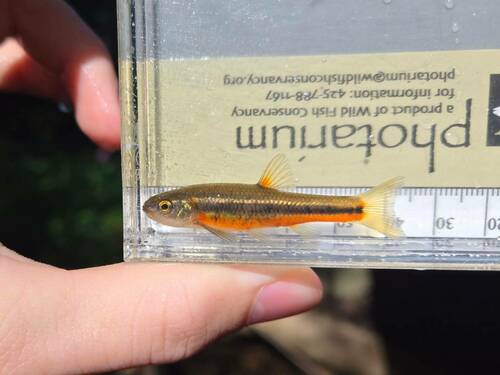
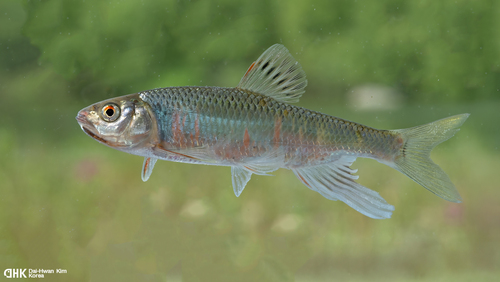
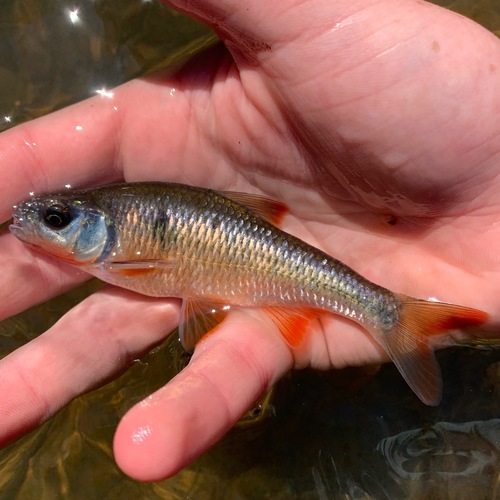
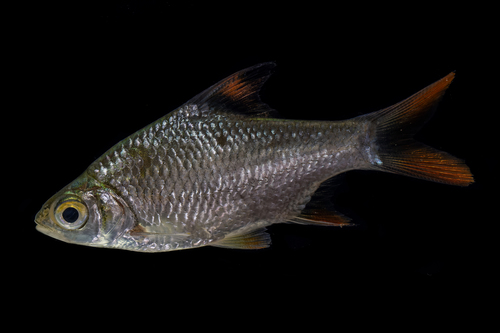
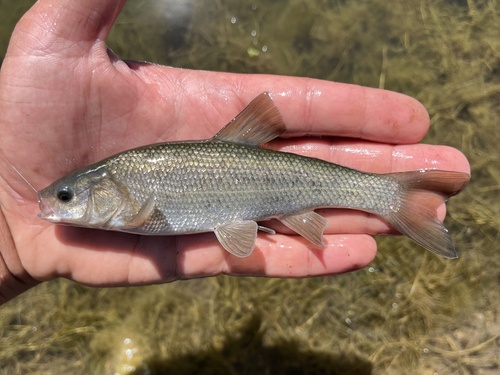
Gila atraria, commonly known as the Utah chub, has a dorsal fin with nine rays, positioned directly above its pelvic fins. The species' coloration is variable: its dorsal side is typically olive-green ranging to nearly black, sometimes with a bluish tint, while its sides are silvery, brassy, or golden. Males tend to have a stronger golden appearance, especially during spawning season, and often develop a narrow golden stripe along their upper side. Its fins can be olive-green, yellow, or golden in shade. A maximum total length of 56 cm (22 in) and maximum weight of 1,360 g (48 oz) have been recorded from specimens caught in Bear Lake, though a size of 15–20 cm (5.9–7.9 in) is more typical for the species across most locations. Age estimates made from pectoral rays and otoliths indicate that Utah chub can live for more than 10 years, though most individuals in most populations are younger than seven years old. The native range of the Utah chub covers the Snake River basin in Idaho and Wyoming, and the Bonneville basin in Utah and Idaho. It has been introduced to other areas, including multiple reservoirs in the Colorado River basin of Utah and Wyoming, and the upper Missouri River basin of Montana. Most introductions of Utah chub are believed to have occurred from accidental release via anglers' bait buckets. Utah chub occupy a wide range of habitats, from small irrigation ditches to large rivers and lakes. Within these water systems, they prefer areas with dense vegetation. The species is also tolerant of extreme environmental conditions, including high alkalinity. Utah chub reproduce via broadcast spawning, which takes place in shallow water during late spring and summer, when water temperatures reach approximately 10–15 °C (50–59 °F). Peak spawning activity occurs when water temperatures are around 16 °C (61 °F). During spawning, each female is accompanied by 2 to 6 males, who externally fertilize eggs after the female deposits them on the bottom of the lake or river. Eggs hatch roughly one week after being laid, though hatching time varies depending on water temperature.