About Gerygone mouki Mathews, 1912
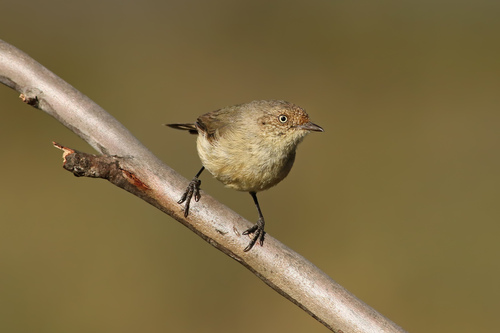
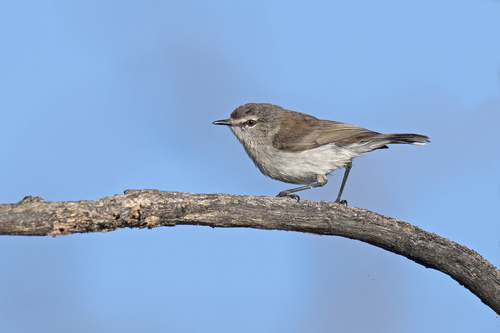
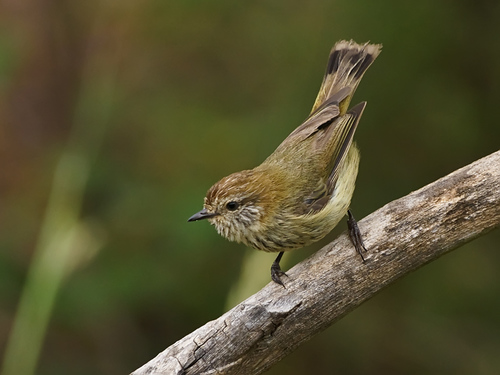
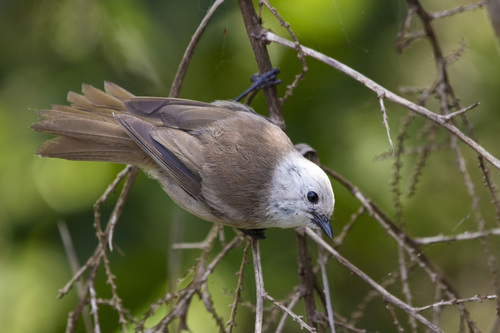
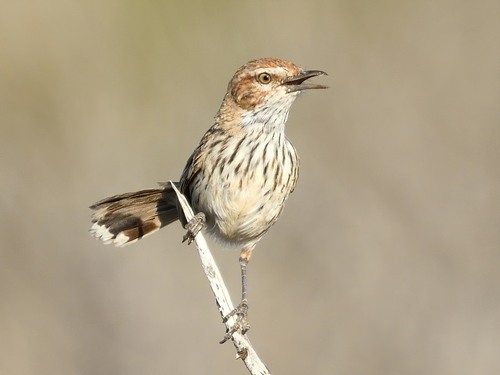
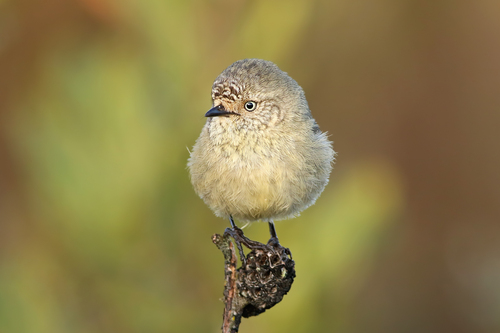
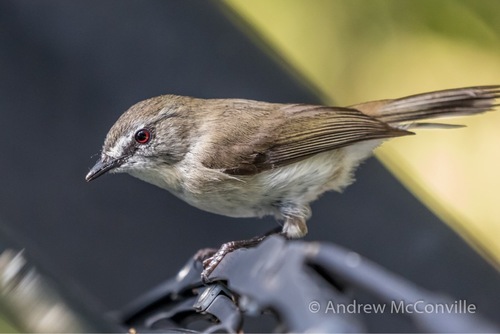
The brown gerygone (scientific name Gerygone mouki Mathews, 1912), previously called the brown warbler, is a small passerine bird native to eastern coastal Australia. The upperparts of the brown gerygone are deep olive-grey or olive-brown, while its face and underparts are much paler grey, cream, or washed-out brown. Its tail feathers are dark and may have white tips. The species is approximately 10 centimetres long. The brown gerygone has a relatively large range. Although total population trends have not been measured, the IUCN classifies this species as of 'least concern'. Brown gerygones can be sighted in coastal rainforest, occurring alone or in small groups of two to four. They feed on insects. The call of the brown gerygone is a soft what-is-it. It is not closely related to true Old World Warblers or New World Warblers; instead, it belongs to the Corvida parvorder, which includes many tropical and Australian passerines as well as crows. The brown gerygone is similar to the large-billed gerygone (G. magnirostris) and the mangrove gerygone (G. levigaster). It differs from the large-billed gerygone by having a distinctive white eyebrow and a grey-tinged face. While the mangrove gerygone also has a white eyebrow, it lacks the grey face, has more white on the flanks, and has a redder eye.