About Gerris lacustris (Linnaeus, 1758)
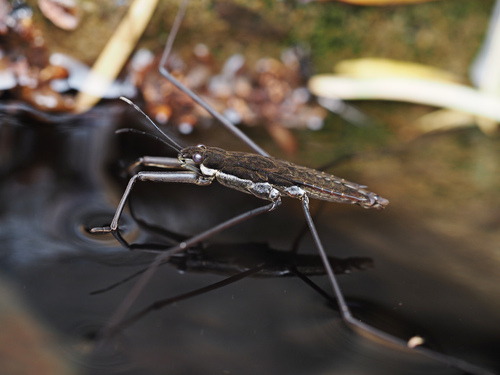
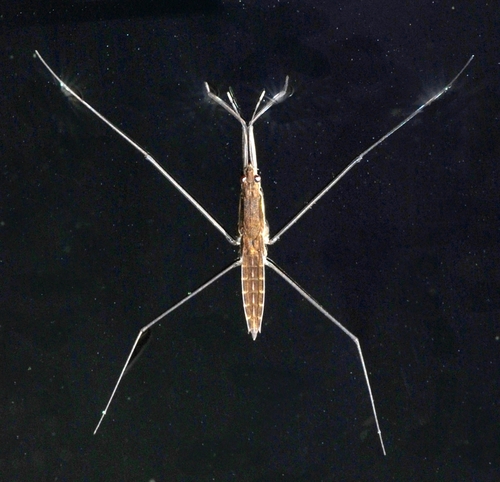
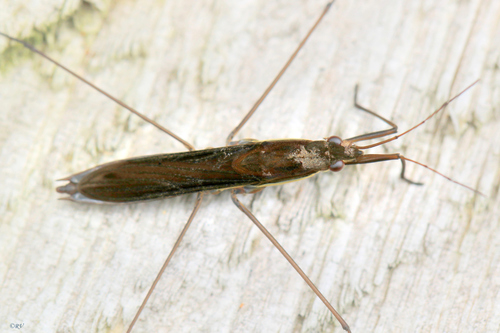
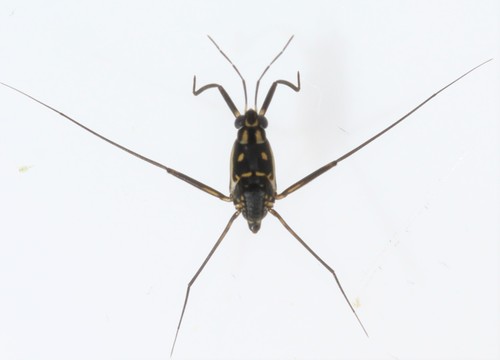
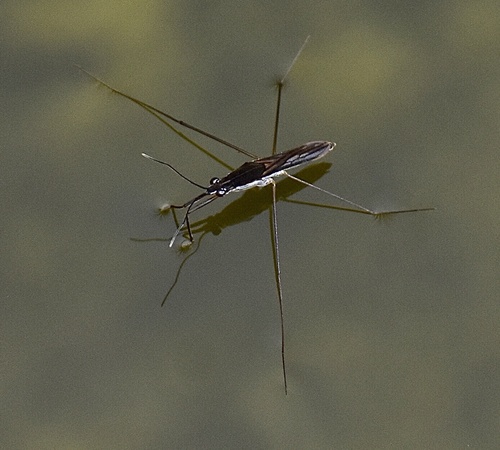
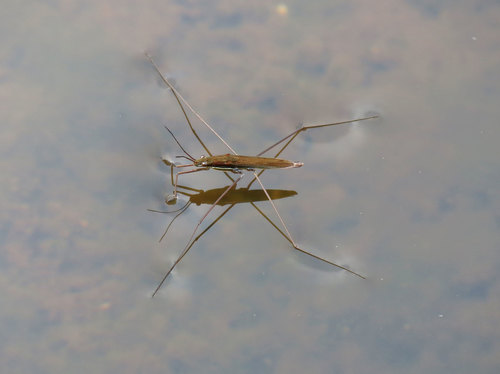
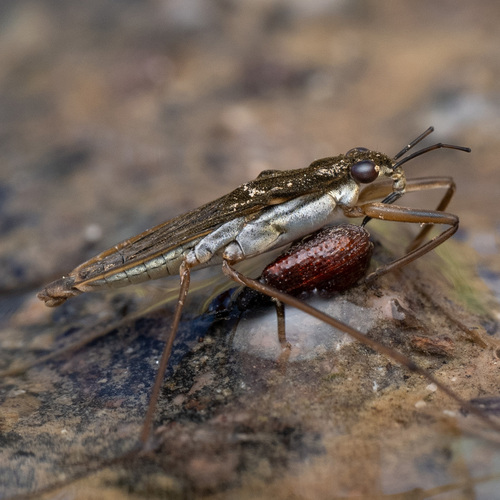
Gerris lacustris, commonly known as the common water strider, adults range in body length from 8 millimetres (0.31 in) to 10 millimetres (0.39 in). They have a very slender, elongated body, and six legs: the first pair is short and stubby, while the middle and hind pairs are thin and elongated, enabling them to move across the surface of water, an ability commonly referred to as walking on water. Each pair of legs has a distinct function: the first pair holds prey, the middle pair propels the insect across the water surface via either rowing or jumping motions, and the hind pair acts as a rudder for steering. The entire body of Gerris lacustris, including its legs, is covered in many tiny hairs that have a wax-like coating. This species is dark brown in colour, and has strong sucking mouthparts called a rostrum, or beak. For reproduction, female Gerris lacustris are usually significantly larger than males. Female egg production rate is limited by the availability of food resources: more available food leads to more eggs laid by the female. Adult water striders emerge around April and May. Females lay eggs around this time, and eggs take approximately 12 to 14 days to complete development before they are ready to hatch. Hatching does not occur immediately once development is complete; hatching timing depends heavily on the environmental temperature the eggs are exposed to. After hatching, Gerris lacustris undergo a development process called incomplete metamorphosis. In this process, larvae, also called nymphs, progress through a series of moults, with each stage called an instar. There are five instars in total during development, and each instar is progressively longer than the previous one. The full incomplete metamorphosis process from hatching to adulthood usually lasts between 24 and 30 days. When other males are present, male Gerris lacustris prolong their mating to guard their female against harassment from other males. Research has found that males influence how long copulation lasts, while females influence how frequently copulation occurs. Gerris lacustris is a predatory insect. The species hunts for insects and other small invertebrates on or below the water surface, using its strong claw-tipped forelegs. It uses its piercing and sucking mouthparts to consume small insects that have fallen onto the water surface, and feeds on both live and dead insects including Culiseta annulata, non-biting midges, and other aquatic invertebrates. The front pair of legs can detect ripples and sense vibrations in the water's surface film from struggling insects, and is also used to grasp and handle captured prey. After catching prey, Gerris lacustris consumes other small invertebrates and digests them internally.