About Gerbillus cheesmani Thomas, 1919
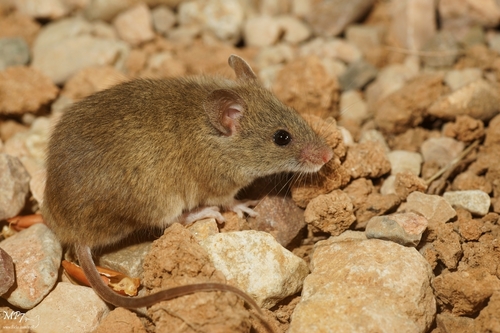
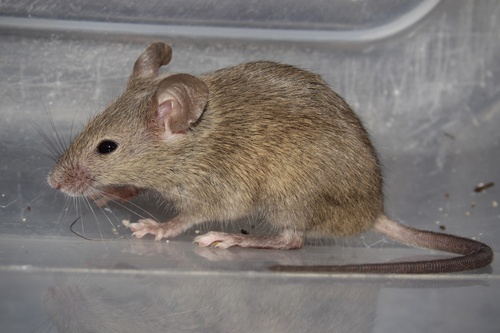
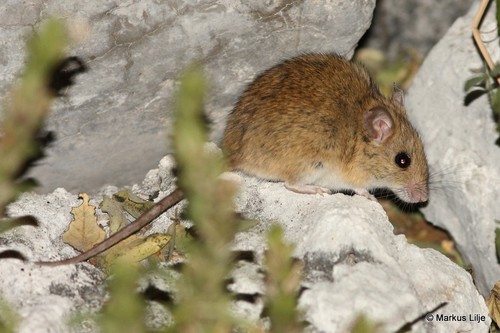
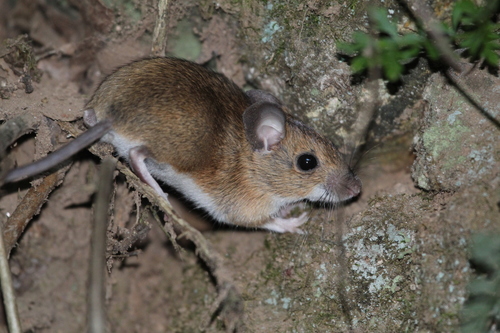
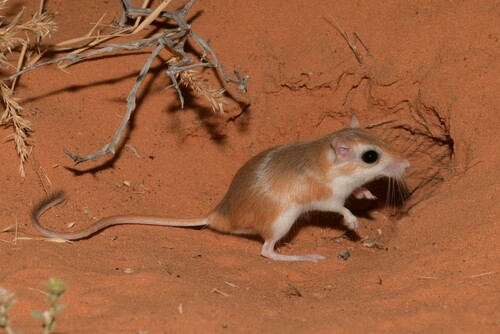
Cheesman's gerbil, Gerbillus cheesmani Thomas, 1919, is similar in appearance to the lesser Egyptian gerbil (Gerbillus gerbillus) and Anderson's gerbil (Gerbillus andersoni). Its head-and-body length ranges between 70 and 110 mm (2.8 and 4.3 in), while its tail length measures between 90 and 135 mm (3.5 and 5.3 in). Like the two similar species, the soles of its feet are covered in hair. Its upper body fur is orange-brown, and its underparts are white. Cheesman's gerbil is native to the Arabian Peninsula and the Middle East. Its known range includes Saudi Arabia, the United Arab Emirates, Oman, Yemen, Kuwait, Iraq, Iran, Syria and Jordan. Its natural habitat consists of arid plains with sandy soils, deserts, and flat coastal salt pans called sabkha. It is commonly found in areas where Haloxylon, Calligonum, Ephedra alata and Artemisia plants grow. This is a nocturnal species. It stays in a burrow to avoid daytime heat, and emerges at night to forage for seeds and grasses, though it may become omnivorous in some situations. The hair on the soles of its feet is an adaptation for running across sand, and the species is also capable of making long leaps. By feeding at night, it can utilize dew on plants, and it conserves moisture by producing dry faeces and very little urine. It carries damp vegetation back to its burrow, which raises the humidity inside the burrow. The burrow entrance is often located at the base of a shrubby plant. When the gerbil enters the burrow, it closes the entrance by flicking sand across it with its tail. It is preyed on by predators including owls, the Arabian red fox, and Rüppell's fox.