About Geranium nodosum L.
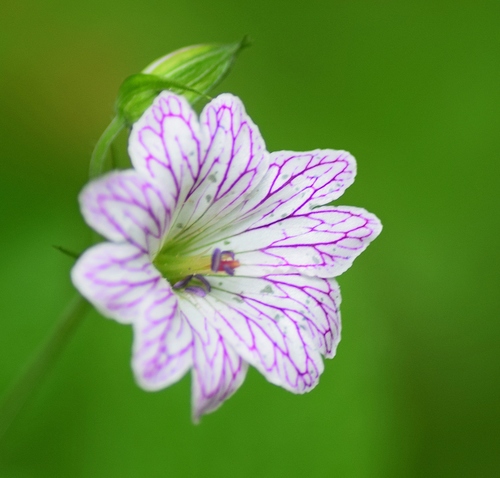
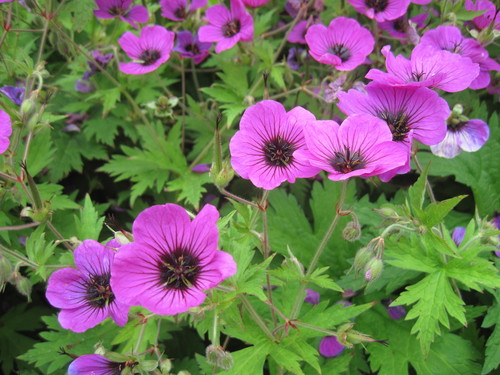
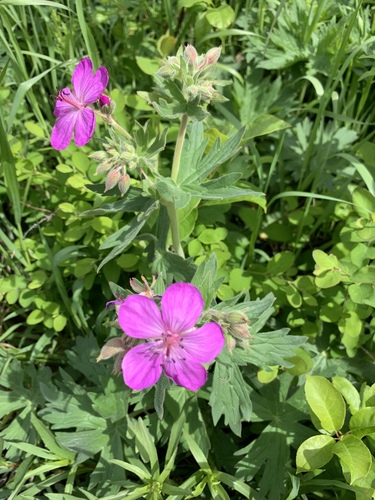
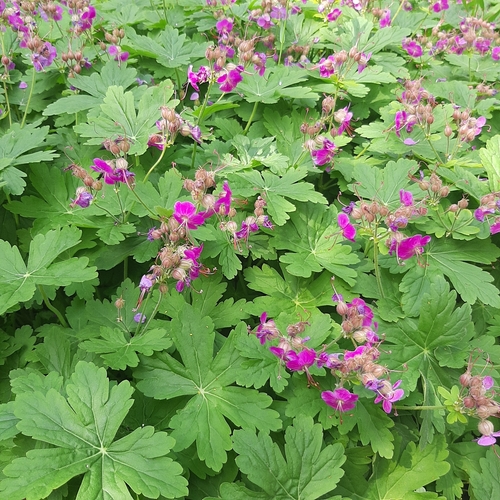
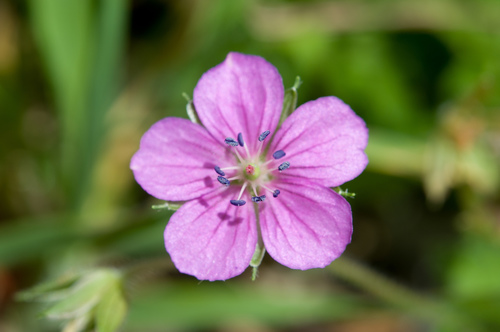
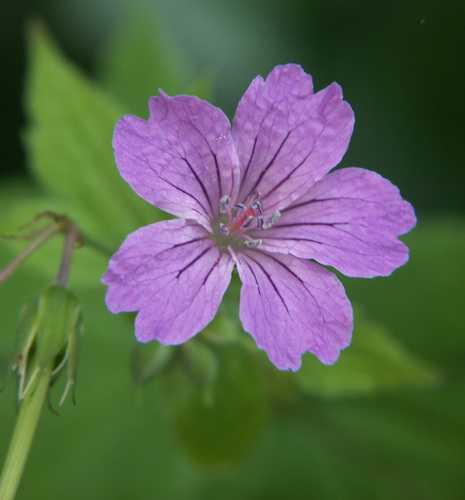
Geranium nodosum L. is a rhizomatous geophyte, meaning it spreads via a rhizome — a horizontal reproductive stem that produces new aboveground stems and roots below the soil surface. In winter, this species loses all aboveground foliage, surviving as an underground rhizome. Mature plants usually grow 20 to 30 centimeters (7.9 to 11.8 inches) tall, reaching a maximum height of 50 centimeters (20 inches). Its stem is erect, slender, branched, and covered in hairs. The leaves are palm-shaped with 3 to 5 lobes, and grow on leaf stalks called petioles. The upper leaf surface is dark green and hairless, while the lower surface is light green and covered in a short layer of hairs. Each individual flower grows on a long stalk. It has five obovate petals that range in color from lilac to violet. This species flowers from June to August. Its flowers are entomophilous, meaning they are pollinated by insects. Its fruit is a fuzzy capsule that holds approximately five achenes. This plant is native to southern Europe, and grows naturally in the Alps, Jura, and Pyrenees. Its typical habitat is deciduous forest margins, growing alongside oak, beech, and chestnut trees. It grows on both calcareous and siliceous substrates that have a neutral pH and average soil moisture. It can be found at altitudes between 100 and 1,300 meters (330 to 4,270 feet) above sea level.