About Geranium molle L.
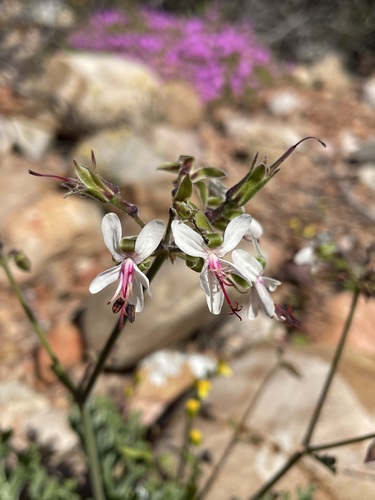
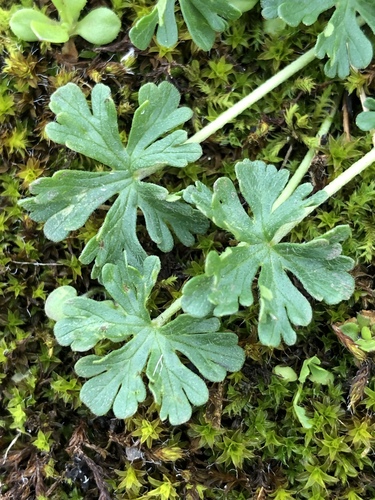
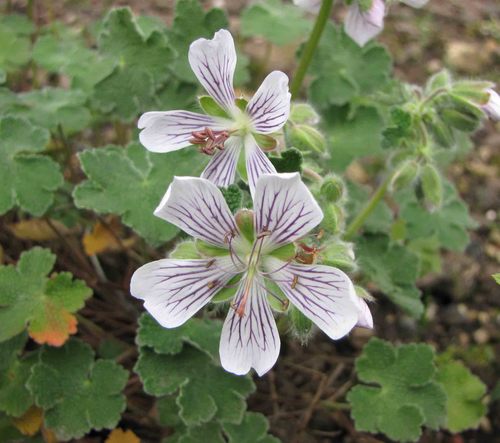
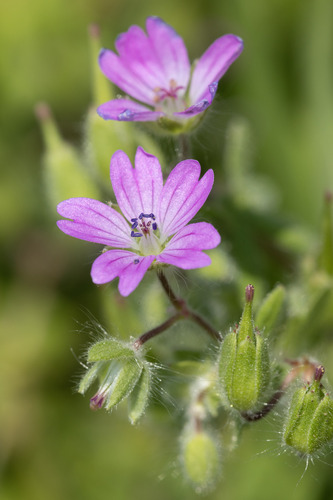
Geranium molle L. is a small plant that averages 5–30 centimetres (2.0–11.8 in) in height. It is heavily branched, quite hairy, and produces multiple ascending stems. Its leaves are palmate and cut 5 to 9 times. Basal leaves grow in a rosette arrangement, while upper leaves are sessile, rounded, and hairy; the lower basal leaves have a long petiole about 5–12 millimetres (0.20–0.47 in) long. The flowers of Geranium molle are pinkish-purple, 8–12 mm in diameter, and have very jagged petals. This plant blooms from April to September. Its flowers are hermaphrodite and are mainly pollinated by Hymenoptera. The fruits are glabrous, and usually have 6 to 9 transverse ridges. Geranium molle is native to Mediterranean and sub-Mediterranean areas, but has naturalized in other parts of Europe, southwestern and central Asia, and North Africa. It is possible the species was already present in these areas but had not been correctly identified previously. It is classified as an introduced species in North America, where it is commonly called Dovefoot Geranium or Awnless Geranium. Although it is non-native in some parts of its current range, the species poses little threat to native ecosystems. It grows in dry meadows, hedges, banks, and forest edges. It prefers sunny locations on sandy, relatively dry soils, and occurs at altitudes between 0 and 1,000 metres (0–3,281 ft) above sea level. In his 1652 herbal, Nicholas Culpeper recorded a variety of herbal uses for Geranium molle, including treating both internal and external injuries. He noted that bruised leaves of the plant healed external injuries faster, and that a decoction of the plant prepared in wine was said to relieve gout and other joint pains.