About Geranium lucidum L.
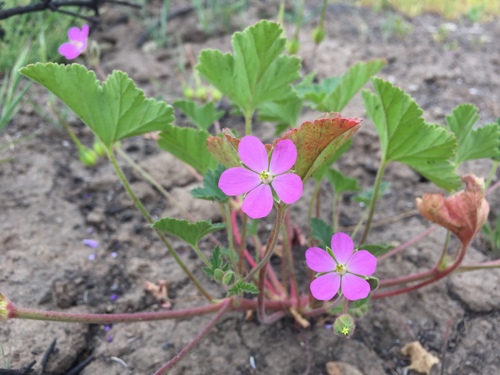
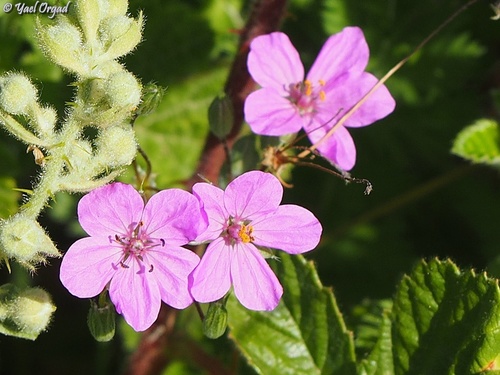
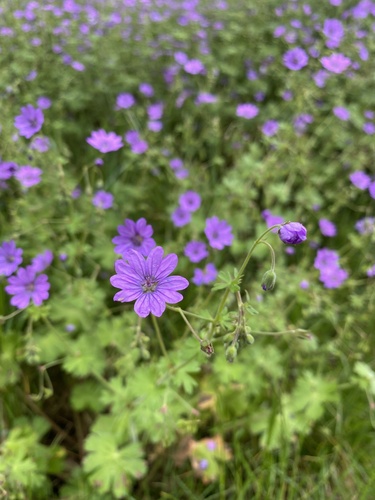
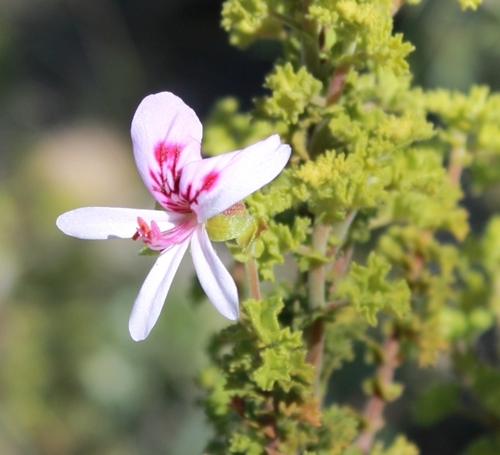
Geranium lucidum L., commonly called shining cranesbill, is an annual plant. Its stems grow up to 35 cm (14 in) long; they are brittle, fleshy, hairless, and often red. The plant's leaves are round or kidney-shaped and glossy. They are palmately lobed or bluntly divided to around two-thirds of their depth, and the upper leaf surface sometimes bears short hairs. Flowers have parts arranged in groups of five, with sharply keeled sepals and bright pink, rounded petals. The whole flower is roughly 10 mm (0.4 in) in diameter; the petals themselves are 8 to 10 mm (0.3 to 0.4 in) long, with long bases and flat blades. Flowers are produced in pairs from May to August. The fruits are beaked capsules that are ridged and slightly hairy, at least along their edges, and split open into five sections when mature. The seeds of this species are smooth. The entire plant often develops a red coloration as it grows. This species is native to Europe, Asia extending east to the Himalayas, and northern Africa. It is common across Great Britain and Ireland, particularly in the southwest and west of the region, but uncommon in Scotland. It grows at altitudes up to 610 m (2,000 ft). It has been cultivated as a garden plant in parts of the United States, and has become naturalized in the Pacific Northwest. Shining cranesbill is common on limestone rocks and walls, as well as in churchyards, roadside verges, banks, gardens, and bare ground. It grows well in chalky or sandy soil, and is also common in acid soils and on shady banks. The species has strong seed dispersal abilities: the mature capsule explosively ejects its seeds, which allows new plants to establish up slopes, and colonize higher crevices in tree trunks and wall recesses above the parent plant.