About Geranium bicknellii Britton
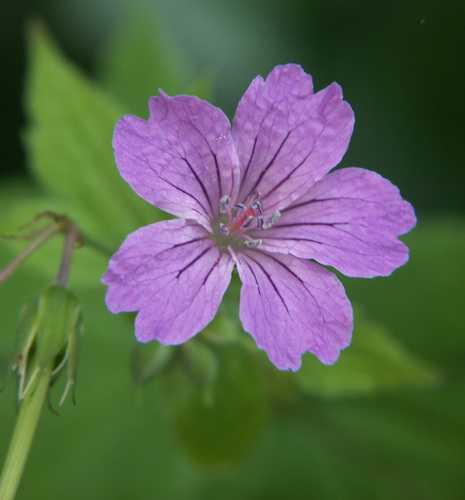
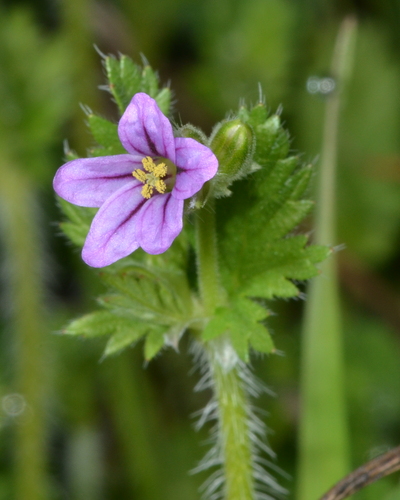
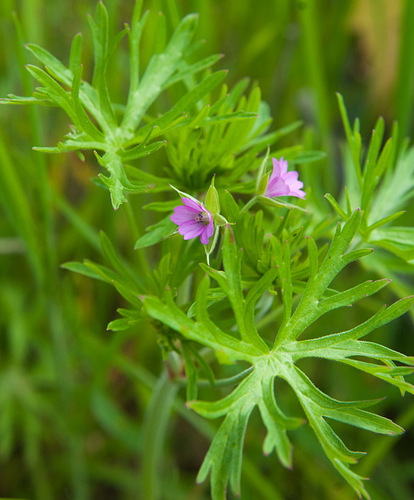
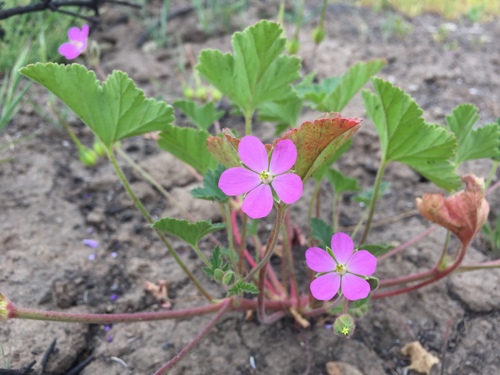
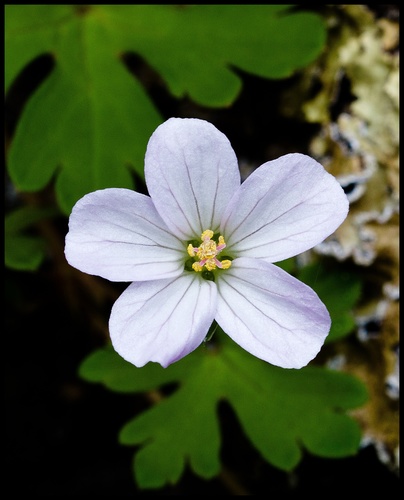
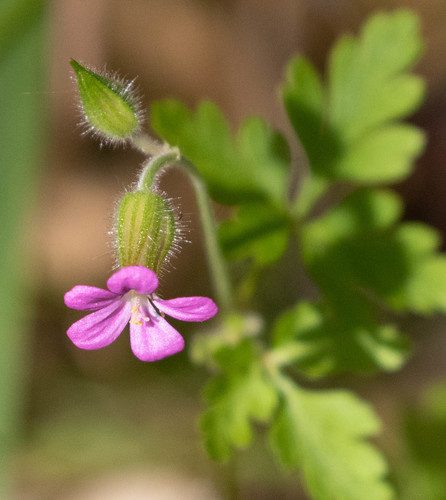
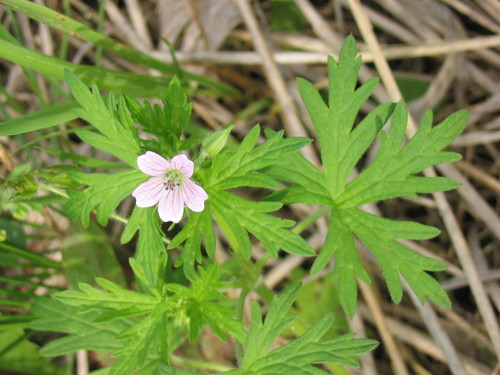
Geranium bicknellii is a species of geranium commonly known as Bicknell's cranesbill and northern cranesbill. It is native to most of the northern half of North America, where it grows in a variety of forest and woodland habitats. This species is an annual or biennial herb that produces hairy stems up to roughly half a meter long. Stems may grow erect or spread low along the ground. Each leaf is several centimeters in both length and width, and is divided into several lobes; each of these main lobes may bear smaller lobes or teeth. Flowers occur singly or in pairs, with pointed sepals and small lavender petals, each of which has a notch at the tip. The fruit has a rounded base with a long, straight style around 2 centimeters long, tipped with a small beak.
Geranium bicknellii is a fire-adapted species, and grows most abundantly in recently burned forests. Its seeds remain dormant while buried in the forest floor, sometimes for centuries, until a fire removes organic litter and exposes the seeds to sunlight. After a fire, the geraniums germinate, bloom, and produce large amounts of seed for several years, until other plants grow large enough to shade them out. New seeds then enter dormancy in the soil to wait for the next fire.
The leaves of this species and some related species are hard to distinguish from the leaves of some plants in the buttercup family Ranunculaceae, particularly members of the genera Aconitum (monkshood) and Delphinium (larkspur). They have also been confused with members of the genus Ranunculus, also in this family, such as meadow buttercup (Ranunculus acris). Because Ranunculaceae species with similar leaf shapes are toxic if ingested, and sometimes even if touched, this is especially true for Aconitum species, it has been suggested that this similarity is an example of mimicry that is selectively favored because it reduces herbivory. However, the similarity could also simply be a case of coincidental convergent evolution. Since the family Ranunculaceae is an especially ancient lineage, other plant families have had a great deal of time to evolve mimicry of its characteristics through herbivore-driven selection.