About Geotrupes stercorarius (Linnaeus, 1758)
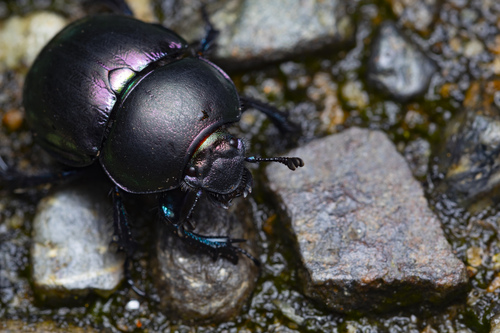
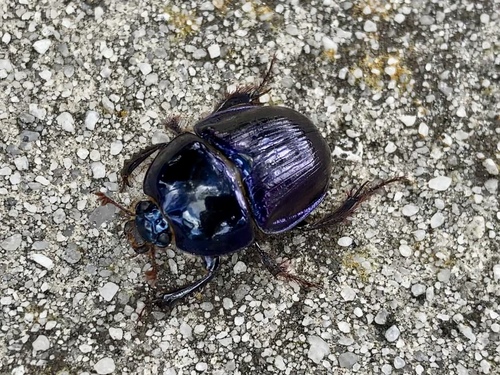
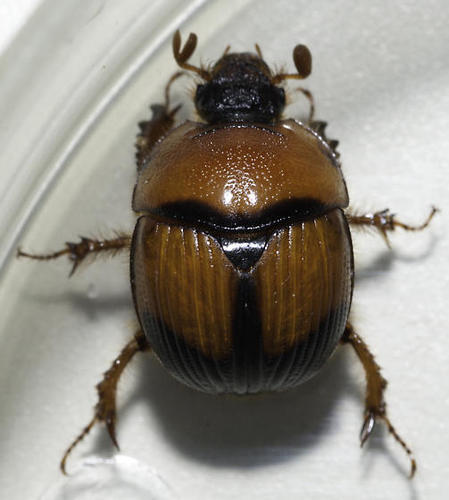
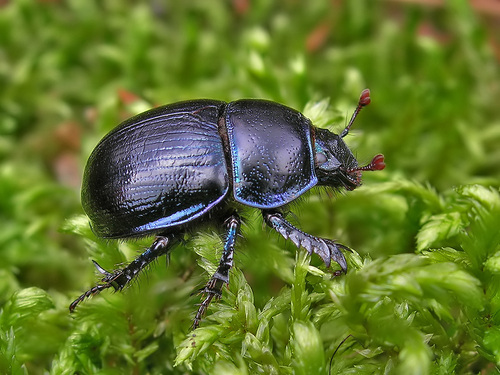
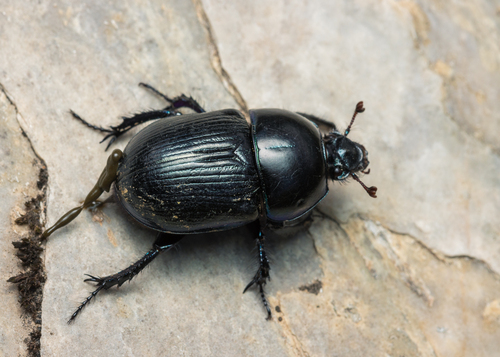
This species of beetle reaches up to 2.5 cm (1 in) in length. The entire body is dark-colored with a weak sheen, and sometimes has a bluish tint. Its body shape is very compact, with an arched upper surface. Each elytron has seven just-visible long rows of punctures. The head is positioned clearly forward and shaped like a shovel. The antennae are short, and thicken into fan-like structures at the tip. Each leg has numerous spikes. Geotrupes stercorarius is coprophagous, meaning it feeds on the droppings of herbivorous animals. It prefers horse dung, but is also commonly found in cattle dung, and has also been recorded from other dung sources and rotting fungi. Adult beetles emerge a little later in the year than the related species G. spiniger, generally starting from April or May. They can be found anywhere that suitable host material is abundant, including cattle pastures, moorland, and hillsides. They are mostly crepuscular or nocturnal, and can be seen flying, often around resting cattle in fields, or they may be attracted to light in large numbers. Mating takes place in spring. Both sexes dig a vertical burrow directly below the dung they use as a host; the burrow can be up to 50 cm (20 in) deep, depending on the substrate. Once the main burrow is complete, the female digs a series of horizontal brood chambers branching from the main burrow. Each chamber is stocked with dung, a single egg is laid, then the chamber is sealed with soil excavated from digging the next chamber. Larval development takes place through the summer. Some larvae pupate to produce new adults in autumn; these adults feed and then overwinter inside the burrows. Other larvae stay in their brood chambers and pupate in spring, producing adults that emerge slightly later. In the evenings, these beetles can be observed circling closely around animals on the ground. They produce a chirping sound using their hind legs.