About Geothlypis flavovelata Ridgway, 1896
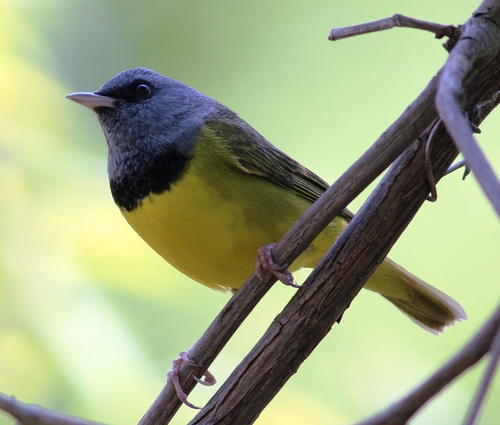
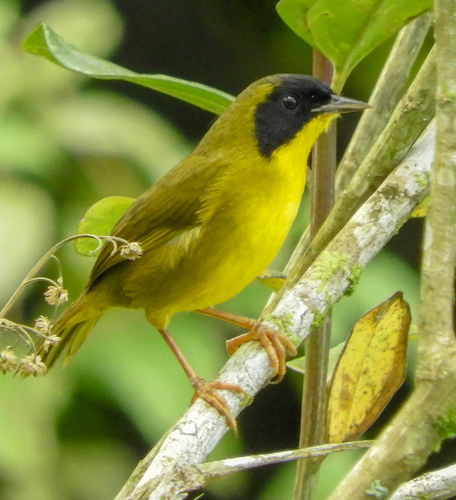
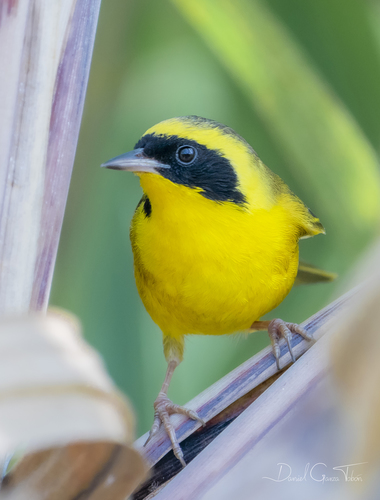
The Altamira yellowthroat, scientifically Geothlypis flavovelata Ridgway, 1896, measures 13 cm (5.1 in) in length. It has a yellow-green back and a bright yellow belly. Adult males of this species have a black face mask and a yellow crown, while females have a similar overall appearance but lack the black mask and have an olive crown instead. This species can be easily distinguished from wintering common yellowthroats by its uniform yellow underparts; common yellowthroats have white bellies in contrast. The yellow forehead band found on male Altamira yellowthroats is a diagnostic identifying feature. The vocalizations of the Altamira yellowthroat are very similar to those of the common yellowthroat, and the two are not readily distinguishable by the human ear. Despite this similarity in vocalizations, Altamira yellowthroats and common yellowthroats do not respond to recordings of one another's songs. This is a resident species that lives in freshwater marshes, including canals and drainage ditches, and it particularly favors habitats with cattails. Very little is currently known about the breeding or feeding habits of the Altamira yellowthroat. However, other yellowthroat species build cup-shaped nests low in vegetation and feed on insects, usually capturing their prey in dense vegetation, so it is likely that the Altamira yellowthroat shares these habits.