About Geothelphusa miyazakii (Miyake & Chiu, 1965)
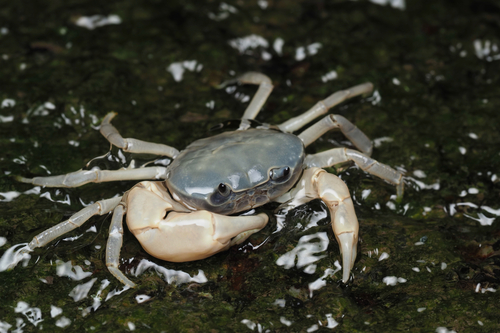
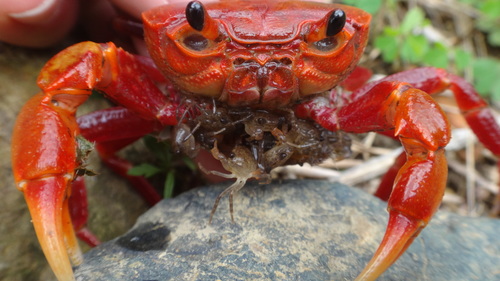
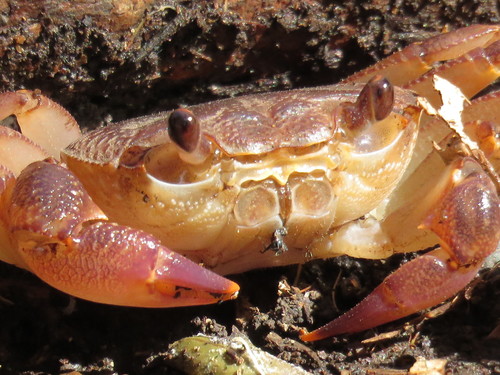
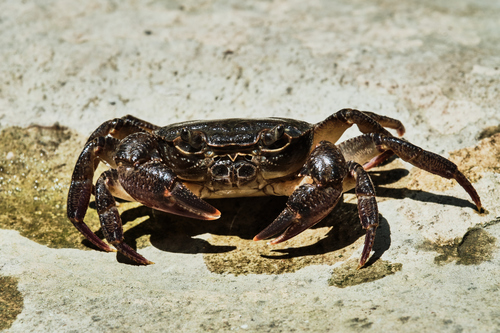
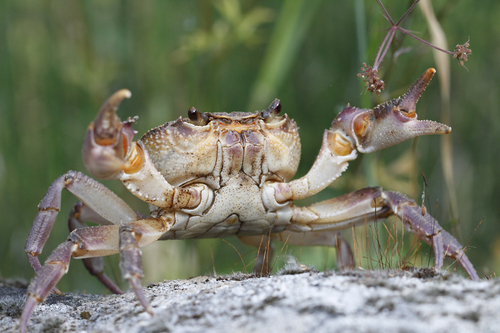
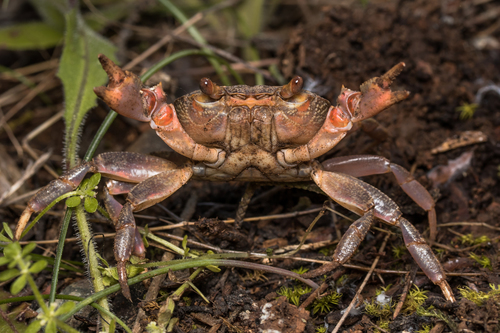
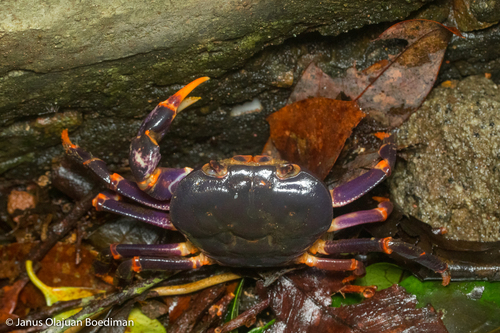
Geothelphusa miyazakii was first described by Miyake & Chiu in 1965. The carapace of this crab is nearly quadrate and smooth, measuring approximately 23 mm long and 29 mm wide. Its body is predominantly dark purple, with distinct orange coloration on the chelae (claw fingers) and limb joints. This species shows clear sexual dimorphism: males have unequal-sized chelipeds, while females have smaller, more symmetrical claws. Its walking legs are slender, and bear fine spines and setae (bristles). Geothelphusa miyazakii is native to Taiwan, where it is known to occur in northern regions including Taipei, New Taipei, Keelung, and Yilan. It lives in low-elevation mountain streams between 50 and 200 meters above sea level, and shelters in mud burrows or under rocks in moist, shaded environments. This species is primarily nocturnal: it stays hidden during the day, and becomes active to forage at night. It is an omnivore that feeds on algae, aquatic vegetation, and small invertebrates, and may consume up to half its body weight in food each day. It uses its claws for digging, handling food, and self-defense, and has keen eyesight paired with a strong sense of smell. During reproduction, females carry fertilized eggs on their abdomen for around 20 days until the eggs hatch. Juveniles of this species are aquatic, and stay dependent on water until their respiratory system develops enough to tolerate more terrestrial conditions.