About Geophilus carpophagus Leach, 1815
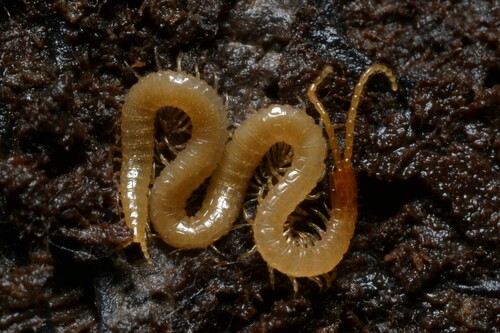
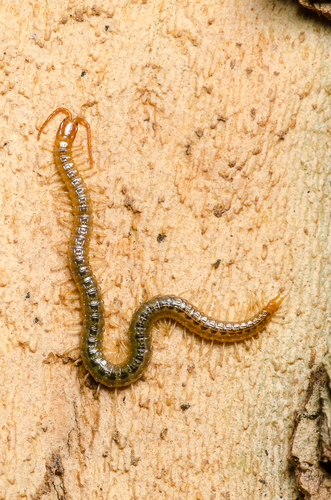
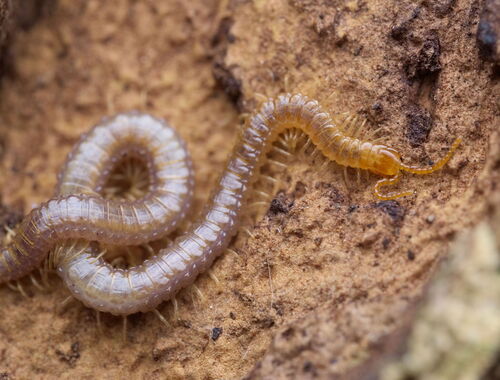
Geophilus carpophagus Leach, 1815 is a species of soil centipede that belongs to the family Geophilidae. This species can grow up to 60 millimeters in length. It has an orange or tan body marked with a distinctive purplish marbled pattern, a pattern that is also seen in the species Henia vesuviana. Males of Geophilus carpophagus have 51 to 55 pairs of legs, while females of the species have 53 to 57 pairs of legs. Geophilus carpophagus is widespread across mainland Europe, north-western Africa, and Macaronesia, which includes Madeira, the Azores, the Canary Islands, and Cape Verde. A viable population of this centipede was first discovered in Finland in 2018. In the north of England, the species is found exclusively in coastal areas, where it occurs on cliff sites located above the high tide mark. In non-coastal locations, it is typically found living 1 meter or more above ground level, in habitats including rocks, walls, buildings, and trees. Geophilus carpophagus appears to have stronger adhesive abilities than the related species Geophilus easoni; this stronger adhesion is thought to help the centipede with climbing. Compared to most other British geophilomorphan centipedes, Geophilus carpophagus nests in drier sites. This nesting preference may be linked to its smaller size and lower number of coxal pores when compared to G. easoni.