About Geomys pinetis Rafinesque, 1817
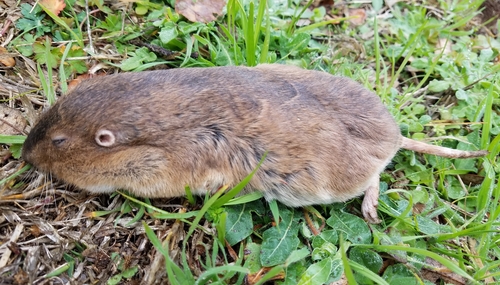
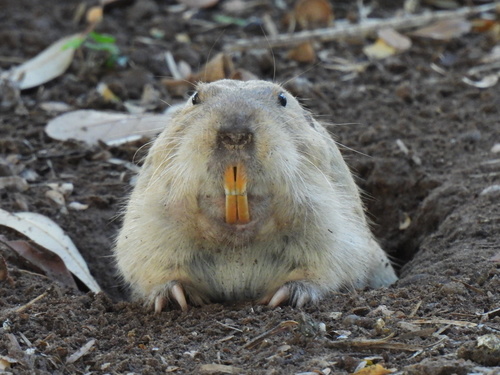
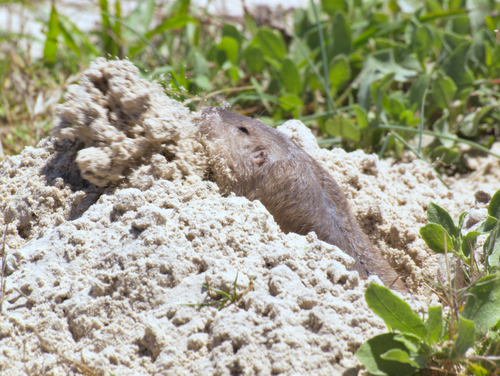
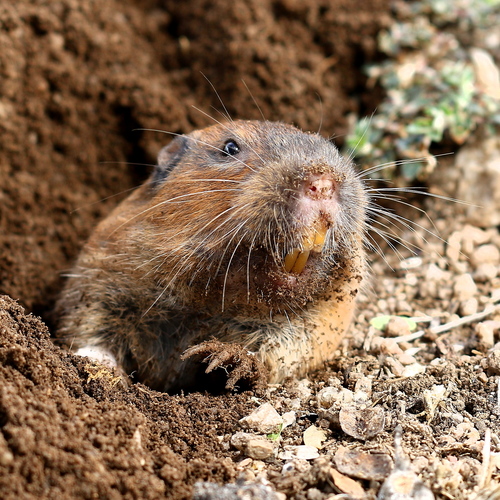
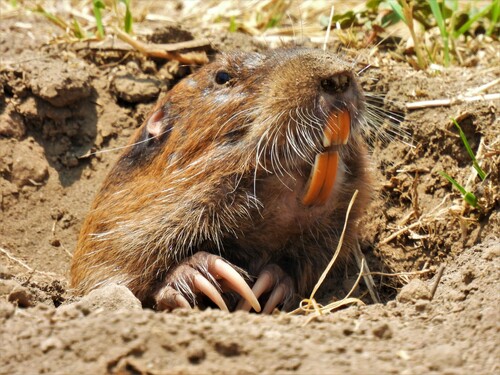
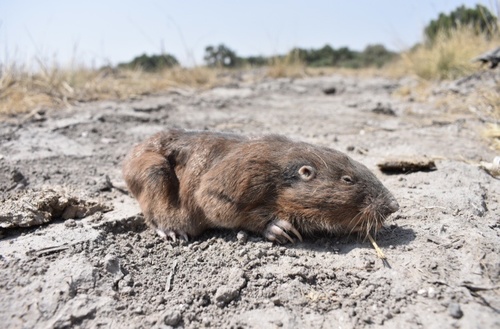
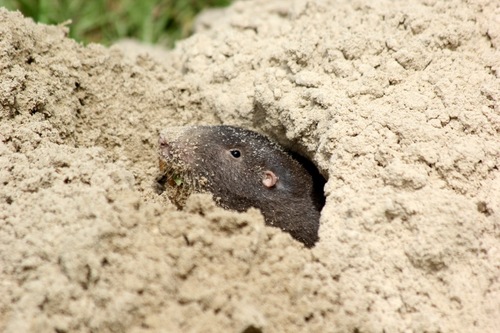
Geomys pinetis, commonly called the southeastern pocket gopher, is smaller than the closely related plains pocket gopher (Geomys bursarius). Its total average length is 260 mm (10.2 in), including a tail that measures approximately 86 mm (3.4 in). Males are larger than females, with an average weight of 176 g (6.2 oz), while females average 136 g (4.8 oz). The gopher’s dorsal fur is cinnamon brown, and its underparts are paler, with a buff or reddish-yellow tint. Its feet and tail are white or pale buff. Like other members of the Geomyidae family, this species has external cheek pouches that can be turned inside-out for grooming. It is well adapted to an underground lifestyle, with large, protruding incisor teeth for tearing roots, and powerful claws on its forefeet for digging. This species is restricted to the southeastern United States, where it occurs in Alabama, Georgia, and Florida. It occupies a range of dry, sandy habitats: it can be found in sand-hill country with longleaf pine (Pinus palustris) and turkey oak (Quercus laevis), as well as in slightly moister hammocks (low mounds) among sand hills that host Quercus virginiana and other hardwood trees. Away from sand dunes, it lives in longleaf pine woodland and scrubby sand pine (Pinus clausa) habitats. The presence of southeastern pocket gophers in an area is obvious from the numerous piles of sandy soil they push to the surface. The subspecies G. p. mobilensis, which occurs west of the Apalachicola River, may be a distinct species. Genetic studies have found it to be genetically distinct from the other subspecies of G. pinetis, and G. p. mobilensis hosts a different louse species than the nominate subspecies; lice typically speciate alongside their host species within the Geomyidae. Geomys pinetis is a solitary animal that digs shallow tunnels, marked by a series of mounds made of excavated soil. The gopher pushes soil up with its front limbs and chest, creating a fan-shaped mound with the tunnel opening at one side. The burrow entrance is immediately blocked with soil after construction. These shallow tunnels connect to a deeper tunnel system via a spiral "staircase". The deeper tunnels hold food storage chambers and a nest chamber, which is lined with dried vegetation and plant fibres. Breeding occurs in spring and summer, with activity peaking around February to March and June to July. The gestation period is about four weeks, and the average litter size is two. Despite this low fecundity, the southeastern pocket gopher is a common animal, which indicates good offspring survival. Evidence that the gophers sometimes emerge above ground includes green forage in their diet and the fact that owls sometimes prey on them. Underground predators are rare, with the main threats being snakes and weasels. The southeastern pocket gopher is active year-round. It feeds on underground roots and rhizomes, and on green plants including grasses, sedges, and weeds that it can reach from near its burrow entrance. It gathers large quantities of vegetation to carry back and store in dedicated chambers in its burrow. Because its burrowing activity promotes plant growth, it has been suggested that southeastern pocket gophers act as farmers. A number of arthropods share the gophers' burrows, including around fourteen species that are not found anywhere else. Southeastern pocket gophers are often drawn to cultivated land, particularly sweet potato crops, and can also be pests in peanut, pea, and sugarcane crops.