About Geodorcus helmsi (Sharp, 1881)
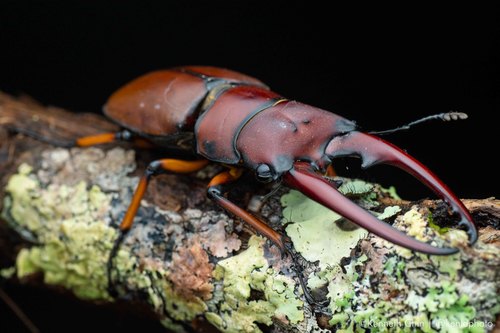
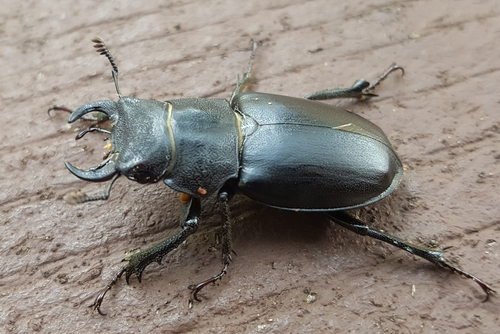
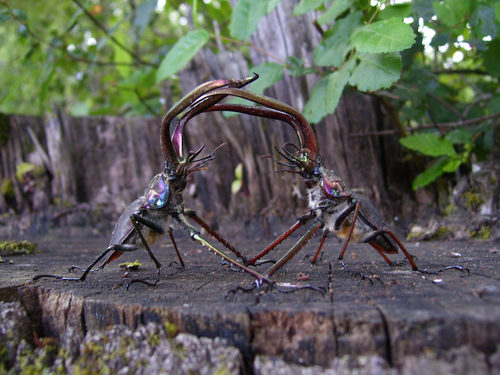
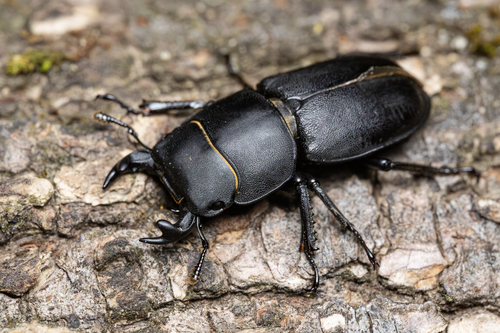
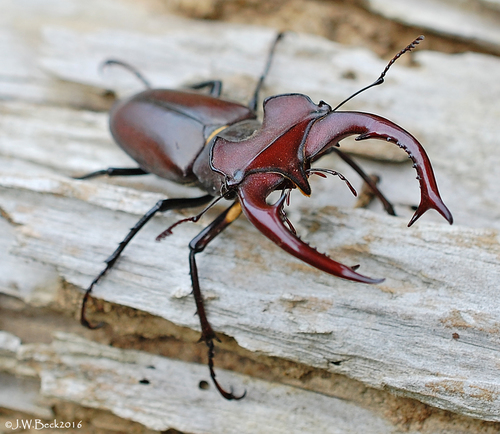
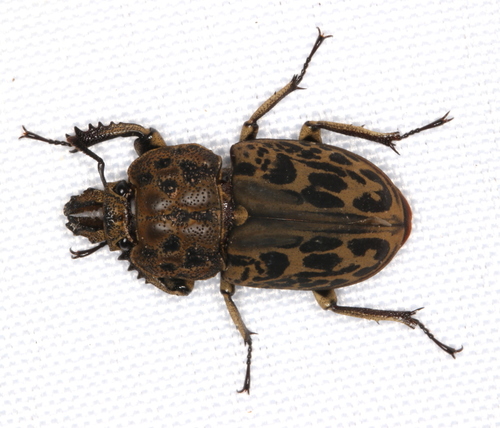
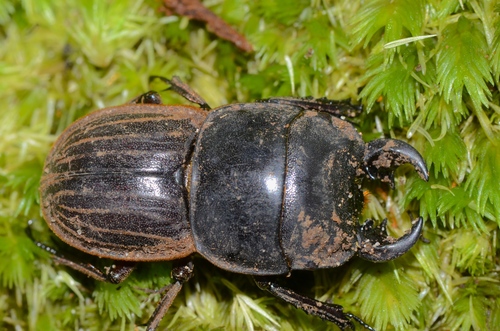
Geodorcus helmsi is a large, flightless stag beetle that ranges in color from black to brownish-black. Its dorsal surface can vary in texture from dull to glossy. Like other stag beetles, this species displays clear sexual dimorphism. When including their large mandibles, males measure between 17.5 millimeters and 44.0 millimeters long, while females are smaller, measuring 16.5 to 27.5 millimeters long with less noticeable mandibles. In larger male individuals, the mandibles are long, slender, and strongly arched, with a distinct tooth positioned near their base. There is no evidence that this species has distinct male morphs. G. helmsi can be told apart from other members of the Geodorcus genus by its straight, non-arched tibiae, and five setose ridges on its elytra. Of the ten recognized Geodorcus species, Geodorcus helmsi is the most widespread. It has been collected from Karamea on the northern West Coast of New Zealand, south across the South Island to Tapanui in West Otago. It has also been found on islands in Fiordland, and on Stewart Island. Adult G. helmsi occupy a broad altitudinal range, growing from sea level up to 1400 meters. All Geodorcus species are primarily nocturnal, and spend daylight hours hiding under fallen logs, stones, or leaf litter on the forest floor. At night, G. helmsi have been observed active on tree trunks, chewing bark to access tree exudate. This species lives in a wide range of variable habitats, including both forested areas and tussock-dominated high country. No published information currently exists about the duration or timing of oviposition, larval, pupal, or adult life stages for any New Zealand stag beetle including this species. Mating copulation has been observed in the month of October. Geodorcus larvae have been found under decaying logs, occupying galleries within the soil layer. They are C-shaped, slow-moving, and avoid light.