About Gentiana villosa L.
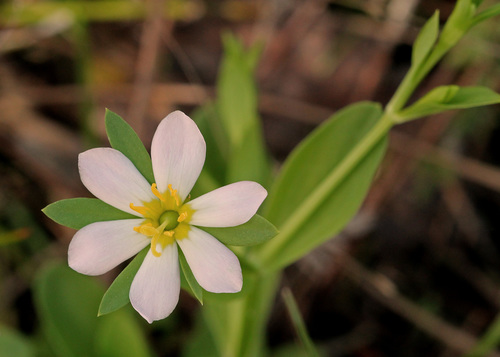
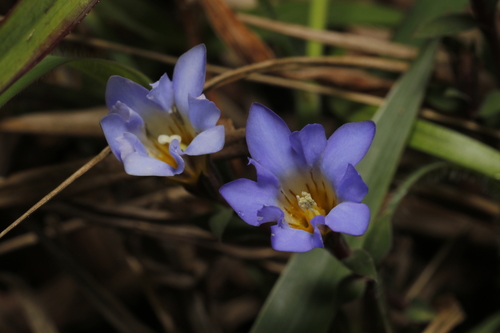
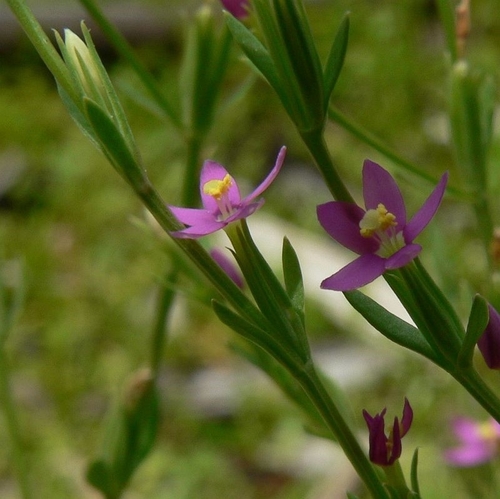
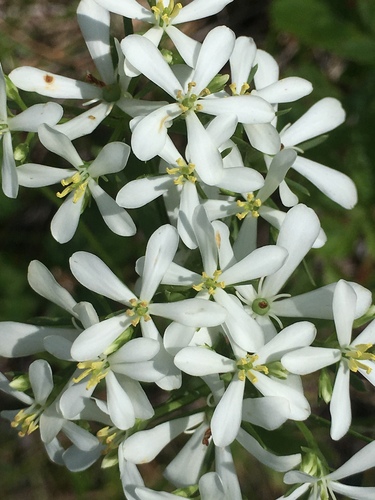
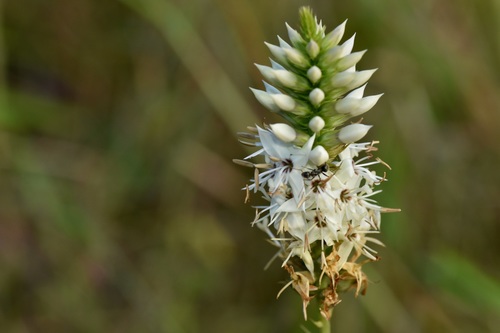
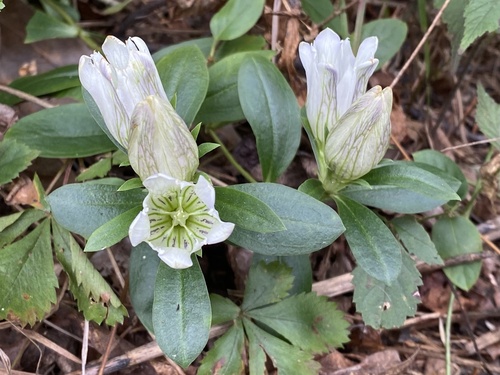
Gentiana villosa L. can grow up to two feet tall. Its leaves are lanceolate in shape, typically wider above the midpoint of the leaf, and are dark green and shiny. Its flowers grow in clusters at the plant’s terminal bud, are white with purple stripes, and are easy to identify by these distinct purple stripes. G. villosa generally blooms from late August to October in the fall. Insects attracted to the plant’s purple stripes and nectar pollinate its flowers. Fruiting occurs from October to November. Unlike the seeds of most other gentian species, the seeds of G. villosa are wingless. The species is widely considered to have been misnamed: the Latin epithet "villosa" translates to "hairy", but G. villosa is actually completely glabrous (hairless). This species is primarily found in pine barrens and open woodlands across 18 U.S. states, ranging from the East Coast to the mid-eastern United States. It has been recorded in Alabama, Washington D.C., Delaware, Florida, Georgia, Indiana, Kentucky, Louisiana, Maryland, Mississippi, North Carolina, New Jersey, Ohio, Pennsylvania, South Carolina, Tennessee, Virginia, and West Virginia. Four of these states—Indiana, Ohio, Pennsylvania, and Maryland—list G. villosa as an endangered species. As its common name Sampson's snakeroot suggests, G. villosa is thought to help relieve symptoms of snakebites. In Appalachia, people carry the roots of this plant as a charm. The Catawba Indians used boiled roots of G. villosa as medicine to ease back pain.