About Gentiana asclepiadea L.
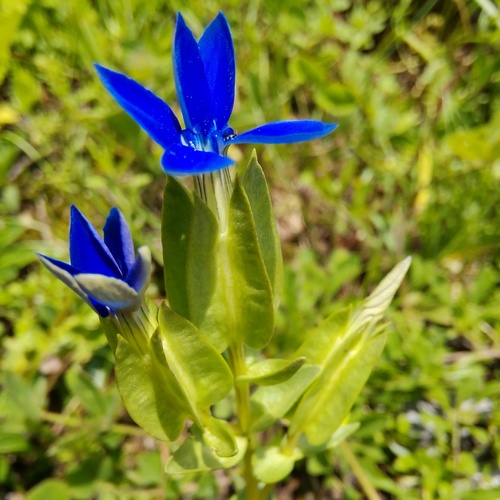
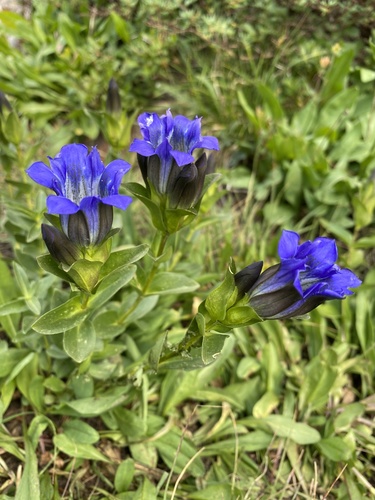
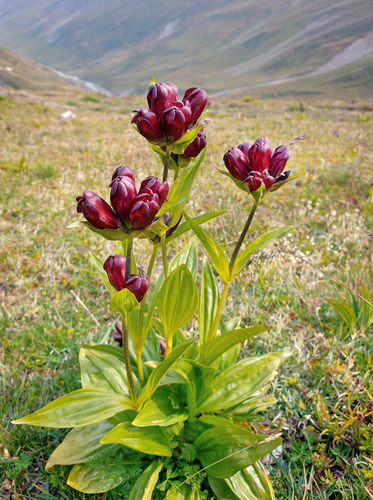
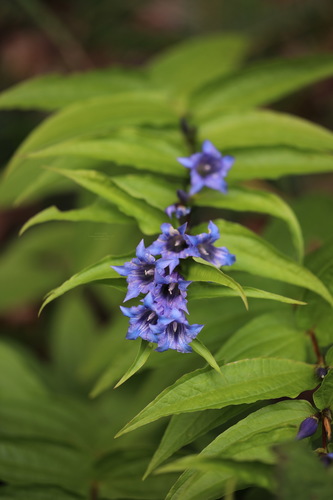
Gentiana asclepiadea, commonly called the willow gentian, is a flowering plant species in the genus Gentiana of the family Gentianaceae, native to central and eastern Europe. It grows primarily in montane mountain woodland, though it can also grow in more open, less wooded pasture in some areas, where it likely persists after woodland clearance. It is one of the larger species in its genus. Stems typically arch elegantly outward from the plant’s base, reaching between 60–90 cm (2.0–3.0 ft) in length. Leaves grow in pairs, and may sometimes form whorls of three or four around especially vigorous growing shoots. Deep blue, trumpet-shaped flowers bloom from late summer into autumn. Like many species in the genus Gentiana and the family Gentianaceae, the roots of willow gentian form a close association with specific fungi. This association is similar to associations seen in the unrelated families Orchidaceae and Ericaceae. This species is relatively easy to grow in most garden settings, as long as its growing soil is amended with plenty of organic material. It prefers moist, rich, well-drained soil, and will grow in full sun or partial shade. The plant can be divided after flowering, but it rarely requires division. To propagate, sow seed into a cold frame as soon as the seed is ripe. If sowing seed indoors, cold treatment of the seed is required. This species can be affected by spider mites, slugs, snails, and aphids. Gentiana asclepiadea has received the Royal Horticultural Society's Award of Garden Merit.