About Gekko gecko (Linnaeus, 1758)
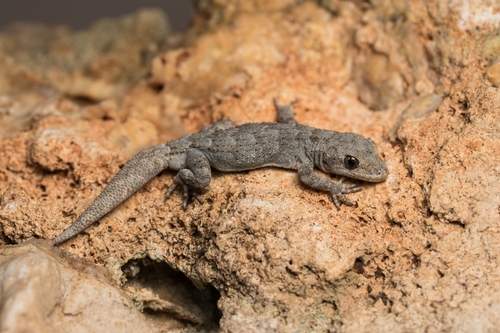
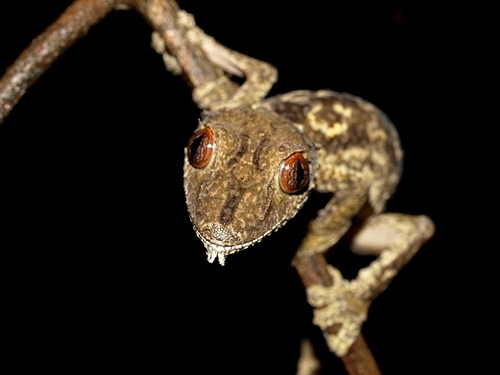
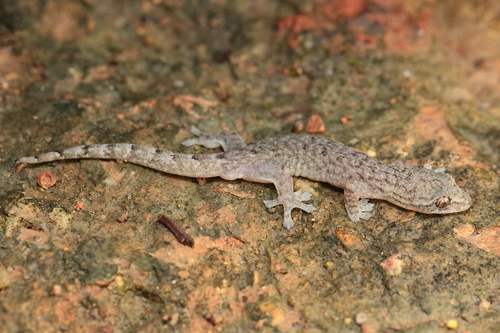
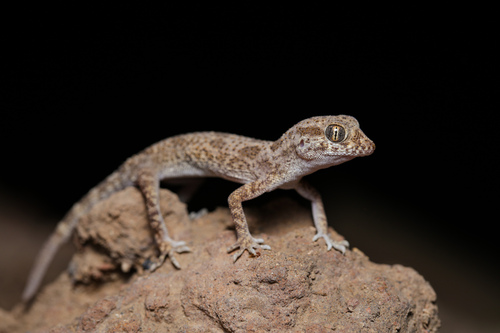
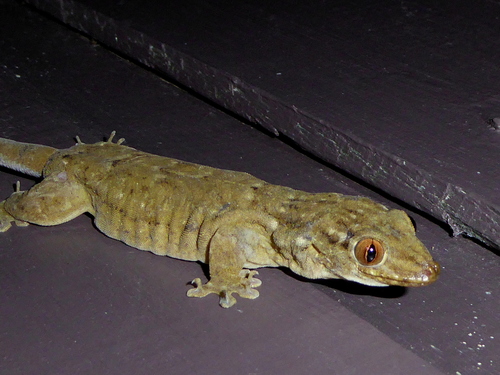
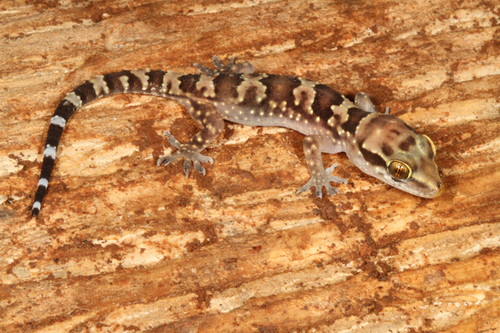
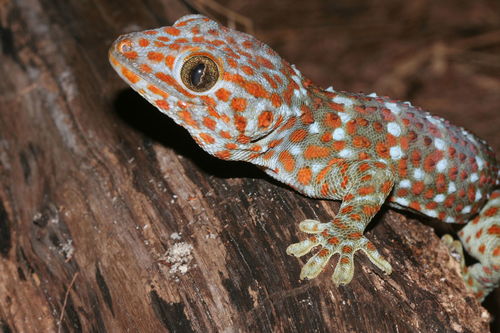
The tokay gecko (Gekko gecko (Linnaeus, 1758)) is a large nocturnal gecko. On average, it reaches a total length including tail of 25–30 cm (10–12 inches), though some individuals grow as large as 40 cm (16 inches) long. It is believed to be the third-largest gecko species, ranking after the giant leaf-tail gecko (Uroplatus giganteus) and New Caledonian giant gecko (Rhacodactylus leachianus). Its body is cylindrical but somewhat flattened in shape, and its eyes have vertical pupils. Its skin is soft to the touch, generally blue-gray with red or orange spots and speckles, and the gecko can change its skin color to blend into its environment. The species displays sexual dimorphism: males are more brightly colored and slightly larger than females. Tokay geckos have two visual pigments: a "green" pigment with a λmax at 521 nm, and a "blue" pigment at 467 nm. It is a strong climber, with foot pads that can support the full weight of its body on a vertical surface for long periods of time. Compared to other gecko species, the tokay gecko has a robust build, with a semiprehensile tail, a large head, and muscular jaws. This species is native to northeast India, Bhutan, Nepal, Bangladesh, all of Southeast Asia including Cambodia, Thailand, the Philippines, Malaysia, Vietnam, and Indonesia, and western New Guinea. Its native habitat is rainforests, where it lives on trees and cliffs. It frequently adapts to rural human habitations, roaming walls and ceilings at night to search for insect prey. Tokay geckos are an introduced species in some areas outside their native range. Established introduced populations exist in Florida in the United States, Martinique, and the islands of Belize, with possible established populations in Hawaii. Increasing urbanization is reducing the species' native range. It remains unclear whether tokay geckos are native but very uncommon in Taiwan, or if the rare individual reports recorded since the 1920s come from repeated human-caused translocations that may or may not have resulted in established populations to date.