About Geijera parviflora Lindl.
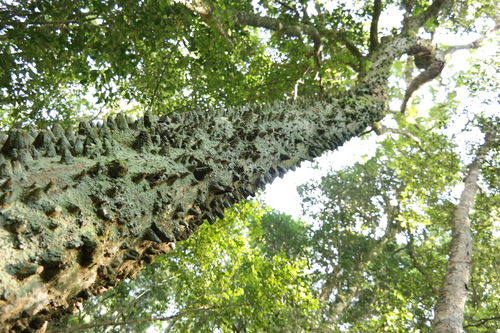
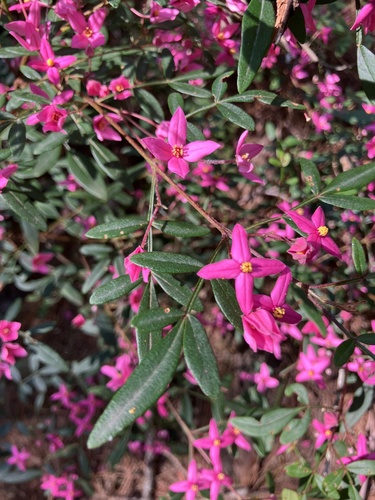
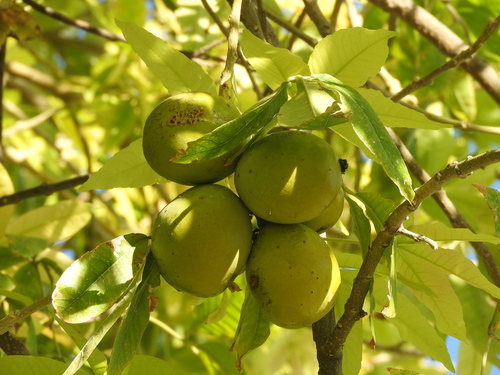
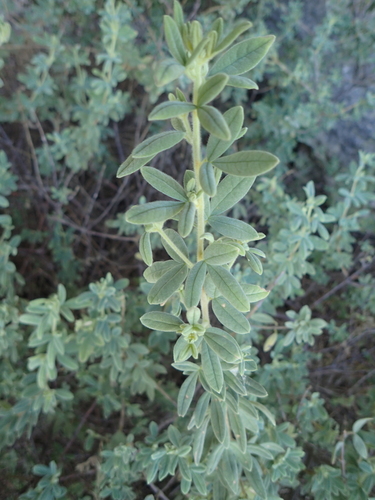
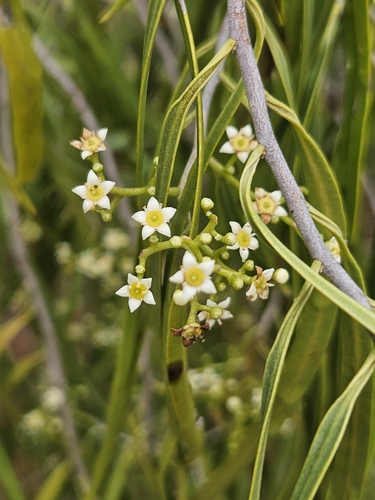
Geijera parviflora Lindl. is a shrub or tree that typically grows to a height of 8–10 m (26–33 ft). It has drooping branches with leaves that often reach ground level, though these leaves are commonly grazed by sheep. Its leaves are glossy dark green, shaped linear to lance, 35–180 mm (1.4–7.1 in) long and 4–10 mm (0.16–0.39 in) wide, growing from a petiole 3–12 mm (0.12–0.47 in) long. Crushed leaves of this species release a strong scent. Its flowers are arranged in loose panicles 40–70 mm (1.6–2.8 in) long, with each flower growing on a pedicel about 1 mm (0.039 in) long. The sepals are 0.8–1 mm (0.031–0.039 in) long, and the petals are white and 1.5–2.5 mm (0.059–0.098 in) long. The scent of the flowers has been described as both foetid and citrus-scented, and it attracts insects. Flowering occurs from June to November. The fruit is roughly spherical, 4–5 mm (0.16–0.20 in) in diameter, and each fruit holds a single shiny black seed.
Commonly called wilga, this species prefers calcareous soils, including red clays or sandy soils. It grows as scattered trees in open woodland, or occasionally in grouped stands. It is mainly found in inland New South Wales and Queensland, extending into south-eastern South Australia. It is rare in Victoria, where it is only recorded in the state’s north-west, near Kenley.
Wilga is a useful shade and fodder tree for agricultural areas. Sheep particularly enjoy grazing on its lower branches, though individual trees vary greatly in palatability—some are eagerly grazed while others are ignored. The cause of this palatability variation is unknown, but soil composition has been speculated as a possible cause. Despite growing slowly, it is planted as an ornamental in Australia and overseas. It prefers full sunshine, and can tolerate occasional light frost and drought. Indigenous Australians chewed the plant’s aromatic leaves to alleviate toothache. Regeneration from fresh seed and cuttings is known to be difficult. Cracking the hard seed coat is suggested to help improve seed germination.