About Gehyra dubia (Macleay, 1877)
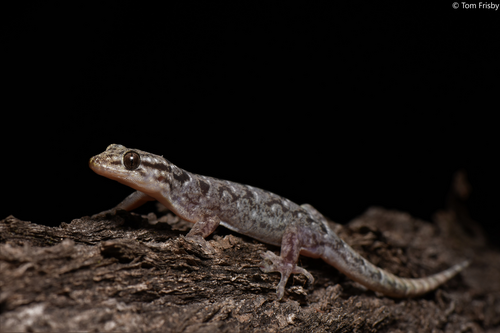
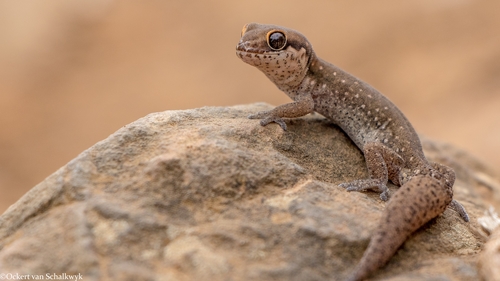
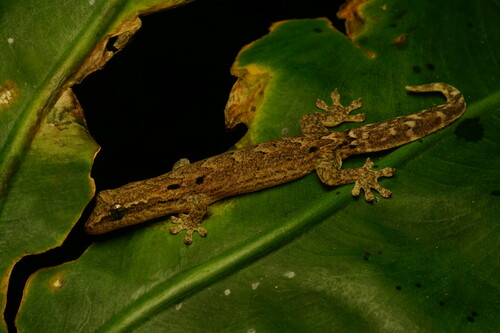
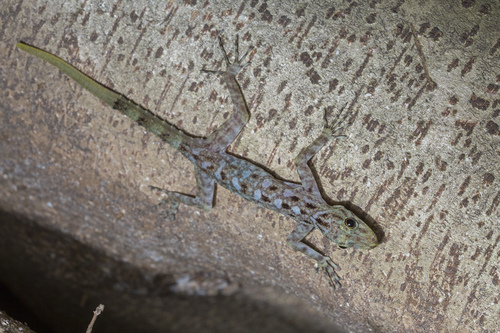
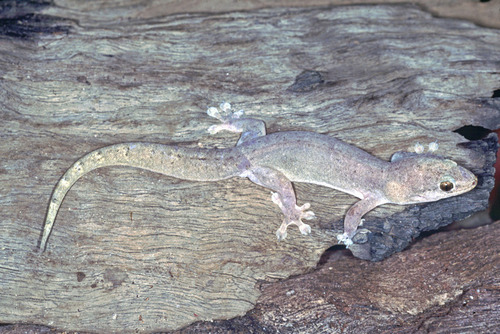
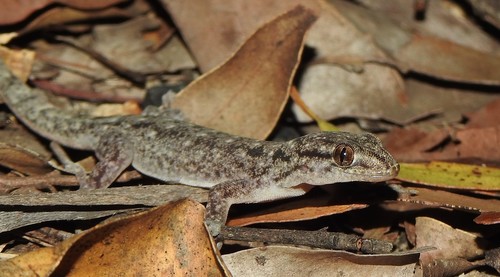
Gehyra dubia, commonly called the dubious dtella, is a small species of gecko. Its maximum snout-to-vent length reaches 6 cm, and its maximum tail length reaches 14 cm, with no significant difference in body size between males and females. When at rest, this gecko is typically a dull gray-brown, with dark spots covering its entire dorsal side. It has mild camouflage ability, and often changes its color to a lighter brown. When foraging, the spots on its back disappear. These geckos have four limbs, each with five digits. Every digit has a circular pad that helps grip surfaces, a trait that allows them to live successfully in human homes, as they can grip onto ceilings and glass windows. Uniquely, G. dubia lacks a claw on its inner digits. The skin of this gecko, including the skin on its tail, is smooth; this is one feature that distinguishes Gehyra dubia from other Australian gecko species. Like most other gecko species, G. dubia lacks eyelids and has vertically oriented pupils in its eyes. Because they cannot blink, they lick their eyes clean with their tongues. As a nocturnal species, it has large eyes that are around 350 times more sensitive to light than human eyes in dark conditions. When under stress, such as when chased by a predator, the dubious dtella can shed its tail to feign injury and escape. In the 1800s, G. dubia was recorded as abundant in southeast Asia, Pacific Islands, and northern Australia. Currently, G. dubia is confirmed to be widespread only across Eastern Australia. Because it is often confused with other gecko species, many sources report it is also present in the island archipelagos north of Australia and in New Guinea, but researchers currently restrict the species' confirmed true range to Australia only. The dubious dtella is highly adaptable and can live in a wide range of habitats, including woodlands, dry forests, and shrublands. It is mainly an arboreal species and generally prefers dry habitats, so it is not commonly found in rainforest areas. Its broad ecological niche means it is very common in homes in Queensland, Australia, as houses provide shelter from predators and increased access to prey. For this reason, they are frequently found at night on walls, floors, or windowpanes. They also forage for scattered prey at night in the Australian bush. G. dubia is oviparous, meaning it reproduces by laying eggs. A typical clutch laid by a female contains two eggs. Egg size increases as the size of the mother gecko increases. Since this species is common in human homes, their eggs are often laid in clutches of two inside the crevices where the geckos reside. G. dubia lays eggs and breeds during the wet season. During the breeding season, individuals produce mating chirps, especially to attract a mate. These chirping calls function as mating signals; males use them to call for females.