About Gecarcoidea natalis (Pocock, 1889)
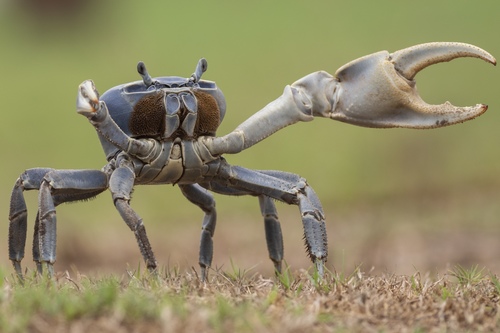
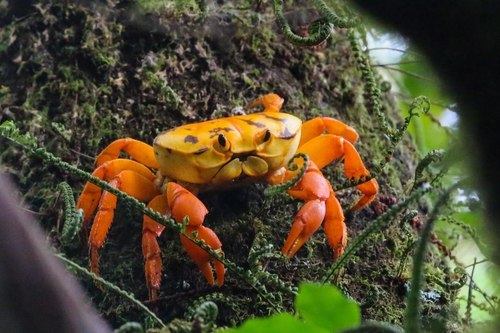
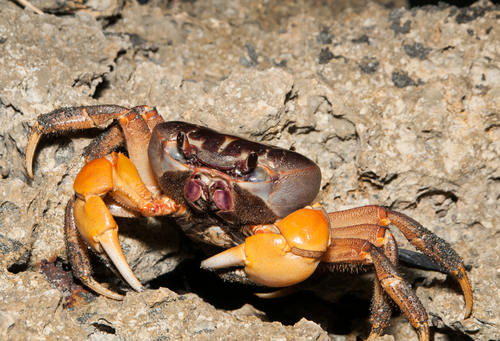
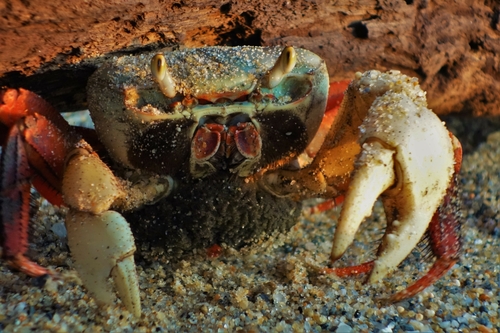
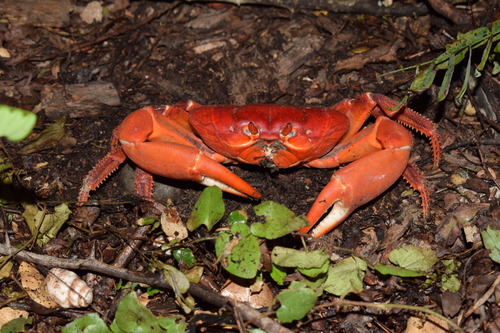
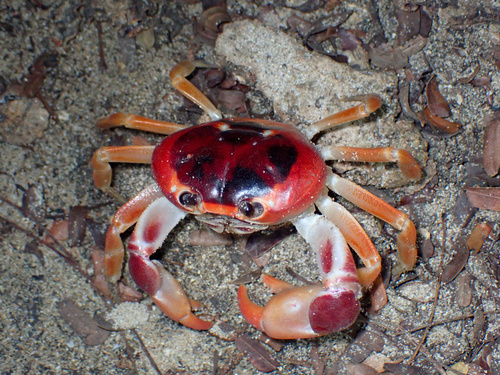
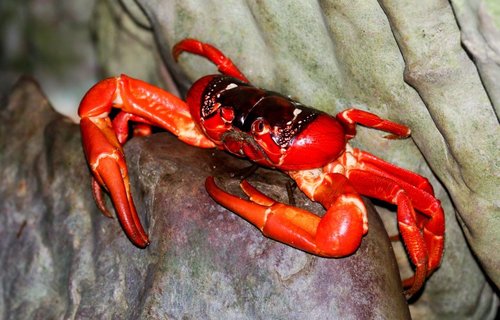
Gecarcoidea natalis, commonly known as Christmas Island red crabs, are large crabs whose carapace can reach up to 116 millimetres (4.6 in) wide. Their claws are usually equal in size, unless one is injured or detached; if this occurs, the limb will regenerate. Male crabs are generally larger than females. Adult females have a much broader abdomen, a feature that only becomes apparent when individuals are over 3 years old, and females usually have smaller claws. Bright red is the most common color for this species, but some individuals are orange, and purple is a much rarer color variant.
In their life cycle, eggs released by females hatch immediately when they come into contact with seawater. Clouds of crab larvae drift near the shore until they are swept out to the open sea, where they stay for 3 to 4 weeks. During this period, the larvae go through multiple larval stages, eventually developing into shrimp-like creatures called megalopae. The megalopae gather near the shore for 1 to 2 days before molting into young crabs that measure only 5 mm (0.20 in) across. The young crabs then leave the water to complete a 9-day journey to the center of Christmas Island.
For the first three years of their lives, young red crabs stay hidden in rock outcrops, dry leaf litter, fallen tree branches, and debris on the forest floor. Red crabs grow slowly, reaching sexual maturity at around 4 to 5 years old. Once mature, they begin taking part in the annual breeding migration. Red crabs moult multiple times during their early growth stages. Mature red crabs moult once a year, typically inside the safety of their burrows. The average lifespan of Christmas Island red crabs is about 12 years.