About Gecarcinus lateralis Guérin, 1832
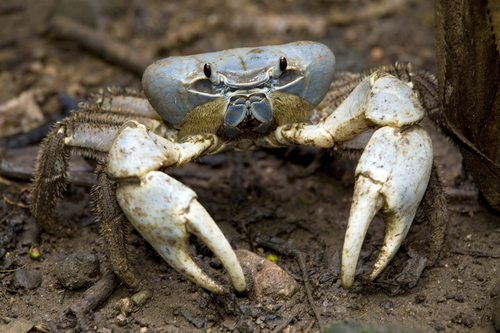
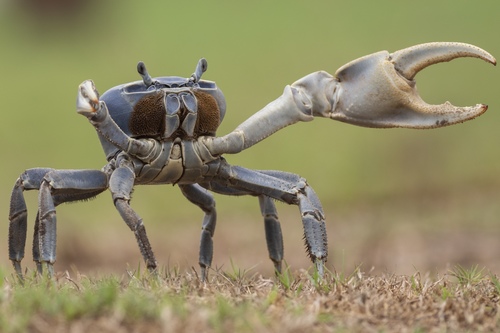
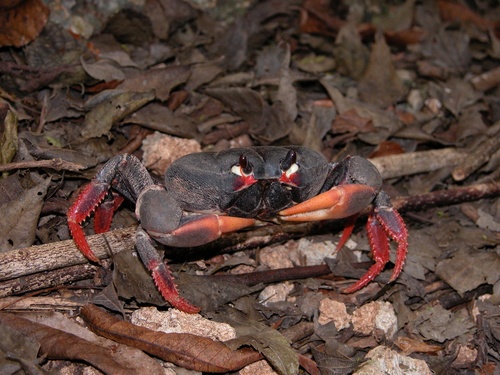
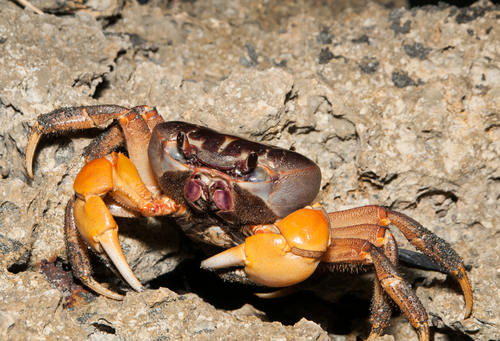
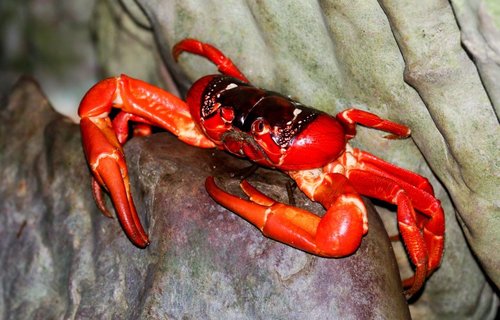
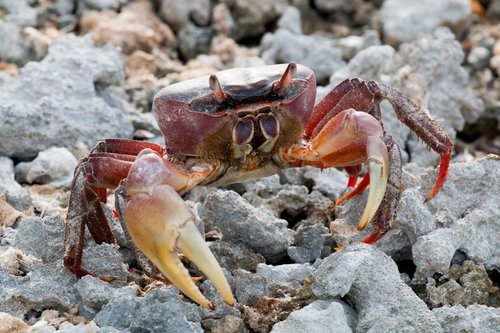
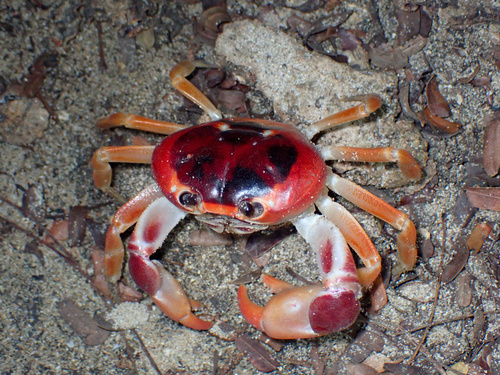
Gecarcinus lateralis, commonly called the blackback land crab, has a large, variably shaped blackish spot that covers most of the central area of its carapace, or back. The legs, claws, and outer sections of the carapace are colored reddish, orange, or whitish. The carapace can reach a maximum width of 11 centimetres, or 4.3 inches. This species is distributed along the Atlantic coast from South Padre Island, Texas, south to Macuto, Venezuela. It also lives in the Florida Keys and the islands of the Caribbean. Gecarcinus lateralis lives in the dry zone of sandy beaches and nearby hills, roughly 6 to 9 metres, or 20 to 30 feet, above the highest high tide mark. This habitat has no standing water, but holds significant moisture in the spaces between sediment particles. This crab must return to the ocean to breed, as its larvae are released into the sea. In addition, its gills must stay moist at all times, or the crab will die. Unlike most other crustaceans, the blood of Gecarcinus lateralis has a higher oxygen carrying capacity. This crab is largely herbivorous, but will consume animal matter when it is available.