About Geastrum fornicatum (Huds.) Hook.
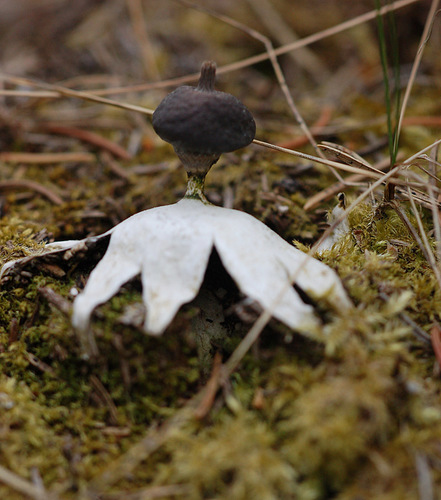
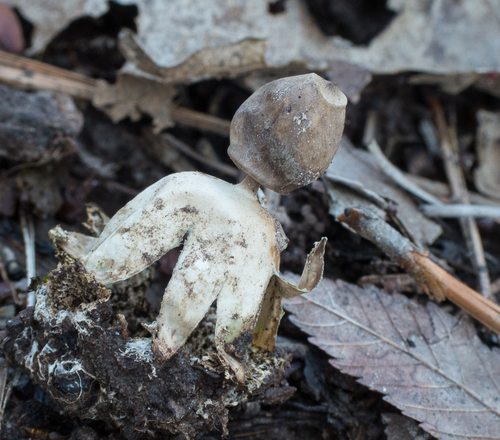
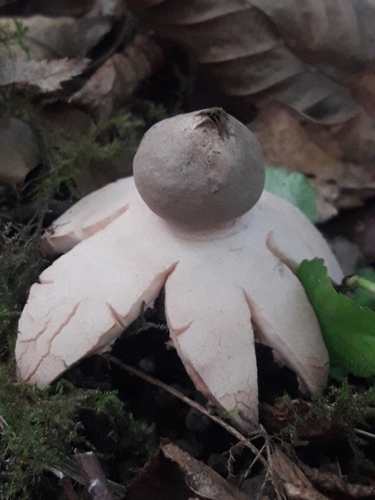
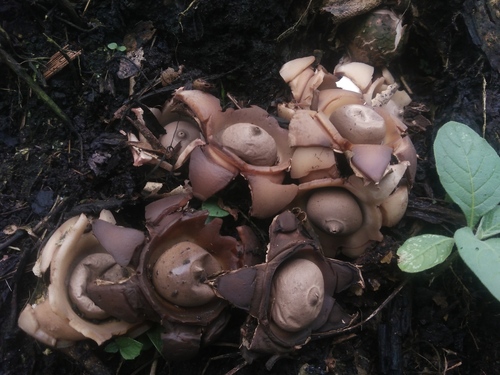
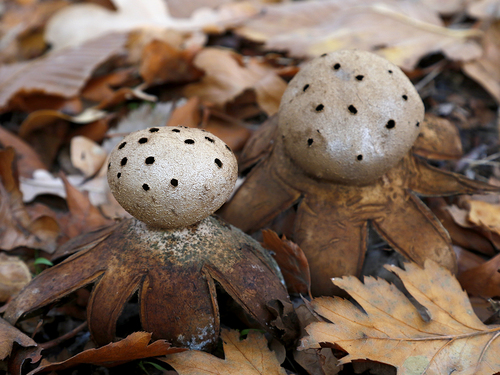
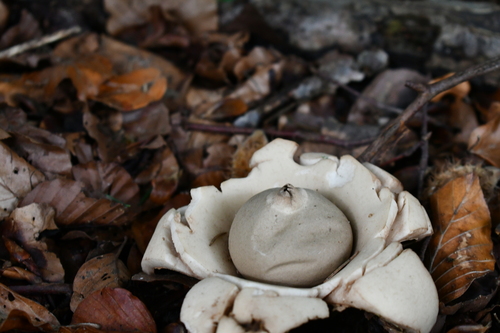
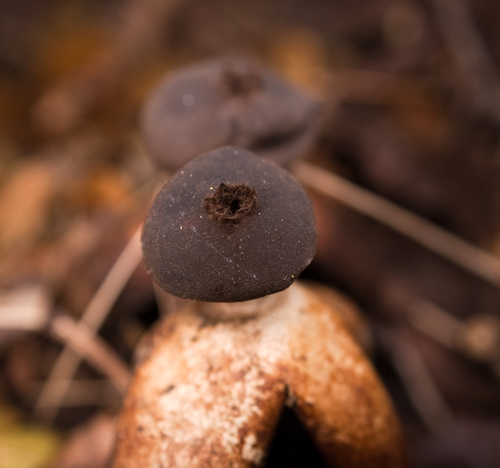
Geastrum fornicatum (Huds.) Hook. has an immature roughly spherical fruit body that is typically 1–4 centimetres (1⁄2–1+1⁄2 inches) in diameter and dark brown in color. When the fungus reaches maturity, the exoperidium (outer layer) splits into four to five rays. These rays curve backwards to elevate the fruit body and lift the spore sac, supporting optimal spore dispersal. The tips of the rays remain attached to a basal cup. The spore sac has an ostiole, a small opening located near its apex. Mature fruiting bodies can reach up to 6 cm (2+1⁄4 in) in diameter and 8 cm (3+1⁄4 in) in height. The exoperidium attaches to soil via rhizomorphs. The spores of Geastrum fornicatum are spherical, warted, thick-walled, nonamyloid, and measure 5–6 μm. Young fruit bodies are white and firm, while mature specimens produce a dark brown spore print. This uncommon fungus grows singly or in small groups in southwest United States, found between October and March. It most often grows under bushes and trees in deciduous woods, and does not grow in heavily wooded areas. Methanol extracts of G. fornicatum have been shown to have antimicrobial properties. These extracts inhibit the growth of multiple human-pathogenic bacteria, including Bacillus subtilis, Escherichia coli, Klebsiella pneumoniae, Pseudomonas aeruginosa, Salmonella typhimurium, and Streptococcus pyogenes. They also inhibit the growth of the fungi Candida albicans, Rhodotorula rubra, and Kluyveromyces fragilis. This species is inedible.