About Gazella arabica (Lichtenstein, 1827)
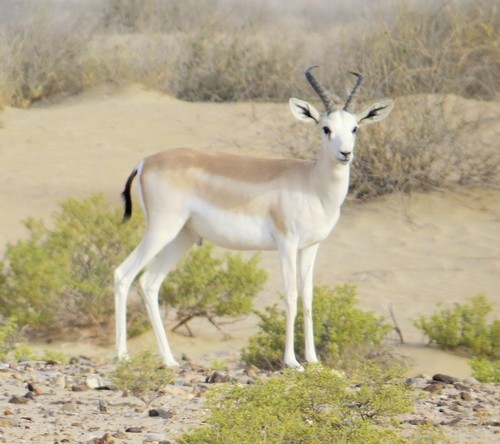
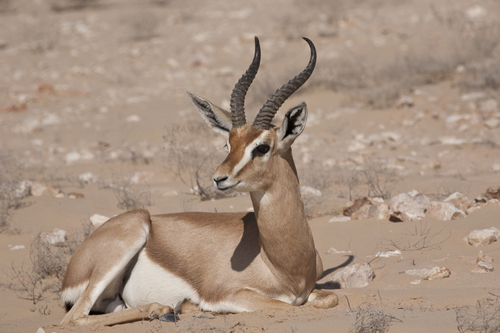
The Arabian gazelle, scientifically named Gazella arabica (Lichtenstein, 1827), is a gazelle species native to the Arabian Peninsula. Approximately 5,000 to 7,000 mature Arabian gazelles live in the wild. Gazella erlangeri, commonly known as Erlanger's gazelle or Neumann's gazelle, is now considered a synonym of Gazella arabica. Arabian gazelles inhabit grassland, shrubland, and desert habitat types. They feed mainly on the leaves, flowers, and fruits of acacia trees from the genus Vachellia, as well as those of other trees and shrubs. They are selective browsers that prefer woody plants over grasses. They mostly feed while standing on all four legs, but may rear up on their hind legs to reach food growing higher up. Arabian gazelles share their habitat with many other herbivores, including Dorcas gazelles (Gazella dorcas), mountain gazelles (Gazella gazella), Nubian ibex (Capra nubiana), Asiatic wild ass (Equus hemionus), and Arabian oryx (Oryx leucoryx). Their main predator is the Arabian wolf (Canis lupus arabs). Arabian gazelles are crepuscular, meaning they are most active during the cooler early morning and evening hours. During the hot midday, they rest while chewing their cud. Arabian gazelles have been found to carry antibodies for the parasite Toxoplasma gondii, which causes toxoplasmosis. They can also contract gastrointestinal diseases including clostridiosis and salmonellosis, as well as develop chronic renal fibrosis. For Arabian gazelle offspring, higher birth weight correlates with greater survival chances. Birth weight in this species is more strongly influenced by heritability than by maternal effects.