About Gavicalis virescens (Vieillot, 1817)
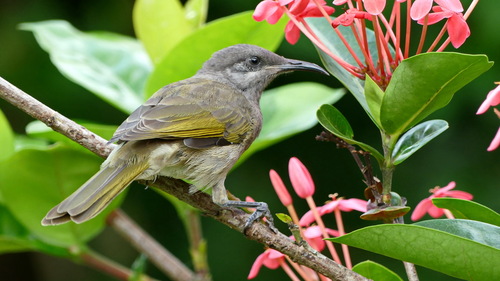
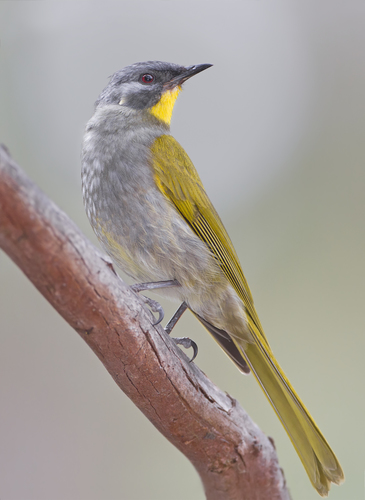
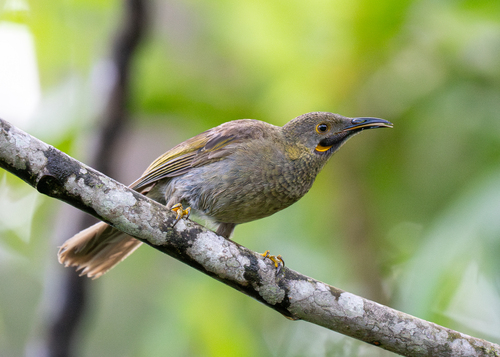
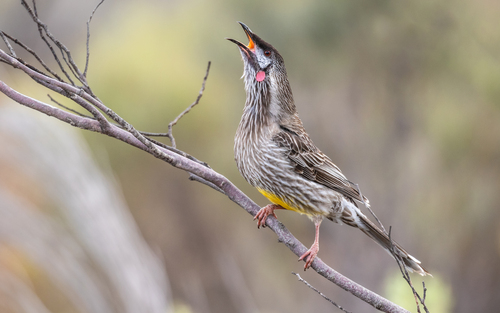
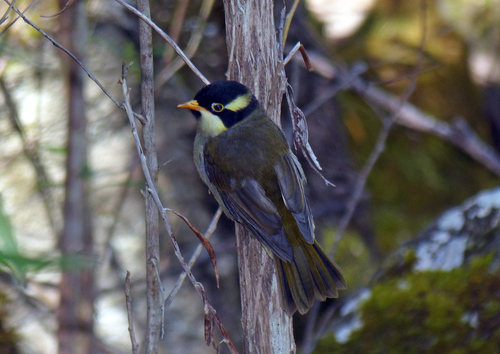
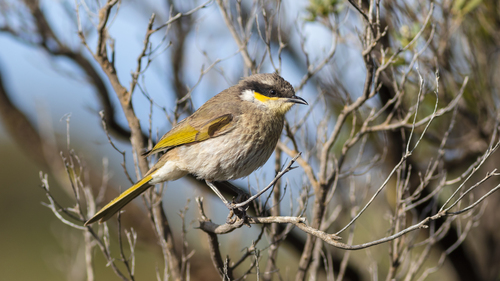
Singing honeyeaters (scientific name Gavicalis virescens) measure 17–22 cm (6.7–8.7 in) in length. Their overall plumage is grey-brown, with olive-green tails and wings marked by bright yellow flashes. A broad black stripe runs from behind the beak to the back of the head, with a yellow streak running below this stripe starting at the eye. Their song varies from scratchy to melodious, and its characteristics change based on the region the birds inhabit. This species has close relatives with similar general appearance, shared physical traits, overlapping ranges, and similar vocalizations, so a bird identification guide with clear images is often required for confident correct identification. Singing honeyeaters are omnivorous, feeding on a wide variety of foods including nectar, small insects, fruits, grubs, and berries. They are also opportunistic nest predators that prey on the eggs and chicks of smaller birds such as the zebra finch; any unattended nest with eggs or chicks is a potential easy food source for them. Their breeding season runs from July to February. They can form long-term pair bonds with partners, and become aggressive when breeding. They build cup-shaped nests from grass, plant stems, and spider webs. Clutches contain 2 to 3 light cream-brown eggs marked with darker spots, and the incubation period lasts 14 days. Singing honeyeaters live in family groups. They will attack larger animals if they feel threatened or if the animals enter their territory, and have been observed attacking intruders in mobs, showing they are cooperative social birds that work together toward a common goal. They also associate with other bird species, including the brown honeyeater and the red wattlebird. Unlike many other bird species, singing honeyeaters cannot communicate with geographically isolated populations of their own species. A 1996 study by M.C. Baker found that mainland singing honeyeaters did not respond to the songs of singing honeyeaters from Rottnest Island, located off the west coast of Australia. The study confirmed that Rottnest Island singing honeyeater songs are shorter, have fewer distinct song and syllable types, and contain fewer syllables and notes per song than mainland songs.